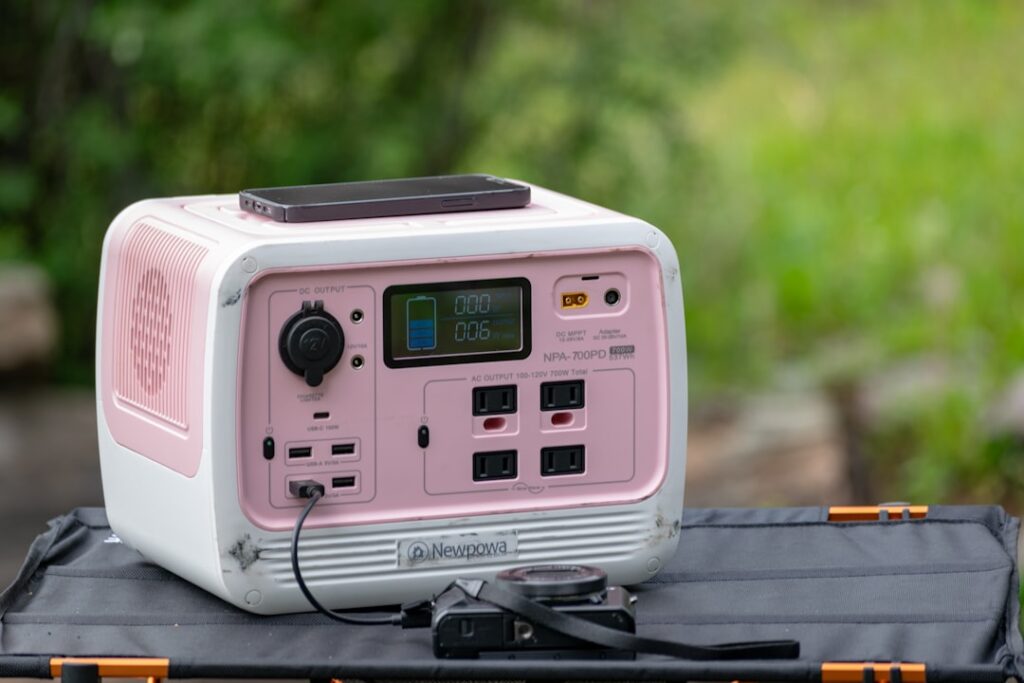
When the power goes out, a small portable generator keeps your fridge cold, your phone charged, and a few lights on without the cost or complexity of a whole-house standby unit. These compact machines usually put out somewhere between 1,000 and 4,000 watts, run on gasoline, and cost anywhere from $150 to $1,200 depending on power and features.
The trick to buying a small portable generator is matching its wattage to what you actually need to run, then respecting the safety rules that keep it from killing you. Carbon monoxide from these engines is lethal, and every year people die running them the wrong way. Let’s get both the sizing and the safety right.
How Generator Wattage Works
Every generator lists two numbers: running watts and starting (surge) watts. Running watts is the continuous power it delivers. Starting watts is the brief extra jolt it can supply for a second or two when a motor kicks on — refrigerators, well pumps, and power tools all spike hard at startup.
A unit rated “3,000 starting / 2,400 running” gives you 2,400 watts of steady power with 3,000 available for that startup surge. Size your generator by the running watts you need, then confirm the surge rating covers your biggest motor’s startup draw. Ignore the surge number and your fridge compressor will trip the generator every time it cycles on.
Sizing: Add Up What You’ll Run
Make a list of what you truly need during an outage and add up the running watts. Typical draws:
- Refrigerator/freezer: 600-800 running watts (up to 1,200 starting)
- LED lights (several rooms): 100-200 watts total
- Phone and laptop charging: 50-150 watts
- Wi-Fi router and modem: 30-60 watts
- Sump pump: 800-1,050 running (1,500-2,200 starting)
- Space heater: 1,500 watts
- Microwave: 600-1,200 watts
- CPAP machine: 30-100 watts
Add your essentials, then add 20% headroom so you’re never running the engine flat-out. Most people find that keeping a fridge, some lights, phones, and the internet alive lands around 1,500 to 2,000 running watts — comfortably inside what a small portable generator delivers. If you want to add a sump pump or space heater, you’re looking at 3,000 to 4,000 watts.
Run Time and Fuel
Run time depends on tank size and how heavily you’re loading the engine. A small generator with a 1- to 2-gallon tank typically runs 8 to 12 hours at 25% to 50% load. Push it near full load and that drops to 5 or 6 hours. Gasoline is the standard fuel; dual-fuel models also run on propane, which stores indefinitely and burns cleaner but delivers slightly fewer watts.
Plan your fuel supply before the storm. Keep 5 to 10 gallons of fresh gasoline stabilized with fuel stabilizer, stored in approved cans away from the house. Gas older than about 30 days without stabilizer starts to gum up carburetors, and a generator that won’t start is just an expensive paperweight when you need it most.
Inverter vs Conventional
Two flavors dominate this size class. Conventional open-frame generators are cheaper and put out plenty of power, but their electricity is “dirtier” — fine for lights, fridges, and power tools, risky for sensitive electronics. Inverter generators produce clean, stable power safe for laptops, phones, and TVs, run much quieter, and throttle the engine down to match the load, which saves fuel. They cost more.
If you mainly need to keep a fridge and lights going, a conventional unit at $150 to $500 is fine. If you’re powering computers, medical equipment, or you just want a quiet machine you can run near the house, spend $500 to $1,200 on an inverter.
Price Ranges by Power
- 1,000-1,200 watt inverter: $150-$350 — charges devices, runs a few lights, very portable
- 2,000-2,300 watt inverter: $400-$700 — fridge plus lights plus electronics, the popular sweet spot
- 3,000-3,500 watt conventional: $300-$600 — fridge, lights, sump pump, and small appliances
- 3,500-4,000 watt inverter: $700-$1,200 — near-whole-essentials backup with clean power
Features Worth Paying For
Two generators with the same wattage can be very different machines. When you compare models, weigh these features:
- Electric start: A push-button or key start beats yanking a recoil cord, especially in cold weather or for anyone with a bad shoulder. Worth the small premium.
- CO shutoff sensor: Automatically kills the engine if carbon monoxide builds up nearby. This is a safety feature, not a luxury — prioritize it.
- Fuel gauge: Tells you when to refill before the tank runs dry and the engine stalls mid-outage.
- Parallel capability: Lets you link two smaller inverter units for more power when you need it, then run just one for light duty.
- USB and 12-volt outlets: Handy for charging phones and devices directly without a separate adapter.
- Noise rating: Inverters run around 50-60 decibels; open-frame units can hit 70-plus. Your neighbors will notice the difference.
Maintenance Between Outages
A generator that sits for months often won’t start when the storm hits. Run it under load for 20 to 30 minutes every couple of months to keep the carburetor clear and the battery charged. Change the oil per the manual — typically after the first 20 to 25 hours of use, then every 50 to 100 hours after that. Before long-term storage, either run the tank dry or fill it with stabilized fuel and run the engine a few minutes to circulate it through the carburetor. Keep a spare spark plug and an oil-change kit on the shelf so you’re never stuck.
Carbon Monoxide: The Rule That Saves Lives
Generators produce carbon monoxide, an odorless, colorless gas that kills fast. This is not a suggestion — it is the single most important thing on this page. Never run a generator indoors, in a garage, in a basement, on a porch, or anywhere near a window, door, or vent. “The garage door was open” has killed people. CO pools and seeps into living space even from a partially open garage.
Run the generator outdoors only, at least 20 feet from the house, with the exhaust pointed away from doors and windows. Buy a model with a built-in CO sensor that shuts the engine off if gas builds up — many newer units have this and it’s worth paying for. Install battery CO alarms inside your home regardless. Every year outweighs the cost the first time it matters.
Backfeeding: Never Do This
Do not plug a generator into a wall outlet to power your house. This “backfeeding” trick pushes electricity backward through your home’s wiring and out to the utility lines, where it can electrocute a lineman working to restore power. It also bypasses your breakers, creating a serious fire risk. It’s illegal in most places and it kills people who never see it coming.
Power your appliances by running heavy-duty outdoor-rated extension cords directly from the generator to each device. If you want to power hardwired circuits, hire a licensed electrician to install a transfer switch — a $500 to $900 device that safely and legally connects the generator to your panel and locks out the utility feed. That’s the only correct way to feed your home’s circuits.
Safe Operation Checklist
- Run outdoors, 20+ feet from the house, exhaust pointed away.
- Never refuel a hot or running engine — let it cool 5 to 10 minutes first.
- Keep it dry; run it under an open canopy or generator tent in rain, never enclosed.
- Use outdoor-rated extension cords sized for the load.
- Install CO alarms indoors and choose a unit with automatic CO shutoff.
- Never backfeed — use a transfer switch installed by an electrician.
- Store fuel in approved cans, stabilized, away from living space.
A well-chosen small portable generator is one of the best emergency-preparedness buys you can make. Size it to your real running-watt needs, add 20% headroom, keep fresh stabilized fuel on hand, and follow the CO and backfeed rules without exception. Do that and you’ll ride out the next outage in comfort instead of the dark.