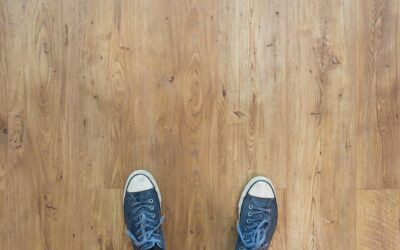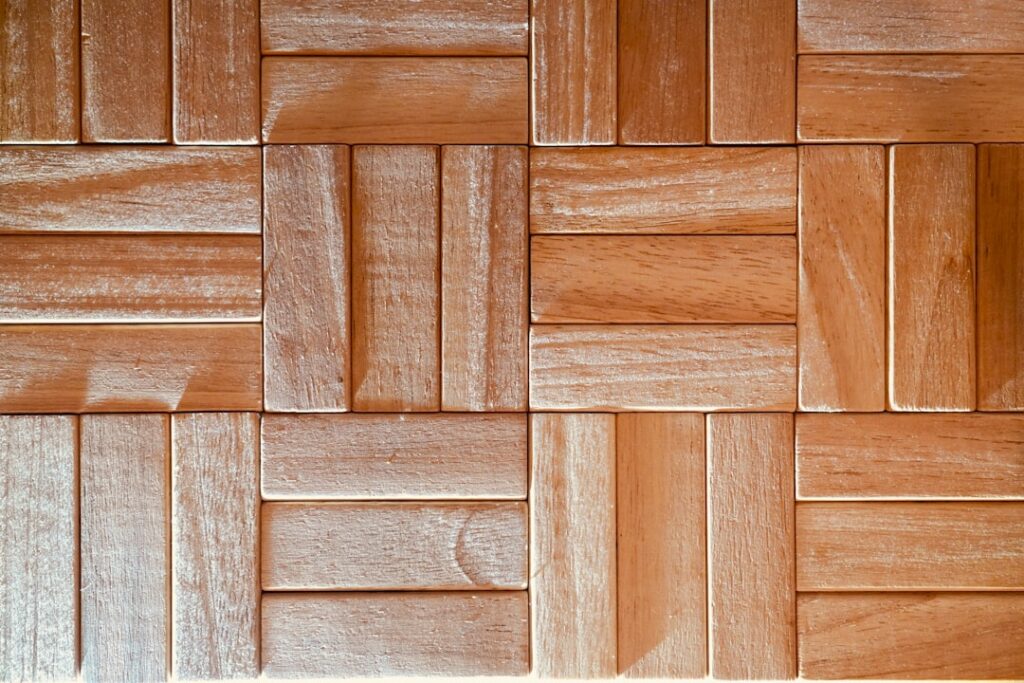
A solid oak floor properly installed today will outlast nearly every other component of the house. Solid oak floorboards have powered the American hardwood flooring market for over a century because oak balances hardness, workability, and grain character better than almost any other domestic species. Unlike engineered wood, solid oak can be sanded and refinished six to ten times across its life, which is why 100-year-old original oak floors still grace homes built before World War I.
Red Oak vs White Oak
The two main oak species sold in the US are red oak and white oak, and they look meaningfully different. Red oak runs warmer with pinkish undertones and a more open grain pattern that shows clearly under stain. White oak skews cooler with golden-brown to slightly olive tones and a tighter grain. White oak also has higher density (Janka 1,360 vs red oak’s 1,290) and greater water resistance due to closed cellular structure called tyloses.
For modern design schemes leaning toward neutrals and grays, white oak dominates. Red oak is making a quiet comeback for traditional and warmer interiors and remains the cheaper option, often by 10 to 20 percent. Both species accept stain well, both refinish equivalently, and both deliver 100-year service life when properly installed.
Plank Width and Length Options
Standard strip flooring runs 2 1/4 inches wide. Plank flooring starts at 3 inches and continues up to 12 inches for wide-plank installations. Random-width packages combine multiple widths for a traditional look. Random-length boards typically range from 12 inches to 84 inches with average length around 40 inches.
- Strip 2 1/4 inch: classic American style, $4 to $7 per sq ft material
- Plank 3 to 5 inch: most popular contemporary, $5 to $10 per sq ft
- Wide plank 6 to 8 inch: premium look, $8 to $14 per sq ft
- Wide plank 9 to 12 inch: estate-style, $12 to $22 per sq ft
- Random width packages: traditional rustic, $7 to $12 per sq ft
Wider boards are more expensive per square foot because each tree yields fewer wide planks than narrow strips. They also move more with humidity changes, requiring stricter HVAC control to prevent gaps in winter and cupping in summer.
Grading and What It Means
Oak is graded by knots, color variation, mineral streaks, and other character marks. Clear grade has minimal character and a uniform appearance. Select grade allows small knots and slight color variation. #1 Common shows moderate character with knots and color streaks. #2 Common is a rustic grade with prominent character. Character grades and rustic grades sit at the most heavily figured end.
Grade does not mean quality in the structural sense. A #2 Common board is just as durable as a Clear board. The grade reflects appearance only. For most modern installations with a natural or light stain, mid-grade Select or #1 Common produces the most pleasing result. Pure Clear grade often looks too uniform and reads as fake to a careful eye.
Pricing Across Tiers
Unfinished red oak runs $4 to $7 per sq ft material. Unfinished white oak runs $5 to $9 per sq ft. Prefinished factory product adds $1.50 to $3.50 per sq ft for the factory finish, which is more durable than site-applied finish but harder to repair over time. Installation labor varies by method:
- Nail-down installation: $3 to $5 per sq ft
- Glue-down installation on slab: $4 to $7 per sq ft
- Floating installation (rare for solid): $2.50 to $4.50 per sq ft
- Sand and finish (site-applied): $2.50 to $4.50 per sq ft additional
A typical 1,200 sq ft installation of mid-grade white oak in 5-inch plank, site-finished with three coats of polyurethane, runs $13,000 to $19,000 supplied and installed. Wider planks and prefinished product push the high end up to $24,000 to $30,000.
Pros That Justify the Investment
Lifespan is the headline. A solid oak floor can serve 100-plus years with periodic refinishing. No competing material approaches that longevity. Refinishing costs $3 to $5 per sq ft every 8 to 15 years, far cheaper than full replacement of any alternative flooring.
Resale value tracks with installed hardwood. Buyers pay more for homes with oak floors than for equivalent properties with carpet, vinyl, or laminate. The premium varies by market but typically ranges from 1 to 3 percent of home value, often exceeding the floor’s installation cost on resale.
Cons to Consider
Humidity sensitivity is real. Solid oak gains and loses moisture with seasonal humidity swings, expanding in summer and contracting in winter. Properly acclimated and installed, the movement stays within acceptable limits. Skimp on acclimation or install during a humidity extreme and you will see gaps, cupping, or both within the first year.
Slab installations are limited. Solid oak generally cannot be installed below grade on concrete because moisture from the slab destroys the wood. Engineered oak handles slabs and basements far better. For above-grade wood subfloor installations, solid oak is the right choice.
Installation Best Practices
Acclimate boards for 7 to 14 days in the actual install room with HVAC running at homeowner’s normal occupied conditions. Stack cartons cross-hatched with spacers to allow air circulation. Test moisture content with a pin meter and verify boards sit within 2 percent of the subfloor reading before nailing the first plank.
Use 15 lb felt or rosin paper between subfloor and oak as a moisture buffer and squeak preventer. Nail every 8 inches along the tongue with a pneumatic flooring nailer. Stagger end joints by at least 6 inches between adjacent rows. Pull boards from at least three cartons during install to randomize color and grain variation.
Finishing Choices
Site-applied oil-modified polyurethane delivers the warmest amber tone and most traditional look at $2 to $3 per sq ft. Water-based polyurethane stays clearer and yellows less over time, costs slightly more, and dries faster. Hardwax oil from companies like Rubio Monocoat and Pallmann produces a natural matte finish that spot-repairs more easily but requires more frequent maintenance. Aluminum oxide factory finishes deliver the highest scratch resistance but cannot be spot-repaired.
Maintenance Across the Decades
Sweep or vacuum twice weekly. Damp mop monthly with a pH-neutral hardwood cleaner. Address spills immediately. Plan for a screen-and-recoat every 5 to 8 years to refresh the surface without full sanding. Full sand and refinish every 15 to 25 years depending on traffic, which removes scratches, dents, and stains and effectively gives you a brand new floor.
Keep indoor humidity between 35 and 55 percent year-round. A whole-house humidifier in winter and properly sized AC in summer protect the investment. Use felt pads on furniture, area rugs in high-traffic zones, and walk-off mats at every exterior entrance.
Final Thoughts
Solid oak floorboards remain the gold standard for residential hardwood flooring after a century of competition from engineered alternatives. Match the species and grade to your design intent, prioritize proper acclimation and installation, and you will own a floor that adds value to your home for the rest of your life and probably your children’s lives too.
Prefer to explore on your own?
See how new flooring looks in your actual room in seconds — free, no signup.
Try the free Floor Studio →