
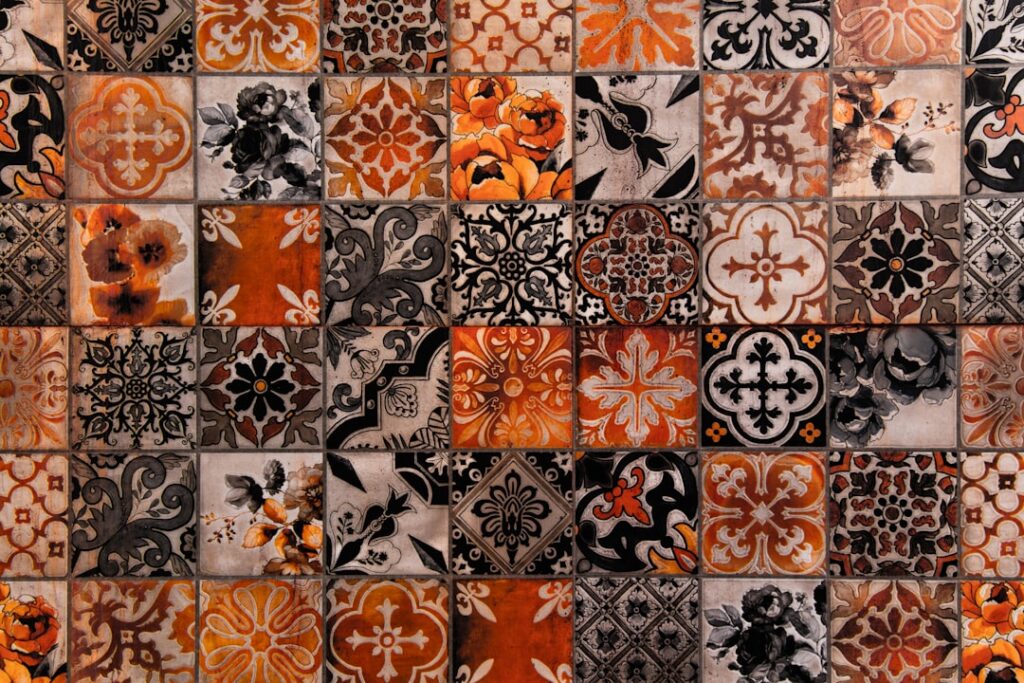
The warm terracotta tones and hand-painted geometric patterns of Mediterranean interiors have never gone out of fashion, and now you can get that look without the cost or upkeep of real ceramic. Spanish tile vinyl flooring reproduces the intricate encaustic and terracotta designs of classic Spanish, Moroccan, and Portuguese tile on a durable, waterproof vinyl surface. It delivers old-world charm at a fraction of the price, installs faster, and feels warmer underfoot. This guide covers the styles available, realistic costs, where to use it, and how to buy the right product for your home.
- What Is Spanish Tile Vinyl Flooring?
- Popular Spanish Tile Styles
- Why Choose Vinyl Over Real Ceramic Tile?
- Best Rooms for Spanish Tile Vinyl
- Formats and How They Install
- What It Costs and How to Budget
- Decorating Around a Patterned Floor
- Care and Maintenance
- Buying Tips for the Best Result
- The Bottom Line
What Is Spanish Tile Vinyl Flooring?
Spanish tile vinyl flooring is a luxury vinyl product, available as either individual tiles (LVT) or continuous sheet, printed with high-resolution images of traditional Mediterranean tilework. The designs draw on centuries-old traditions: bold encaustic cement-tile patterns, glazed terracotta, azulejo blue-and-white motifs, and intricate Moorish geometry. Because the pattern is a photographic print protected by a clear wear layer, you get the visual richness of authentic tile without grout lines that crack, stain, or require sealing.
The construction mirrors other quality vinyl floors. A rigid or flexible core supports a printed design film, topped by a urethane wear layer usually between 12 mil and 20 mil. Many products add an embossed texture so the surface has a subtle relief that catches light like a real glazed or matte tile would.
Popular Spanish Tile Styles
The category is broad, and the right pattern depends on your room and taste. Here are the most sought-after looks.
- Encaustic patterned tile: Bold, symmetrical geometric designs in navy, ochre, sage, and charcoal that read as a statement floor.
- Terracotta (Saltillo): Warm earthy reds and oranges with a rustic, handmade appearance ideal for Spanish Colonial and Southwestern homes.
- Azulejo blue and white: Cool ceramic-style motifs inspired by Portuguese and Andalusian tradition, perfect for coastal or farmhouse kitchens.
- Moroccan and Moorish: Interlocking star and lattice patterns with rich jewel tones for an exotic, layered look.
- Mixed patchwork: A curated blend of coordinating designs that mimics reclaimed antique tile from a Mediterranean villa.
Why Choose Vinyl Over Real Ceramic Tile?
Authentic encaustic and terracotta tile is beautiful but demanding. It is cold, hard, expensive, and needs periodic sealing, and its grout lines trap dirt. Spanish tile vinyl flooring solves most of those pain points while keeping the aesthetic intact.
- Cost: Genuine encaustic tile can run $15 to $40 per square foot plus installation, while vinyl versions typically cost $2 to $5 per square foot.
- Comfort: Vinyl is warmer and softer to stand on, a real advantage in kitchens where you spend hours on your feet.
- Waterproof and low-maintenance: No sealing, no cracked grout, just a simple damp mop to keep patterns crisp.
- Easier installation: Click-lock or peel-and-stick formats let a DIYer finish a room in a day instead of a multi-day mortar-and-grout job.
- Softer failures: Drop a heavy pot and vinyl dents rather than chips or shatters like ceramic.
Best Rooms for Spanish Tile Vinyl
Because it is waterproof and easy to clean, this flooring thrives in the exact rooms where real Mediterranean tile is traditionally used. Kitchens are the number-one application, where a patterned encaustic look becomes a design centerpiece. Bathrooms and powder rooms benefit from the water resistance and the chance to make a small space feel special with a bold pattern.
Entryways and mudrooms are another natural fit, since the busy pattern hides tracked-in dirt between cleanings. Sunrooms and enclosed patios suit terracotta and Saltillo styles that evoke an outdoor Mediterranean courtyard. For laundry rooms, a patchwork or azulejo design adds personality to an otherwise utilitarian space.
Formats and How They Install
Spanish tile vinyl comes in three main formats, each with its own installation approach. Understanding the differences helps you pick the right one for your skill level and subfloor.
Rigid-Core Click Tiles
These SPC or WPC tiles snap together and float over the subfloor, requiring no adhesive. They are the most forgiving for DIYers and handle minor subfloor imperfections well. Expect squared tile shapes around 12 by 24 inches or 18 by 18 inches to match the scale of real tile.
Glue-Down LVT
Individual tiles bonded with adhesive give the flattest, most tile-authentic result and let you grout the seams with vinyl grout for extra realism. This method suits high-traffic rooms and is common in professional installations.
Peel-and-Stick Tiles
The most budget-friendly and beginner-friendly option, these self-adhesive squares work for small spaces and quick refreshes, though they are less durable long-term than click or glue-down products.
What It Costs and How to Budget
Material prices for Spanish tile vinyl flooring generally land between $2 and $5 per square foot, with premium rigid-core patterned lines reaching $6. For a 120-square-foot kitchen, budget roughly $240 to $600 in material. Professional installation adds $2 to $4 per square foot depending on format, so a glue-down job with vinyl grout costs more in labor than a simple floating floor.
Always order 10 to 15 percent extra for a patterned floor. Complex geometric designs require careful alignment, and cuts around cabinets and thresholds waste more material than plain planks. Buying from one dye lot ensures the pattern colors match across the whole room.
Decorating Around a Patterned Floor
A bold Spanish tile floor is a focal point, so the rest of the room should support rather than compete with it. Pull one color from the pattern, such as the navy in an encaustic design or the warm red in terracotta, and echo it in cabinetry hardware, a rug, or wall accents to tie the space together. Keep walls and larger furnishings relatively neutral so the floor remains the star.
For kitchens, pair a patterned encaustic floor with simple shaker cabinets and a plain countertop to avoid visual overload. In bathrooms, a azulejo blue-and-white floor loves crisp white fixtures and brass or matte-black hardware. The goal is contrast and calm around a busy floor, letting the Mediterranean pattern breathe.
Care and Maintenance
Keeping this flooring looking vivid is straightforward. Sweep or vacuum regularly to lift grit, then damp mop with a pH-neutral cleaner to preserve the printed pattern and clear wear layer. Unlike real cement or terracotta tile, there is no sealing, no grout scrubbing, and no risk of efflorescence, which is a major part of the appeal.
Avoid abrasive scouring pads and harsh solvents that can cloud the finish, and wipe up spills promptly even though the surface is waterproof. Felt pads under furniture and walk-off mats at entrances protect the wear layer, helping a quality patterned vinyl floor keep its rich colors for a decade or more.
Buying Tips for the Best Result
When shopping, request a full-size sample rather than judging from a small chip, because these patterns repeat and you need to see how the design tessellates across a floor. Check the wear layer: choose at least 12 mil for kitchens and 20 mil if you have pets or heavy traffic. Confirm the product is FloorScore certified for low VOC emissions, and verify whether the pattern is directional, since some designs must be laid in a specific orientation to line up correctly.
Finally, think about scale. A large, bold encaustic pattern can overwhelm a tiny powder room, while a subtle tone-on-tone terracotta grounds a big open kitchen without competing with cabinetry. Matching pattern scale to room size is the difference between a floor that delights and one that feels chaotic.
The Bottom Line
Spanish tile vinyl flooring is a smart way to capture the romance of Mediterranean design without the expense, cold underfoot, or maintenance headaches of authentic ceramic. With encaustic, terracotta, azulejo, and Moroccan styles available in easy-install formats for $2 to $5 per square foot, it lets almost any homeowner add character to a kitchen, bath, or entry. Choose the right wear layer, order extra for pattern matching, and select a scale that suits your room, and you will enjoy a warm, waterproof, and eye-catching floor for years to come.
Prefer to explore on your own?
See how new flooring looks in your actual room in seconds — free, no signup.
Try the free Floor Studio →

