SPC is the rigid-core flooring that has quietly taken over kitchens, basements, and rental units across the country, and for good reason: it is waterproof, dent-tough, and forgiving to install. If you are budgeting a project, the spc flooring installation cost breaks down into two clear halves: the material itself, and the labor to lay it. Understanding both, plus the small line items like underlayment and subfloor prep that catch people off guard, lets you plan a job that comes in on budget instead of $1,000 over.
- What SPC Flooring Is and Why It Affects Cost
- Material Cost Per Square Foot
- Labor Cost Per Square Foot
- Underlayment and the Hidden Line Items
- Floating vs. Glue-Down SPC and What Each Costs
- Subfloor Prep: The Wildcard
- Sample Project Budgets
- How to Save on SPC Installation
- What Drives the Price Up or Down
- SPC vs. Other Floors on Total Cost
- Frequently Asked Questions
What SPC Flooring Is and Why It Affects Cost
SPC stands for Stone Plastic Composite. The core is a dense blend of powdered limestone and PVC, which makes the plank rigid, dimensionally stable, and 100% waterproof. On top sits a printed decorative film and a clear wear layer; underneath, many planks come with a pre-attached foam or cork pad. Because SPC clicks together as a floating floor, it installs faster than glue-down vinyl or nailed hardwood, and that speed keeps labor costs down. The stone core also means the floor tolerates an imperfect subfloor better than flexible vinyl, trimming prep costs on many jobs.
Material Cost Per Square Foot
SPC material spans a wide range depending on plank thickness, wear-layer thickness, and brand. Here is what the tiers look like in the current market:
- Budget SPC ($1.50 to $2.50/sq ft): 4 mm to 5 mm total thickness, 12 mil wear layer. Fine for bedrooms and rentals.
- Mid-grade SPC ($2.50 to $4.00/sq ft): 5 mm to 6 mm thickness, 20 mil wear layer, attached pad, better embossing. The residential sweet spot.
- Premium SPC ($4.00 to $6.50/sq ft): 6 mm to 8 mm thickness, 22 to 30 mil wear layer, enhanced textures and wider planks. Suits high-traffic homes and light commercial.
The wear layer, measured in mils, is the single biggest driver of longevity. A 12 mil layer suits light residential use; 20 mil handles a busy family with pets; 28 to 30 mil steps into commercial durability. Do not overbuy wear layer for a quiet bedroom, but do not skimp in an entry or kitchen.
Labor Cost Per Square Foot
Professional installation of floating SPC typically runs $2 to $5 per square foot. Where you land depends on the job:
- Simple rectangular rooms: $2 to $3 per square foot. Straight runs, few cuts, minimal transitions.
- Average homes: $3 to $4 per square foot. Multiple rooms, doorways, closets, and some obstacles.
- Complex jobs: $4 to $5+ per square foot. Diagonal or herringbone layouts, many angles, stairs, or heavy furniture moving.
Installers may also charge for removing old flooring ($1 to $2 per square foot), hauling debris, and moving furniture. Stairs are billed separately, often $30 to $75 per step, because each tread and riser must be cut and glued individually.
Underlayment and the Hidden Line Items
Whether you need underlayment depends on the plank. If your SPC has a pre-attached pad, you generally lay it directly on the subfloor and skip a separate underlayment, saving money. If the plank has no pad, add a thin SPC-rated foam or cork underlayment at $0.30 to $0.60 per square foot. Never double up on padding, because a too-soft base stresses the click joints and voids warranties.
Other easy-to-forget costs include:
- Vapor barrier over concrete: $0.15 to $0.30 per square foot if the underlayment does not include one.
- Transition strips and moldings: $2 to $5 per linear foot for T-molds, reducers, and quarter round.
- Waste overage: buy 8% to 10% extra for straight layouts, 15% for diagonal or herringbone.
- Delivery: $50 to $150 for local, more for freight on large orders.
Floating vs. Glue-Down SPC and What Each Costs
Nearly all residential SPC is installed as a floating floor — the planks click together and rest on the subfloor, held in place by their own weight and the perimeter walls. Floating is the cheaper method in both labor and materials: there is no adhesive to buy, it lays fast, and a damaged board lifts out for repair. Floating is the assumption behind the $2 to $5 per square foot labor figures above, and it is why SPC is such a DIY-friendly floor.
Glue-down SPC, where each plank is set in a full-spread adhesive, is less common in homes but shows up in commercial spaces, over radiant heat, and in very large open runs where a floating floor could telescope or gap. Glue-down adds roughly $0.50 to $1.25 per square foot in adhesive and another $1 to $2 per square foot in labor, because troweling adhesive and cleaning squeeze-out is slower and messier than clicking planks together. The payoff is a more solid, silent floor with no hollow sound and no perimeter expansion gaps to manage. For most homeowners the floating method wins on cost and simplicity — reserve glue-down for rooms wider than about 40 feet, spaces with heavy rolling loads, or a slab with radiant heat where the manufacturer specifically requires it.
Subfloor Prep: The Wildcard
SPC is more forgiving than sheet vinyl, but the subfloor still has to be flat and sound. Manufacturers typically require flatness within 3/16 inch over 10 feet. If your slab or plywood has humps or dips beyond that, you will pay for prep before the floor goes down. Self-leveling compound runs $1 to $3 per square foot including material and labor. Grinding down high spots on concrete adds cost, and replacing water-damaged subfloor is billed by the sheet. On a clean, flat subfloor, prep can be nearly free; on a bad one, it can rival the flooring itself.
Sample Project Budgets
Numbers land better with a real example. Here are two typical rooms:
- 200 sq ft bedroom, DIY, budget SPC: Material at $2.25/sq ft with 10% waste = $495; underlayment (padless plank) $90; transitions $60. Total about $645, or $3.23 per square foot with no labor.
- 500 sq ft kitchen and living area, professional, mid-grade SPC: Material at $3.50/sq ft with 10% waste = $1,925; labor at $3.50/sq ft = $1,750; old-floor removal $600; transitions and prep $350. Total about $4,625, or $9.25 per square foot installed.
As a rule of thumb, a professionally installed SPC floor lands between $5 and $10 per square foot all in, while a DIY floating install drops to $3 to $6 per square foot.
How to Save on SPC Installation
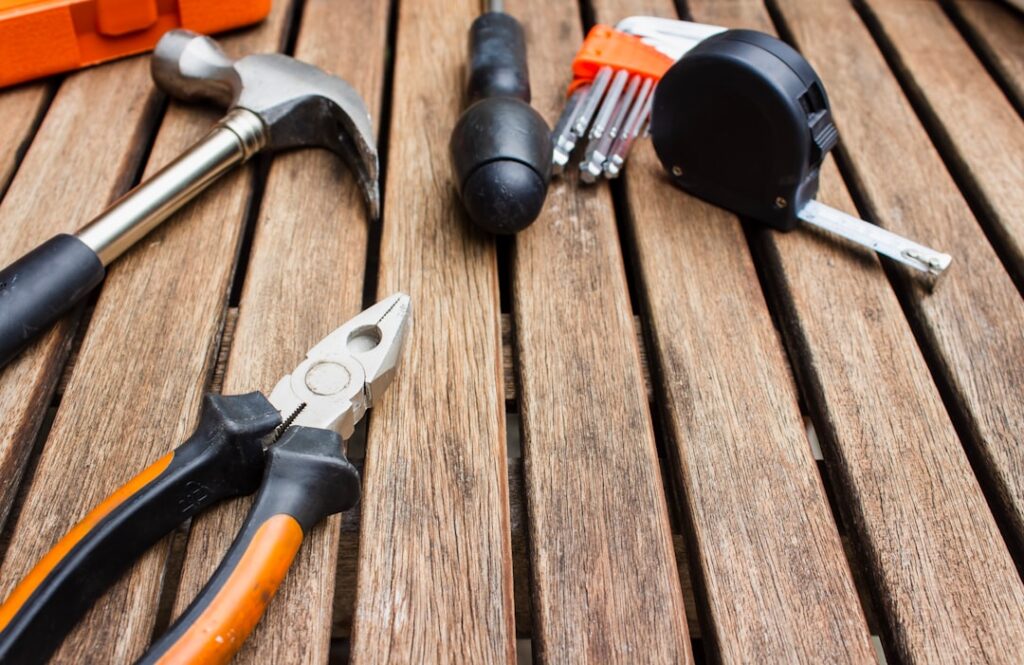
The fastest way to cut the spc flooring installation cost is to do the labor yourself. Floating click-lock SPC is among the most DIY-friendly floors: acclimate the boxes 48 hours, level the subfloor, lay a starter row with spacers for a 1/4 inch expansion gap, and click each plank in with a tapping block. A confident homeowner can floor a bedroom in a day with a $50 tool kit. Buy a padded plank to skip underlayment, shop closeout colors for premium wear layers at budget prices, and reuse existing baseboards to trim the finish cost.
What Drives the Price Up or Down
Two identical-size rooms can quote thousands apart, and the difference almost always traces to a handful of factors. Plank quality is the obvious one: a 30 mil premium plank costs three times a 12 mil budget plank. But labor variables move the number just as much. A house full of small rooms, closets, and doorways generates far more cuts and transitions than one open space of the same square footage, so the per-foot labor rate climbs. Diagonal and herringbone layouts add 15% to 30% to both material waste and labor time.
Removal of old flooring, especially glued-down tile or carpet with tack strips, adds $1 to $2 per square foot. Stairs, radiator cutouts, and heavy furniture that must be moved all show up as line items. Getting three itemized bids lets you see exactly where each installer’s number comes from and where you can trim scope, such as handling furniture and old-floor removal yourself.
SPC vs. Other Floors on Total Cost
Put next to its rivals, SPC lands in the value sweet spot. It installs for less than nailed hardwood ($6 to $12 per square foot installed) and glue-down luxury vinyl tile, roughly matches laminate on labor, and often needs less subfloor prep than flexible sheet vinyl because the rigid core bridges minor imperfections. Ceramic and porcelain tile cost far more to install, $10 to $20 per square foot, once you factor mortar, grout, and the skilled labor of setting each piece. For a waterproof floor that a homeowner can install over a weekend, SPC delivers the lowest realistic total cost of any hard-surface option.
Frequently Asked Questions
What is the average SPC flooring installation cost?
Professionally installed SPC runs $5 to $10 per square foot all in, combining $1.50 to $6.50 for material and $2 to $5 for labor. A DIY floating install drops the total to $3 to $6 per square foot since you skip labor.
Do I need underlayment for SPC?
Only if your plank lacks a pre-attached pad. Padded SPC installs directly on the subfloor, while padless planks need a thin SPC-rated underlayment at $0.30 to $0.60 per square foot. Never stack two layers of padding.
Is SPC cheaper to install than laminate or hardwood?
Yes, generally. Floating SPC installs faster than nailed hardwood and rivals laminate on labor, and its rigid core often needs less subfloor prep than flexible vinyl, keeping total costs lower than most wood options.
Does floating or glue-down SPC cost more to install?
Glue-down costs more. It adds roughly $0.50 to $1.25 per square foot in adhesive and $1 to $2 per square foot in labor over a floating install. Most homes use floating SPC; glue-down is reserved for very large rooms, radiant-heat slabs, and commercial rolling loads where a floating floor is not ideal.
How much extra material should I order?
Buy 8% to 10% overage for standard straight-lay rooms and 15% for diagonal or herringbone patterns, which generate more offcuts. Keeping a few spare planks also lets you replace a damaged board later.
Prefer to explore on your own?
See how new flooring looks in your actual room in seconds — free, no signup.
Try the free Floor Studio →