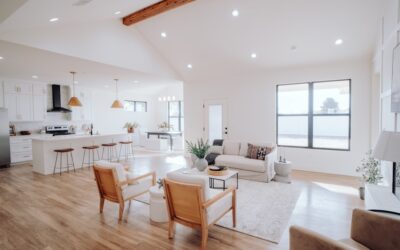
Square-format floors fell out of fashion in the early 2000s when wood-look planks took over. Two decades later they’re back hard, this time in larger sizes, better materials, and more sophisticated patterns. Square flooring covers everything from 24-inch porcelain tiles in modern lobbies to 18-inch parquet panels in restored townhouses to 12-inch carpet squares in office overhauls. The format has practical advantages that planks simply can’t match.
- The Major Square Flooring Categories
- Why Square Formats Are Coming Back
- Sizing Matters More Than You Think
- What Square Flooring Costs
- Pattern Layouts to Consider
- Subfloor Requirements That Matter
- Pros That Drive Adoption
- Honest Drawbacks
- Where Square Flooring Wins by Application
- Maintenance and Long-Term Care
- Final Recommendation
The Major Square Flooring Categories
- Porcelain and ceramic tile: Most common. Sizes from 6-inch to 48-inch.
- Parquet wood: 9-inch, 12-inch, 18-inch panels in herringbone, basketweave, or Versailles patterns.
- Carpet tile: 18-inch and 24-inch modular squares for offices and basements.
- Vinyl composition tile (VCT): 12-inch traditional commercial squares.
- Natural stone: Travertine, slate, and granite in 12-inch to 24-inch squares.
- Cork tile: 12-inch squares in glue-down or floating formats.
Why Square Formats Are Coming Back
Pattern flexibility is the biggest reason. Square tiles can be set straight, on a diagonal, in checkerboard, in pinwheel, or in custom medallion patterns. Plank flooring is largely limited to running bond or herringbone. For designers wanting visual interest, squares simply offer more.
Replacement is easier. A damaged 12-inch square is a 12-inch repair. A damaged plank in herringbone is a major operation involving multiple adjacent boards. For commercial and rental settings, this matters more than the design payoff.
Sizing Matters More Than You Think
Small squares (6-inch and 8-inch) read traditional and busy. They work in small bathrooms, mudrooms, and entry foyers. Mid-size (12-inch to 16-inch) is the safest neutral; it works in any room and any style. Large squares (24-inch and up) read modern and luxurious; they need flat subfloors and benefit from 1/16-inch grout joints.
Match scale to room size. A 24-inch tile in a 5-by-8 bath looks oversized. A 6-inch tile in a 20-by-30 great room looks fussy. Use the room’s longest wall as a guide; tiles between 1/8 and 1/15 of that dimension usually look right.
What Square Flooring Costs
Porcelain tile material runs $2 to $15 per square foot. Installation labor is $7 to $14 for standard sizes; large-format (over 24 inches) hits $11 to $18 because of leveling complexity. Carpet tile runs $3 to $9 per sq ft material plus $1 to $2 install. Parquet wood squares cost $7 to $22 material plus $5 to $9 install due to the angled cuts and pattern layout.
For a 600 sq ft project in mid-range 18-inch porcelain at $6 material plus $10 install, expect $9,600 turnkey. Carpet tile in a 1,000 sq ft basement at $5 material plus $1.50 install lands at $6,500.
Pattern Layouts to Consider
- Straight set: Tiles aligned in a grid. Simplest, most modern.
- Diagonal: Rotated 45 degrees. Hides crooked walls and feels more dynamic.
- Checkerboard: Two tile colors alternating. Classic and timeless when scaled appropriately.
- Pinwheel: Mixed sizes interlocking. More complex install but very designer.
- Versailles: Square panels with intricate interior pattern. Premium look, premium price.
Subfloor Requirements That Matter
Large-format squares (24-inch and up) demand flat subfloors. Tile manufacturers spec 1/8-inch flatness over 10 feet for tiles 15 inches and larger; cheaper installs cause “lippage” where tile edges sit higher than neighbors. Self-leveling underlayment costs $2 to $4 per sq ft and is often non-negotiable for premium installs.
Parquet panels need plywood or engineered subfloors fastened every 6 inches along seams. Carpet squares can install over almost anything but benefit from a clean, dust-free surface for adhesive bond.
Pros That Drive Adoption
Modular replacement is a real win for commercial spaces. Carpet tile in a 5,000 sq ft office can have damaged areas replaced overnight by janitorial staff. The same task in broadloom carpet is a weekend operation.
Visual options multiply with squares. Mixing two or three colors of carpet tile creates color-blocking patterns that broadloom can’t match. Mixing two tile sizes creates visual texture that planks can’t deliver.
Honest Drawbacks
Grout lines matter more on squares than planks. With wood-look plank flooring, grout (or lack thereof) is barely visible. With 18-inch porcelain squares, grout becomes a major design element. Choose grout color carefully; samples on the actual tile are essential before committing to 60+ sq ft.
Larger formats also magnify subfloor flaws. Any high spot, low spot, or dust under a 24-inch tile shows up as lippage or hollow spots. Prep work that’s optional with planks is mandatory with squares.
Where Square Flooring Wins by Application
Bathrooms favor squares because the format handles drains, transitions, and tight cuts better than planks. Kitchens often use squares for the same reason, plus the durability under spills. Commercial offices use carpet tile near-universally for replacement convenience. Garages, mudrooms, and basements use VCT or porcelain squares for moisture and abuse resistance.
Plank flooring still dominates living rooms, bedrooms, and hallways where the long-line look feels more residential.
Maintenance and Long-Term Care
For tile, sweep or vacuum weekly and damp mop with pH-neutral cleaner. Reseal grout every 18-24 months to prevent staining. For carpet tile, vacuum twice weekly in commercial settings and spot-clean spills immediately with a tile-safe carpet cleaner like Capture Clean or Folex.
Replace damaged tiles with stored extras. Order 10-15% overage at install and store in a climate-controlled space. Production runs change formulas; matching 5 years later from current stock often produces visible mismatches.
Final Recommendation
If you want pattern flexibility, easy modular replacement, or a more design-forward floor than planks deliver, square flooring is genuinely the right call. Match scale to room size, prep your subfloor properly, and choose grout colors with intent. Done thoughtfully, square-format floors look fresh in 2026 and will still look current in 2046.
Prefer to explore on your own?
See how new flooring looks in your actual room in seconds — free, no signup.
Try the free Floor Studio →