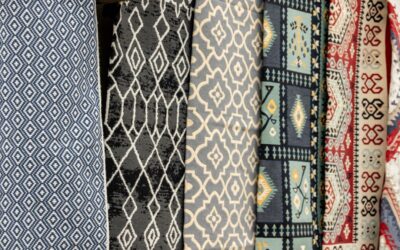
Carpeting your stairs is one of the most impactful home improvements you can make. It reduces noise, adds safety by providing traction, protects the stair treads underneath, and creates a finished look that ties together the upper and lower levels of your home. But choosing carpet for stairs is different from choosing carpet for a flat room because stairs face unique wear patterns, safety requirements, and installation challenges.
- Runner vs Wall-to-Wall Stair Carpet
- Best Carpet Fibers for Stairs
- Nylon: The Top Choice
- Wool: The Premium Option
- Polyester: Budget Friendly but Compromised
- Olefin: Not Recommended for Stairs
- Best Pile Types for Stairs
- Loop Pile (Berber): The Best for Stairs
- Cut-Loop (Pattern): A Good Compromise
- Textured Cut Pile: Acceptable
- Plush and Saxony: Not Ideal
- Safety Considerations
- Installation Methods
- Cost Per Step
- Maintaining Stair Carpet
- When to Replace Stair Carpet
This guide covers everything you need to know about stair carpet, from selecting the right fiber and pile type to understanding installation methods and calculating costs.
Runner vs Wall-to-Wall Stair Carpet
The first decision you will face is whether to carpet the stairs wall-to-wall or install a runner that leaves exposed wood on either side. Both approaches have distinct advantages.
Wall-to-Wall Stair Carpet
Wall-to-wall carpet covers the entire stair tread and riser from one side to the other. It provides maximum coverage, noise reduction, and protection for the underlying stairs. This is the more common approach in most homes and is generally less expensive than a runner because it does not require finished edges.
Wall-to-wall works best when the stairs underneath are made of plywood, MDF, or construction-grade lumber that is not attractive enough to display. It also makes sense when the stairway is enclosed between walls on both sides, as there are no exposed edges to finish.
Stair Runners
A stair runner is a strip of carpet installed down the center of the stairs, typically leaving 3 to 4 inches of exposed wood on each side. Runners create a more formal, decorative look and are the better choice when the stairs are made of attractive hardwood that you want to showcase.
Runners require the carpet edges to be finished, either by serging (binding with thread), using a pre-finished border, or folding under and tacking. The exposed wood on either side must be stained, painted, or finished to complement the runner. These additional finishing requirements add to the total cost.
Stair runners can be held in place with stair rods, which are decorative metal bars that cross each step and secure the runner in the crook where the tread meets the riser. Stair rods add an elegant, traditional look and cost $15 to $40 per rod depending on the material and finish. A full staircase typically needs one rod per step, so budget $200 to $600 for a complete set.
Best Carpet Fibers for Stairs
Stairs are one of the highest-traffic areas in any home. Every trip up or down concentrates foot traffic on the same narrow path, and the pivoting motion of feet on stair treads creates more friction and wear than walking on a flat surface. This means fiber selection matters more on stairs than in any other room.
Nylon: The Top Choice
Nylon is the recommended fiber for stair carpet by virtually every flooring professional. It offers the best combination of durability, resilience (the ability to bounce back after being compressed), and abrasion resistance. Nylon carpet on stairs will maintain its appearance for 10 to 15 years in a typical household.
Solution-dyed nylon (branded products like Stainmaster or Anso) is the premium tier, offering built-in color that resists fading and bleaching from sunlight or cleaning chemicals. This is especially important for stairs near windows or entry doors where sun exposure is common.
Wool: The Premium Option
Wool carpet has been used on stairs for centuries and remains an excellent choice. Wool fibers are naturally resilient, flame-resistant, and soil-resistant. Wool carpet maintains its appearance and texture longer than most synthetic options and has a luxurious feel that synthetics cannot match.
The downside of wool is cost. Wool stair carpet typically costs $8 to $15 per square foot for the material alone, compared to $3 to $6 for quality nylon. Wool is also more susceptible to moisture damage and requires professional cleaning rather than DIY methods. For high-end homes where budget is secondary to quality and aesthetics, wool is the definitive choice.
Polyester: Budget Friendly but Compromised
Polyester (PET) carpet is soft and available at lower price points, but it is not ideal for stairs. Polyester fibers lack the resilience of nylon and will mat and crush in high-traffic areas faster than any other common fiber. If you use polyester on stairs, expect visible wear patterns within 3 to 5 years.
PTT polyester (Triexta, branded as SmartStrand by Mohawk) performs better than standard PET polyester and is acceptable for stairs in low-traffic homes. It is softer than nylon and has excellent stain resistance, but it still does not match nylon’s durability on stairs over the long term.
Olefin: Not Recommended for Stairs
Olefin (polypropylene) is the least expensive carpet fiber and the worst choice for stairs. It mats, crushes, and stains permanently from oily substances. Olefin belongs in low-traffic areas, outdoor applications, or temporary situations. Never install olefin carpet on stairs if you want it to last more than a couple of years.
Best Pile Types for Stairs
Pile type affects how stair carpet wears, how it looks, and how safe it is underfoot. Not all pile types are equally suited for stair use.
Loop Pile (Berber): The Best for Stairs
Loop pile carpet, including Berber style, is widely considered the best pile type for stairs. The uncut loops create a dense, durable surface that resists matting and crushing better than cut pile. Loop carpet shows footprints and vacuum marks less than plush styles and maintains a consistent appearance over years of heavy use.
The tight, flat surface of loop pile also provides excellent traction on stairs, which is an important safety consideration. Choose a level loop (all loops the same height) rather than a multi-level loop for stairs, as multi-level loops can snag and unravel more easily on stair edges.
Cut-Loop (Pattern): A Good Compromise
Cut-loop carpet combines cut and looped fibers in a pattern that creates visual texture and interest. This style works well on stairs because the loop portions provide durability while the cut portions add softness. Patterned cut-loop carpet also helps hide wear and soiling, which is advantageous in a high-traffic area.
Textured Cut Pile: Acceptable
Textured cut pile (also called trackless or twist) has fibers that are cut and then twisted tightly, creating a surface that resists showing footprints and vacuum marks. It is softer than loop pile and reasonably durable on stairs. This is a good middle ground if you want more softness than loop pile provides.
Plush and Saxony: Not Ideal
Plush (velvet) and Saxony cut pile carpets have straight, upright fibers that show every footprint, vacuum mark, and traffic pattern. On stairs, these styles will quickly develop visible wear paths down the center of each tread. They also offer less traction than loop or textured styles. Avoid plush and Saxony on stairs unless appearance is your only priority and you plan to replace the carpet frequently.
Safety Considerations
Stair carpet directly affects the safety of everyone who uses the stairs, including children, elderly family members, and pets. Several factors contribute to stair carpet safety.
Traction. The carpet surface must provide adequate grip for both socked feet and shoes. Loop pile and textured styles generally offer better traction than smooth plush styles. Avoid very long pile (shag or frieze) on stairs because it can be slippery and creates an unstable surface.
Secure installation. Loose or poorly secured stair carpet is a serious tripping hazard. Every tread must be tightly stretched and fastened. There should be no bubbles, wrinkles, or loose edges anywhere on the staircase. Professional installation is strongly recommended for stairs specifically because of the safety implications.
Padding thickness. Stair padding should be thinner and denser than typical room padding. A 3/8-inch thick pad with 8-pound density is standard for stairs. Thicker, softer padding creates an unstable surface on stairs and can make the carpet feel squishy underfoot, which reduces traction and increases fall risk.
Visibility. On open staircases, the carpet should clearly define the edge of each tread. Solid colors or small patterns work best. Large, busy patterns can make it difficult to see where one step ends and the next begins, especially in low light.
Installation Methods
Stair carpet installation is more labor-intensive than flat-room installation and requires specific techniques.
Waterfall Method
The waterfall method drapes the carpet over the nose (front edge) of each step and straight down the riser to the next tread. This creates a smooth cascade effect and is the simplest installation method. It works best with thinner carpet and is common in builder-grade installations. The carpet is not stretched tightly into the crook between tread and riser, so it may wear faster at the nose of each step.
Cap and Band Method (Hollywood Style)
The cap and band method wraps the carpet tightly over the stair nose and tucks it into the crook between the tread and riser using tack strips. This creates a tighter, more tailored fit that follows the profile of each step more closely than the waterfall method. It requires more skill and labor but produces a more professional result and tends to last longer because the carpet is under tension at the stress points.
French Cap Method
The French cap method is a variation where the carpet wraps around the stair nose and is stapled or tacked to the underside of the tread, creating a finished look on open staircases where the underside of each step is visible. This is the most labor-intensive method and is typically used on formal or decorative staircases.
Cost Per Step
Stair carpet costs are typically quoted per step rather than per square foot because the labor involved is disproportionate to the small amount of carpet used on each step.
- Wall-to-wall, basic installation: $10 to $20 per step. Includes carpet, padding, and labor using the waterfall method.
- Wall-to-wall, premium installation: $15 to $30 per step. Uses cap and band method with better carpet and padding.
- Stair runner, standard: $20 to $35 per step. Includes carpet, edge finishing, and installation. Does not include stair rods.
- Stair runner with stair rods: $35 to $45 per step. Includes everything above plus decorative stair rods.
- Stair rods only: $15 to $40 each depending on material (brass, chrome, iron, wood).
A standard staircase with 13 to 16 steps will cost approximately $130 to $320 for basic wall-to-wall carpet, $260 to $560 for a standard runner, or $455 to $720 for a runner with stair rods.
Maintaining Stair Carpet
Stair carpet requires more frequent maintenance than carpet in other areas because of concentrated foot traffic.
Vacuum stairs at least twice a week. Use a handheld vacuum or a canister vacuum with an upholstery attachment rather than dragging a heavy upright vacuum up the stairs. Some cordless stick vacuums have specific stair attachments that make this task easier.
Address stains immediately. Stairs are prone to spills from people carrying drinks between floors. Blot (do not rub) spills immediately with a clean white cloth and a carpet-appropriate cleaning solution. The longer a stain sits, the harder it becomes to remove, and this is especially true on stairs where the carpet is under more physical stress.
Have stair carpet professionally cleaned every 12 months, compared to the 18-month interval suitable for most room carpet. The concentrated traffic on stairs means soil buildup accelerates faster.
Rotate your stair runner if your design allows it. Some runners can be shifted up or down by a few inches every couple of years to distribute wear more evenly. This works only if the runner is secured with stair rods rather than being permanently tacked in place.
When to Replace Stair Carpet
Stair carpet typically needs replacement before other carpet in the house because of the higher wear rate. Signs that your stair carpet needs replacing include visible wear paths on treads, matted or crushed fibers that no longer spring back after vacuuming, fraying at the stair nose, loose carpet that moves underfoot, or visible padding or subfloor through worn areas.
When one or two steps show significantly more wear than the others, you can sometimes extend the life of a stair runner by having a professional shift the runner position so that a fresher section covers the worn steps. This is only practical with runner-style installations.
For complete guidance on choosing carpet fibers, styles, and comparing brands for any area of your home, visit our carpet flooring guide.