Two steel roofs can look identical in the driveway and age twenty years apart — because everything that determines how long steel lasts is invisible: the substrate coating, the steel gauge, and the paint chemistry. Steel roofing accounts for the vast majority of metal roofs installed in the US, and buying it well comes down to reading a spec sheet correctly. This guide decodes Galvalume versus galvanized, what gauge numbers actually mean, and why the three letters “PVDF” are worth real money.
How a Steel Roof Panel Is Built
Every painted steel panel is a sandwich: a carbon steel core, a metallic anti-corrosion coating bonded to both sides, a primer, and a paint topcoat. Steel itself would rust in a season; the metallic coating is what buys decades, and the paint protects the coating while providing color. When you compare quotes, you are really comparing four layers — and the cheapest bid usually thins one of them.
Galvalume vs. Galvanized: The Substrate Decision
The metallic coating comes in two chemistries. Galvanized steel is dipped in zinc, graded by coating weight — G60 (0.60 oz of zinc per square foot) or the better G90 (0.90 oz). Zinc protects sacrificially: it corrodes instead of the steel, which makes galvanized forgiving at cut edges and scratches, but the zinc depletes steadily, giving G90 roughly 20 to 40 years depending on climate.
Galvalume — the AZ50/AZ55 spec — coats the steel with 55 percent aluminum, 43.4 percent zinc, and a little silicon. The aluminum forms a stable barrier while the zinc still self-heals minor scratches, and in field studies Galvalume outlasts G90 galvanized by two to four times in the same exposure. Nearly all quality residential panels today are Galvalume, and it is what you should specify, with two exceptions. First, animal-confinement buildings: ammonia attacks Galvalume, so barns housing livestock still use galvanized. Second, coastal salt spray within about 1,500 feet of breaking surf, where aluminum panels beat both steel options. One more rule either way: never let treated lumber, mortar, or concrete sit in direct contact with the panels — the chemistry eats both coating types.
Gauge: What the Numbers Really Mean
Steel gauge runs backward — smaller numbers are thicker metal:
- 29 gauge (~0.014 in): the ag-panel standard; fine on purlin-framed barns, flimsy for homes. Cheapest by $0.30 – $0.50 per sq ft.
- 26 gauge (~0.019 in): the residential sweet spot for exposed-fastener panels — noticeably stiffer, better hail and foot-traffic tolerance.
- 24 gauge (~0.024 in): the standard for quality standing seam; resists oil-canning (the visible waviness in flat pan areas) and carries most high-wind engineering.
- 22 gauge: commercial and structural applications; rarely needed on houses.
Beware bids that say “metal roof” without a gauge. The jump from 29 to 26 gauge costs roughly 10 to 15 percent on materials and is the best value upgrade in steel roofing; 24 gauge matters most on standing seam and in hail country.
Paint Systems: PVDF vs. SMP vs. Polyester
Paint chemistry determines whether your roof still matches its color in year twenty. Three tiers dominate:
- PVDF (Kynar 500 / Hylar 5000): the premium fluoropolymer system. Exceptional fade and chalk resistance — 30 – 40 year finishes with warranties to match. Adds $0.50 – $1.00 per sq ft over basic paint. Specify it on any roof you’ll see from the street.
- SMP (silicone-modified polyester): the mid-tier workhorse on 26- and 29-gauge panels. Good hardness and scratch resistance, moderate fading over 15 – 25 years, especially in dark colors and strong UV climates.
- Plain polyester: entry-grade; chalks and fades within a decade of hard sun. Acceptable on a shed, not a home.
Bare (unpainted) Galvalume is its own legitimate option — a bright spangled silver that weathers to matte gray, costs less than any paint system, and is popular on farmhouse-modern builds. Also favor light and reflective colors where cooling bills matter; a “cool roof” pigmented PVDF panel can shave 10 to 20 percent off summer air-conditioning loads.
Panel Profiles and Installed Costs
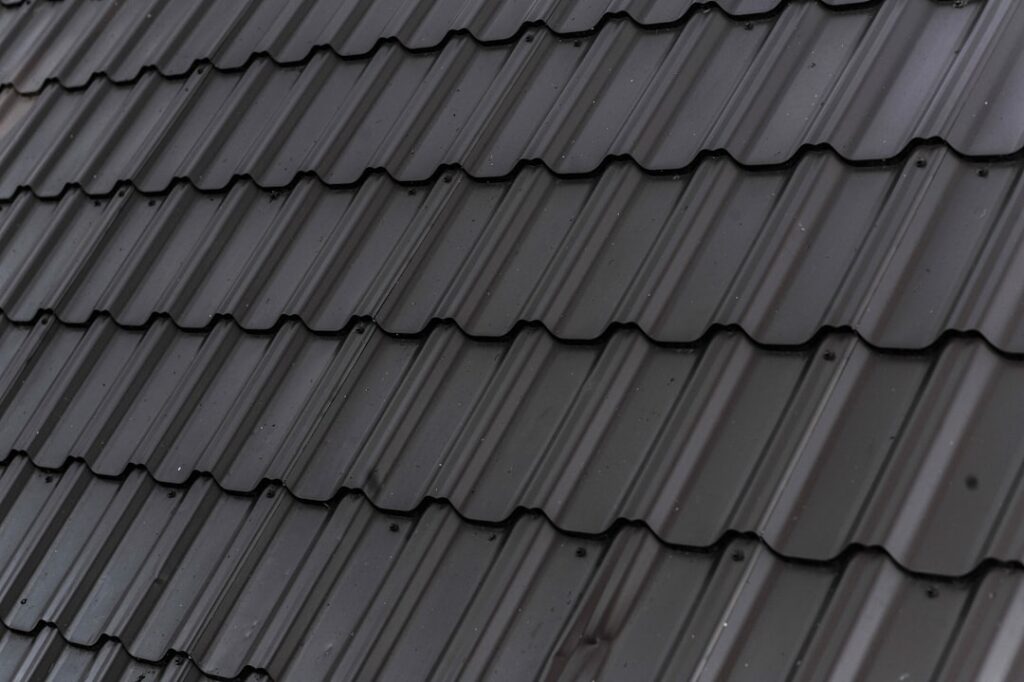
Steel arrives in two structural families. Exposed-fastener panels — corrugated, ribbed R-panel and similar — screw through the face and install fast: $4 to $8 per square foot installed, with the caveat that hundreds of gasketed screws need retightening or replacement around years 10 to 15. Our corrugated metal roofing guide covers that family in depth. Standing seam panels hide the fasteners under interlocked vertical seams, ride on clips that allow thermal movement, and install for $9 to $16 per square foot — the buy-once option. In between, stone-coated steel shingles and shakes run $9 to $14 installed and hide steel inside traditional shapes. For a full walkthrough of profiles across every metal, see our metal roofing pillar guide.
Performance: Where Steel Earns Its Keep
Steel is the toughest mainstream roofing per dollar. Quality panels carry Class 4 impact ratings — worth 5 to 30 percent insurance discounts in hail states — plus Class A fire assemblies and wind ratings from 120 to 180 mph when fastened to the engineered schedule. Snow slides off standing seam readily (order snow guards above doorways), and at roughly 1 to 1.5 pounds per square foot, steel is light enough to overlay a single shingle layer where code allows, deleting tear-off costs. Realistic lifespans: 25 to 40 years for painted 29-gauge exposed-fastener panels, 40 to 60+ for 24-gauge Galvalume standing seam with PVDF paint.
Two performance myths are worth killing. Steel roofs are not loud in rain when installed over solid decking and underlayment — the drum effect belongs to open-purlin barn construction, not houses. And they do not make a home hotter; bare and light-colored steel reflects more solar energy than dark asphalt shingles, and above-sheathing ventilation under standing seam actively sheds heat. Condensation is the real physics issue to manage: on open-framed structures, order panels with a factory anti-condensation fleece or install them over a vapor-managing synthetic underlayment, or warm humid air will drip off the cold steel underside every clear night.
Maintenance and the Long Game
Steel asks little, but the little matters. On exposed-fastener roofs, plan a fastener check around year 10 to 12: the EPDM washers under the screw heads compress and UV-harden, and a few hundred dollars of re-driving or upsizing screws (a #12 replaces a backed-out #9 in the same hole) buys another decade of dry decking. Standing seam deletes that chore entirely — its clips and seams have no gaskets to age — which is a large share of what the price premium buys. On any steel roof, touch up deep scratches that reach bare metal with the manufacturer’s paint pen, keep dissimilar metals apart (copper wire, treated-lumber contact, and even masonry wash water all attack the coating), and rinse valleys in low-rain climates where corrosive grime accumulates.
Watch the cut edges. Field-cut panel ends expose raw steel, and while Galvalume self-protects small edges well, sloppy cutting with an abrasive blade embeds hot steel filings that rust as freckles across the panel face within a season. Insist that crews cut with shears or nibblers and sweep swarf off the roof daily — it is the most common cosmetic complaint on new steel roofs and entirely preventable.
The Spec to Ask For
Cut through the sales fog by requiring the quote to state five things in writing: substrate (AZ50/AZ55 Galvalume unless you have livestock or surf), gauge (26 minimum exposed-fastener, 24 for standing seam), paint system (PVDF/Kynar on any visible roof), underlayment (high-temp synthetic), and the fastener/clip schedule with its wind rating. A contractor who can fill in those five blanks without hesitation is the one who should be on your roof — and a bid missing them is cheap for a reason you’ll discover in year twelve. Ask for the paint warranty document itself, too: a 40-year PVDF film warranty from the coil coater is transferable proof of what you bought, and it only exists on paper.