Running out of space is the most common kitchen complaint, and the fix is often a dedicated storage cabinet for kitchen use, whether that is a tall pantry cabinet, a freestanding cupboard, or a smart base cabinet with pull-outs. The right unit turns cluttered counters and overflowing shelves into organized, accessible storage. This guide compares the main types of kitchen storage cabinets, materials, sizing, costs, and the organization strategies that make any cabinet hold more than you think it can.
- Types of Kitchen Storage Cabinets
- Freestanding Versus Built-In
- Materials and Construction Quality
- Sizing the Cabinet to Your Space
- What It Costs
- Maximizing Storage Inside the Cabinet
- Style and Finish
- Installation Notes
- Common Mistakes to Avoid
- Pantry Cabinet Configurations
- Freestanding Cabinet Placement Ideas
- Buying New Versus Repurposing Furniture
Types of Kitchen Storage Cabinets
- Tall pantry cabinets: Full-height units, usually 84 to 96 inches tall, that provide the most storage in the smallest footprint. Available as built-in cabinetry or freestanding.
- Freestanding cupboards and hutches: Standalone furniture pieces you can place anywhere and take with you when you move. Great for rentals and older kitchens with unused wall space.
- Base cabinets with pull-outs: Standard 24-inch-deep lower cabinets fitted with pull-out shelves, drawers, or a pull-out pantry that brings the back contents to you.
- Utility and broom cabinets: Narrow tall units for brooms, mops, and bulk items.
- Kitchen islands with storage: Add cabinets and drawers in the middle of the room, doubling as prep surface.
Freestanding Versus Built-In
Built-in cabinets integrate seamlessly and maximize every inch, but they are permanent and pricier to install. Freestanding cabinets cost less, install in minutes, and move with you, though they take up floor space and may not match your existing cabinetry exactly. For renters and quick fixes, freestanding wins. For a long-term kitchen you own, a built-in pantry cabinet delivers more storage and a finished look. Many homeowners combine both: built-ins along the main run and a freestanding piece in a breakfast nook or corner.
Materials and Construction Quality
What a cabinet is made of decides how long it lasts under the weight of canned goods and small appliances:
- Solid wood: Most durable and repairable, and the most expensive. Oak, maple, and birch are common.
- Plywood boxes: The sweet spot for cabinetry; strong, holds screws well, resists moisture better than particleboard.
- MDF: Smooth and stable for painted doors, but heavier and less moisture-tolerant.
- Particleboard/melamine: Cheapest, used in budget flat-pack cabinets; fine for light duty but sags under heavy loads and swells if it gets wet.
For a storage cabinet that will hold heavy pantry items, prioritize a plywood or solid-wood box and adjustable shelves rated for the load. Check the shelf thickness; thin shelves bow over time.
Sizing the Cabinet to Your Space
Measure before you buy. Note ceiling height for tall units, and confirm the cabinet fits through doorways and hallways if it ships assembled. Standard depths are 12 inches for uppers and 24 inches for bases and pantries. Common tall-pantry widths are 18, 24, 30, and 36 inches. Leave clearance for doors and drawers to open fully, and remember that a 24-inch-deep cabinet needs enough aisle in front, at least 36 to 42 inches for comfortable use. In tight kitchens, a shallow 12- or 15-inch-deep pantry cabinet can fit where a full-depth one cannot.
What It Costs
Prices span a wide range:
- Budget freestanding cabinets: $80 to $250 at big-box and online retailers.
- Mid-range stock pantry cabinets: $250 to $700.
- Semi-custom built-in pantry cabinets: $700 to $1,800 plus installation.
- Pull-out organizer inserts: $40 to $250 each to upgrade existing cabinets.
Adding pull-out shelves to cabinets you already own is often the highest-value move, dramatically improving access for a small cost.
Maximizing Storage Inside the Cabinet
A cabinet is only as good as how you organize it. Proven strategies:
- Pull-out shelves so you never lose items in the dark back corners.
- Door-mounted racks for spices, foil, and wraps using otherwise wasted door space.
- Adjustable shelves set close together to eliminate wasted vertical air.
- Lazy Susans in corner cabinets to reach everything with a spin.
- Clear bins and labels to group like items and pull out a whole category at once.
- Tiered shelf risers so back rows are visible.
Style and Finish
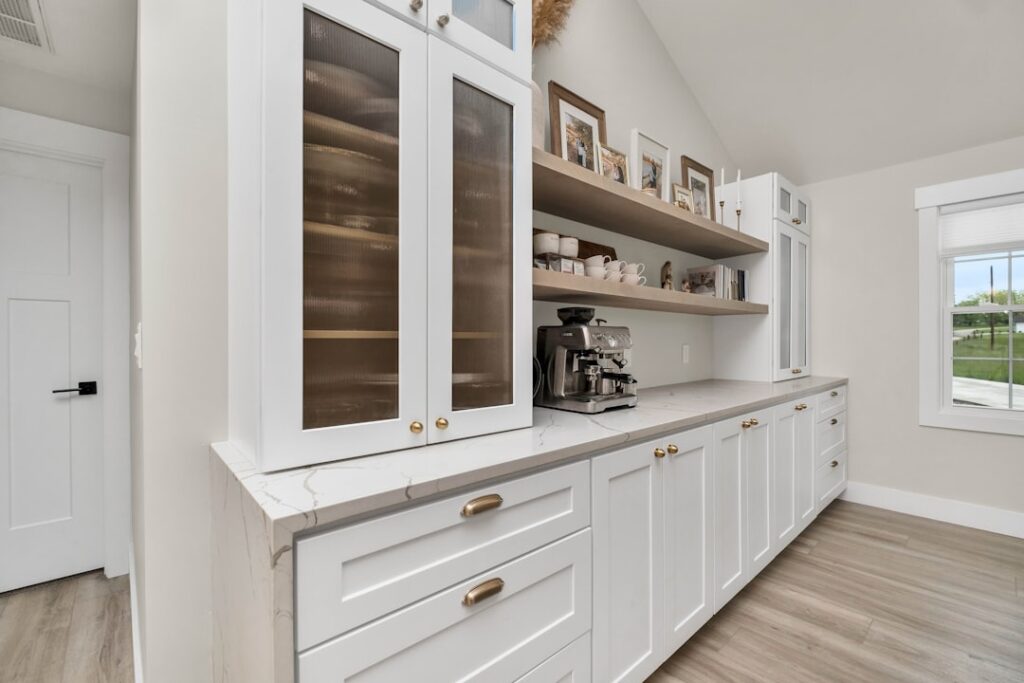
Coordinate the cabinet with your kitchen. If it will sit among existing cabinetry, match the door style and finish as closely as possible, or choose a deliberately contrasting freestanding piece as an accent. Shaker doors in white, sage, or navy remain popular and versatile. Glass-front doors show off dishware but require you to keep contents tidy. Soft-close hinges and full-extension drawer slides are worth the small upcharge for daily comfort.
Installation Notes
Freestanding cabinets usually just need assembly and leveling, plus an anti-tip anchor screwed to a wall stud, which is essential for tall units so they cannot topple. Built-in pantry cabinets follow the same rules as any cabinet install: anchor into studs with structural screws, shim level and plumb, and secure the toe kick. Tall cabinets especially must be plumb or the doors will swing on their own.
Common Mistakes to Avoid
- Buying particleboard for heavy pantry loads and watching shelves sag.
- Ignoring aisle clearance so doors and drawers cannot open fully.
- Skipping the anti-tip anchor on tall cabinets.
- Choosing fixed shelves that waste vertical space.
- Not measuring doorways, then being unable to get the cabinet inside.
Pantry Cabinet Configurations
Tall pantry cabinets come in several internal layouts, and the right one depends on what you store. A fixed-shelf pantry is the simplest and cheapest but forces you to reach into the back. A pull-out pantry with roll-out shelves or a swing-out unit brings everything forward, dramatically improving access, and is worth the upcharge for daily-use food storage. A door-storage pantry adds shelves on the inside of the doors for cans and jars, using otherwise dead space. Corner pantries with lazy Susans capture awkward corner square footage. Think about your habits: if you buy in bulk, prioritize deep adjustable shelves; if you store many small items, choose pull-outs and door racks so nothing disappears into the back.
Freestanding Cabinet Placement Ideas
A freestanding storage cabinet can solve problems a built-in cannot. Tuck a slim cabinet into a breakfast nook for linens and serving pieces, place a hutch on an empty wall for overflow dishware, or roll a butcher-block-top cabinet into the center of the room as a movable island with storage below. In small apartments, a narrow pantry cabinet beside the refrigerator captures the gap that would otherwise go to waste. Because these pieces move with you, they are also a smart investment for renters, who can take the storage to the next home. Just remember the anti-tip anchor on any tall unit, especially in homes with children.
Buying New Versus Repurposing Furniture
You do not always need a purpose-built kitchen cabinet. A sturdy bookshelf, an armoire, a dresser, or a vintage sideboard can serve as characterful kitchen storage, often for less than a new cabinet and with more personality. Add baskets or bins to open shelving to corral loose items, and consider a coat of durable enamel paint to freshen a secondhand piece. The keys are stability, adequate shelf strength for heavy kitchenware, and a surface that wipes clean. Repurposing also keeps a piece out of the landfill and lets you match your kitchen’s style in a way mass-produced cabinets sometimes cannot, making it a budget-friendly and sustainable choice.
The best storage cabinet for a kitchen is the one that fits your space, holds the loads you need, and keeps everything visible and reachable. Prioritize a sturdy plywood box, adjustable and pull-out shelving, and the right size for your aisle, and you will reclaim counters and calm the chaos, whether you install a full built-in pantry or roll in a freestanding cupboard this weekend.