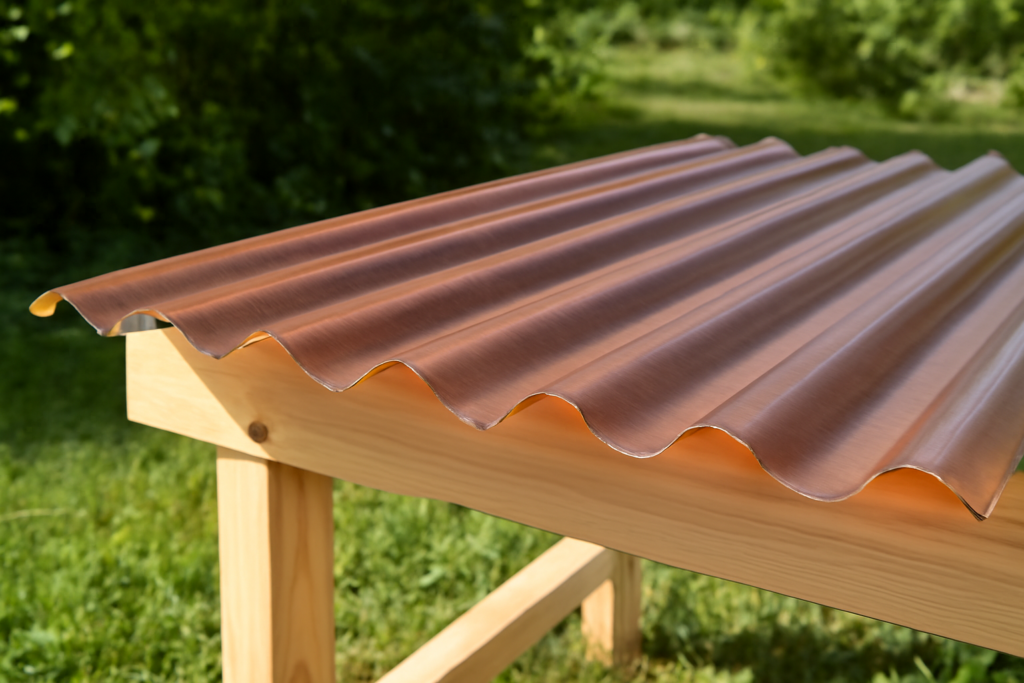
Homeowners shopping for a daylight roof over a patio or deck almost always run into the same choice at the home center: cheap PVC that yellows in a few years, or something tougher that costs more. The suntop corrugated foam polycarbonate roof panel sits squarely in the tougher-and-worth-it camp, and it has become one of the most popular translucent roofing options sold under the Tuftex and Sequentia brands. Made from polycarbonate rather than PVC or fiberglass, it survives hail and foot traffic that would crack lesser panels, carries a real warranty against yellowing, and pairs with matched foam closure strips that make a weathertight roof genuinely achievable for a DIYer. Here is how it stacks up.
What Sets Polycarbonate Apart
Polycarbonate is the same resin used in bulletproof glazing and safety goggles, and it brings roughly 200 times the impact resistance of glass and far more than PVC. That toughness is the headline. A Suntop panel takes a dropped tool, a hailstone, or a fallen branch that would shatter fiberglass or punch through thin vinyl, and it does it across a wide temperature range without turning brittle in winter cold.
Just as important for a roof that faces the sun all day, Suntop panels carry a co-extruded UV-protective layer and a limited warranty against excessive yellowing, commonly around 20 years on the light-transmission side and a shorter term against breakage. Cheap PVC has no such coating, which is why it clouds and cracks so quickly. That difference in longevity is the core reason to spend more here.
Panel Sizes and Coverage
Suntop corrugated panels use the same familiar round-wave profile as classic corrugated metal, so they nest and lap cleanly. Sheets are about 26 inches wide, delivering roughly 24 inches of net coverage after one corrugation of side overlap, and are sold in 8, 10, and 12-foot lengths so most patio depths take a single continuous panel.
- Panel width: about 26 inches nominal, near 24 inches net coverage.
- Lengths: commonly 8, 10, and 12 feet.
- Thickness: roughly 1 mm, light enough to carry one-handed but rigid across framing.
- Colors: clear, smoke, white opal, and tinted options that pass varying amounts of light.
Because the profile matches standard corrugated metal, you can mix a polycarbonate skylight strip into a metal patio roof for daylight without changing your fastening pattern, which is a genuinely handy trick.
Light, Heat, and Comfort
Light transmission depends on color. Clear panels pass roughly 90 percent of visible light for a bright, glassy feel; white opal drops that to around 25 to 35 percent for soft shade with much less glare; smoke and tinted versions sit in between and knock down solar heat gain. For a patio where you want to sit comfortably on a July afternoon, the opal or smoke panels are usually the smarter pick because they cut the greenhouse effect while still lighting the space.
Polycarbonate also handles heat better than PVC. It holds its shape and rigidity at higher temperatures and does not soften or warp as readily on a hot roof, which matters on low-slope patio covers where surface temperatures climb well past 120°F.
The Matched Foam Closure System
The detail that makes Suntop panels install cleanly is the profile-matched foam closure strip. These pre-cut foam pieces fill the gap between the wavy panel and the flat framing at the eave, ridge, and wall, blocking wind-driven rain, insects, and blowing debris. Buying the closures cut to the exact Suntop profile, rather than trying to improvise, is what turns a leaky-looking translucent roof into a tight one.
Install the closures under the panel at supports and use the horizontal wood-grain closures against the house wall. Skipping them is the single most common mistake homeowners make, and it is why some translucent patio roofs whistle in the wind and drip at the top edge.
Fastening It Correctly
As with any corrugated translucent panel, drive screws through the crown of the wave, never the valley. Use the color-matched Suntop or Tuftex screws with sealing washers, and pre-drill each hole about 1/8 inch oversized so the panel can expand and contract; polycarbonate has a notable thermal movement, and pinning it tight causes buckling.
Space purlins 24 inches on center for typical loads, tightening to 16 to 20 inches where snow load is a factor. Fasten every other corrugation at intermediate supports and every corrugation at the ends. Keep a minimum slope of about 2:12 so water sheets off the round profile instead of pooling in the valleys and finding the fastener holes.
Cost and Value
Expect to pay roughly $2.50 to $6 per square foot for Suntop panels depending on color and length, which puts them above basic PVC but well under glass or standing-seam metal. A 10-by-12-foot patio cover in panels alone lands somewhere around $150 to $350, before framing and hardware.
The value case rests on longevity. Where a $2-per-square-foot PVC roof might need replacing in 6 to 10 years as it yellows and cracks, a polycarbonate roof commonly runs 15 to 20 years while holding its clarity. Spread over that lifespan, the higher upfront cost usually works out cheaper, and you avoid tearing off and redoing the roof twice.
Who Should Buy It
A suntop corrugated foam polycarbonate roof panel is the right call for a patio, deck, carport, or greenhouse roof that faces real sun, real hail, or a homeowner who simply does not want to redo the job in a few years. Choose clear if maximum brightness matters, opal or smoke if comfort and glare control come first. Buy the matched foam closures and the manufacturer’s screws, respect the oversized pilot holes and 2:12 minimum slope, and you will have a bright, tough, weathertight roof that outlasts anything else in its price class.
The only reasons to skip it are budget-driven. If the structure is temporary, deeply shaded, or purely utilitarian like a firewood shelter, cheaper PVC will do. For anything you will look at and sit under for a decade or more, the polycarbonate upgrade is money well spent.
Framing and Slope Requirements
Suntop panels reward a well-built frame, and the purlin spacing directly controls how the roof handles wind and snow. For typical loads, run supporting purlins at 24 inches on center; in snow country, tighten that to 16 to 20 inches so the panels do not deflect and pond water in the corrugations. Lay the purlins perpendicular to the panel run so each panel bridges several supports and stays rigid across its length.
Slope is just as important. Hold a minimum pitch of about 2:12 so water sheets off the round corrugations rather than sitting in the low waves and finding the fastener holes. Where the roof abuts the house, install horizontal wall flashing over the top edge of the panels and tuck it under the siding, and seat the profiled foam closure between the panel and the wall. That closure detail is what keeps wind-driven rain and insects from entering at the top of the roof, and it is the step DIYers most often skip.
Cutting and Handling the Panels
Polycarbonate cuts cleanly if you use the right approach, and rushing this step is how panels crack. For straight cuts, use a fine-tooth circular saw blade, ideally one rated for plastics or a plywood blade run at moderate speed, and support the panel fully on both sides of the cut so it cannot flex and chip. For curves and notches around posts, a jigsaw with a fine blade works well, and short trims can be done with heavy aviation snips.
Handle the sheets carefully in wind, since a lightweight 12-foot panel becomes a sail that can crack or blow off a ladder. Keep the protective film on until the panel is fastened, then peel it, because the film shields the UV-coated surface from scratches during handling. Store spare panels flat and out of direct sun. With clean cuts, oversized pilot holes, and the matched closures in place, a Suntop roof goes together quickly and holds its clarity for the better part of two decades.