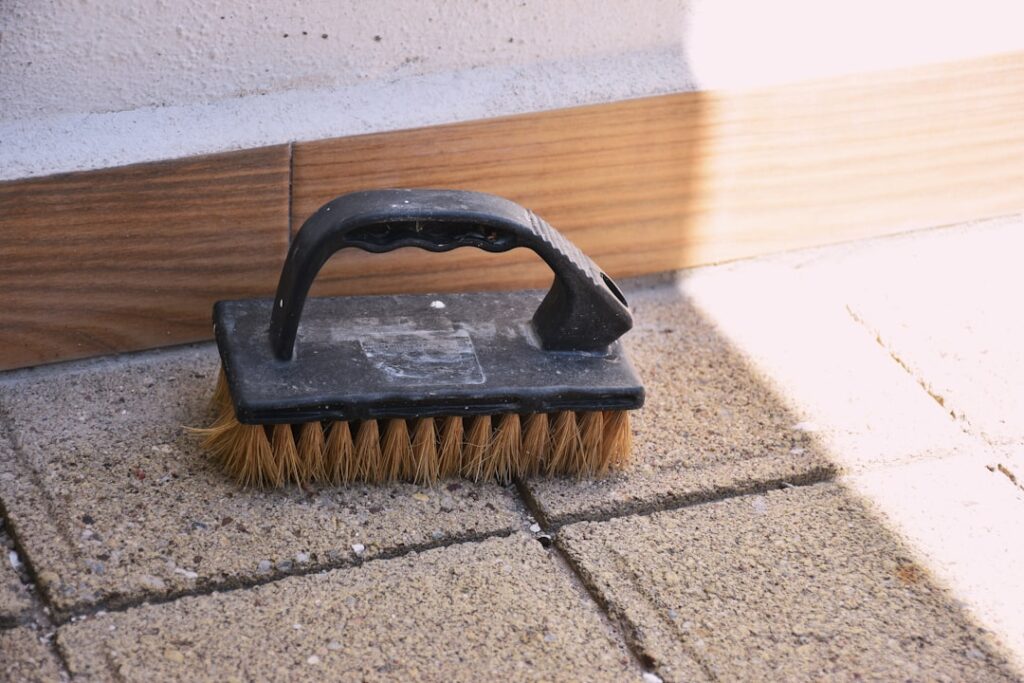
Scrubbing grout with a stiff hand brush leaves your knuckles raw and your corners still dirty. A swivel grout brush fixes both problems by putting a pivoting head on a long handle, so the bristles flex to follow the grout line and reach into corners without you crouching over the floor. For anyone tired of scrubbing tile joints on hands and knees, this simple tool turns a miserable chore into a standing, arm-driven job that actually gets the joints clean.
- What Makes a Swivel Grout Brush Different
- Key Features to Look For
- Top Picks by Use Case
- Best for Floors: Long-Handle Pivot Brush
- Best for Showers and Walls: Compact Swivel Brush
- Best Budget Option: Multi-Head Swivel Set
- How to Use a Swivel Grout Brush
- Common Mistakes to Avoid
- Cost and What to Budget
- Manual vs Powered Swivel Brushes
- Caring for Your Brush
- Final Thoughts on the Swivel Grout Brush
What Makes a Swivel Grout Brush Different
The defining feature is the pivoting head. A fixed brush hits a grout line at whatever angle your wrist happens to be holding, which means the bristles only contact part of the joint. A swivel head rotates to align the bristles flat against the grout, so the full width of the brush does the work on every stroke. Add a long or extendable handle and you clean floor grout upright instead of hunched over, saving your back and your knees.
Most swivel grout brushes also use stiff nylon bristles arranged in a narrow profile that fits into the recessed grout channel below the tile surface. That shape is what lets the bristles dig into the joint rather than skating across the tile faces on either side.
Key Features to Look For
Not all swivel brushes are built the same. A few details separate the ones worth buying from the ones that break in a month.
- Bristle stiffness: Firm nylon bristles clean effectively without scratching glazed tile. Avoid metal bristles on anything but unglazed stone, since they scratch ceramic and porcelain.
- Handle length and reach: An extendable pole, often 40 to 55 inches, lets you clean floors standing up. A shorter handle is fine for backsplashes and shower walls.
- Swivel range: A head that pivots a full range and locks flat against the surface cleans more consistently than one with a loose, sloppy joint.
- Grip: A comfortable, non-slip handle matters, because your hand gets wet and soapy during the job.
- Replaceable heads: Some systems let you swap worn brush heads, which is cheaper over time than replacing the whole tool.
Top Picks by Use Case
The best swivel grout brush depends on what you are cleaning. Here is how the common styles stack up.
Best for Floors: Long-Handle Pivot Brush
A stiff-bristled swivel head on an extendable 48-inch pole is the go-to for floor grout. You work standing, lean your body weight into the head, and the pivot keeps the bristles flat as you push and pull down each line. Look for one rated for wet use with a sealed handle so it does not soak up water. These typically run $12 to $25.
Best for Showers and Walls: Compact Swivel Brush
For vertical grout in a shower, a shorter handle with a tighter-pivoting head gives you more control in a confined space. The compact size reaches into the corners where the wall meets the floor and around fixtures. Expect to pay $8 to $18.
Best Budget Option: Multi-Head Swivel Set
Kits that bundle a swivel handle with two or three interchangeable brush shapes, a narrow tip for joints and a wider pad for open tile, give you the most flexibility for around $15 to $20. The narrow head handles grout while the wide head tackles the tile field.
How to Use a Swivel Grout Brush
Technique makes a bigger difference than muscle. Start by wetting the grout and applying your cleaner, then give it a few minutes to loosen the soil before you scrub.
- Apply cleaner and let it dwell. A grout cleaner or a paste of baking soda and water needs three to five minutes to break down grime before scrubbing.
- Align the head. Set the swivel brush on the joint and let the head pivot flat so the bristles seat into the grout channel.
- Scrub along the line. Push and pull down the length of the joint rather than scrubbing side to side, so the bristles stay in the channel.
- Work in sections. Clean a few feet at a time, then rinse before the dirty cleaner dries back onto the tile.
- Rinse and dry. Wipe the area with clean water and dry it, especially in showers, to slow the return of mildew.
Common Mistakes to Avoid
A swivel grout brush is easy to use, but a few habits undercut the results. The most common is scrubbing dry or scrubbing immediately without letting the cleaner dwell; grime needs a few minutes to loosen, and skipping that just wears out your arm and the bristles. Another is using a brush with metal bristles on glazed ceramic or porcelain, which leaves fine scratches on the tile that trap dirt worse than before. Stick to firm nylon on anything glazed, and save wire brushes for unglazed stone or masonry.
Homeowners also tend to press down with all their weight and splay the bristles flat, which actually reduces cleaning power because the bristle tips are what dig into the joint. Let the swivel head do the aligning and use moderate, consistent pressure. Finally, do not let dirty cleaning solution dry back onto the tile; rinse each section before moving on, or you will spend extra time buffing off a cloudy residue at the end.
Cost and What to Budget
Swivel grout brushes are inexpensive tools, which makes them easy to justify. A basic manual swivel brush runs about $8 to $15, a long-handle floor model with an extendable pole lands around $15 to $25, and a multi-head kit with interchangeable brushes sits near $15 to $20. Powered options cost more: a cordless spin-scrubber with a grout attachment typically runs $30 to $60, while a simple drill-brush attachment set is $10 to $20 if you already own a drill. For most homes, a quality long-handle manual brush is all you need and pays for itself the first time you skip renting or hiring out a floor cleaning. Buy one level up from the cheapest option, since the bargain brushes tend to lose bristle stiffness quickly and the swivel joint gets loose within a few uses.
Manual vs Powered Swivel Brushes
Beyond the classic manual tool, there are powered and drill-mount swivel brushes worth knowing about. A cordless spin-scrubber with a grout attachment does the scrubbing motion for you, which is a real help on large floors and for anyone with wrist or shoulder issues. A drill-brush attachment turns a standard power drill into a fast grout scrubber for stubborn, heavily soiled joints. Both cost more than a manual brush and are overkill for a small backsplash, but for a whole tile floor they cut the labor dramatically. For most homeowners, a good manual long-handle swivel brush handles routine cleaning, and a powered option earns its cost only if you have a lot of tile or badly neglected grout.
Caring for Your Brush
A swivel grout brush lasts far longer with basic care. Rinse the bristles thoroughly after each use to flush out cleaner and grime, then let the head air-dry rather than sealing it wet in a cabinet where mildew grows. When the bristles splay out and lose their stiffness, they no longer dig into the joint, so replace the head or the brush once that happens. Store it hanging by the handle so the bristles keep their shape.
Final Thoughts on the Swivel Grout Brush
A swivel grout brush is a small investment that pays off every time you clean tile, sparing your knees on floors and reaching into the corners a fixed brush cannot touch. Match the handle length to the job, choose firm nylon bristles that clean without scratching, and let your cleaner dwell before you scrub. With the right brush and a little technique, grout cleaning stops being the chore you dread and becomes a quick, standing job you can knock out in a fraction of the time.
Prefer to explore on your own?
See how new flooring looks in your actual room in seconds — free, no signup.
Try the free Floor Studio →