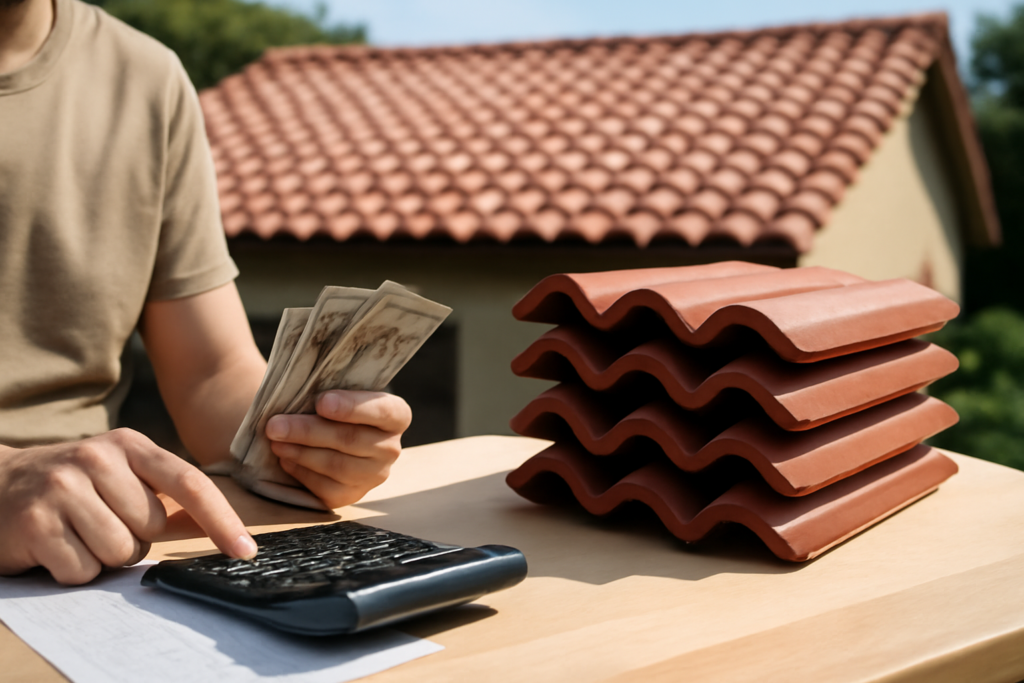
The classic barrel-tile Spanish roof is stunning, but real clay is heavy, brittle, and expensive to install. That is why so many homeowners are turning to lookalike composites, and the synthetic Spanish roof tiles cost lands at $7 to $14 per square foot installed in 2026, meaningfully less than authentic clay while capturing much of the look. Materials run $3.50 to $8 per square foot and labor makes up the rest. This guide breaks down the numbers, compares synthetic to the real thing, and shows what drives your quote.
What Synthetic Spanish Tiles Are Made Of
Synthetic Spanish or barrel tiles mimic the curved profile of traditional clay using engineered materials that weigh a fraction as much. The common types are polymer or composite tiles molded from recycled plastics and rubber, and lightweight versions in metal or specialty blends. Manufacturers such as DaVinci, Brava, and others press these tiles from UV-stabilized polymers colored throughout so the hue does not wear off.
The big engineering win is weight. Real clay barrel tile weighs 850 to 1,100 pounds per square (100 square feet), heavy enough that many roofs need structural reinforcement to carry it. Synthetic versions weigh a quarter to a third as much, which means they often install over standard framing with no reinforcement, saving thousands.
Installed Cost Breakdown
Here is where the money goes on a synthetic Spanish tile roof, per square foot:
- Synthetic tile material: $3.50 to $8 per square foot.
- Underlayment and moisture barrier: $0.50 to $1.50 per square foot.
- Labor: $3.50 to $6 per square foot.
- Flashing, ridge, hip, and trim tiles: $0.75 to $2 per square foot.
All in, expect $7 to $14 per square foot installed, with most jobs landing near $9 to $11. On a 2,000-square-foot roof area, that works out to roughly $14,000 to $28,000 for a complete synthetic Spanish tile roof.
Synthetic vs. Real Clay: The Cost Comparison
The value case for synthetic gets clear when you set it beside authentic clay and concrete barrel tile:
- Synthetic Spanish tile: $7 to $14 per square foot installed.
- Concrete barrel tile: $10 to $18 per square foot installed.
- Authentic clay barrel tile: $12 to $25 per square foot installed.
Beyond the lower material price, synthetic saves on two hidden costs. First, its light weight often eliminates the $2,000 to $10,000 structural reinforcement that heavy clay demands. Second, synthetic tiles are far less likely to crack during installation and foot traffic, cutting waste and callback repairs. Clay chips if you look at it wrong; a composite tile can be walked on.
What Drives the Price Up
Several factors push a synthetic tile roof toward the high end. Roof complexity is the biggest: hips, valleys, dormers, and multiple planes require more cut tiles, more flashing, and more labor. A steep pitch is slower and more dangerous, raising labor cost. Removing and disposing of an old roof adds $1 to $3 per square foot.
Premium tile brands and profiles cost more. A high-end molded tile with realistic color variegation and a strong warranty runs more than a basic composite. Certain fire ratings, impact ratings for hail country, and cool-roof reflective colors can also nudge the material price up. And if you are switching from a lightweight roof to tile, any needed deck or flashing upgrades add cost.
What Keeps the Price Down
To keep the cost in check, a simple gable roof with few penetrations installs fastest and cheapest. Installing over a sound existing deck without a full structural evaluation, where the light synthetic weight allows it, avoids reinforcement expense. Choosing a mid-tier tile brand rather than the premium architectural line saves on material without giving up the look from the street.
Timing helps too. Roofers are often hungrier for work in the off-season, and scheduling in late fall or winter in mild climates can shave the labor quote. As always, three competitive bids from installers experienced with synthetic tile keep everyone honest.
Installation Process and Timeline
Understanding how the roof goes on helps you judge a quote and plan around the disruption. A synthetic Spanish tile installation follows the same broad steps as any tile roof. The crew tears off the old roofing down to the deck, inspects and repairs the decking, and lays a high-quality underlayment, often a synthetic or self-adhering membrane that is the true waterproofing layer beneath the tiles. Battens or a direct-fastening system are set, and then the tiles are laid course by course from the eaves up, with special trim tiles at hips, ridges, and rakes.
A typical home takes a crew several days to a week depending on size and complexity, roughly comparable to a shingle job but often a bit longer because of the detail work at edges and penetrations. Because the tiles are lightweight and impact-resistant, installers can walk the roof during the job without the constant cracking risk that slows a clay installation. Ask your contractor how they handle the underlayment, since on a tile roof that membrane is what actually keeps water out, and a premium underlayment with a long warranty is worth the modest upcharge on a roof meant to last decades.
Maintenance and Repairs Over Time
One of the quieter advantages of synthetic tile is how little it demands after installation. Unlike clay, which cracks and grows moss in damp climates, quality composite tiles resist moss, algae, and freeze-thaw damage, so routine care is mostly keeping the gutters clear and hosing off debris. There is no sealing or coating to reapply on most products.
When a repair is needed, synthetic tile is more forgiving than clay. Individual tiles can be lifted and replaced without shattering neighboring pieces, and because the color runs through the material, a replacement tile blends rather than standing out as a patch. Keep a small stock of spare tiles from the original installation so you have an exact match years later, since colors and profiles get discontinued. Budget a modest amount for occasional flashing maintenance around chimneys and vents, which are the spots most likely to need attention over a long roof life, rather than the tiles themselves. Spread across a 40 to 50-year lifespan, the maintenance cost of a synthetic Spanish tile roof is genuinely low, which strengthens the value case against cheaper roofs that need more frequent attention.
Longevity and Warranty Value
Part of the value equation is how long the roof lasts. Quality synthetic Spanish tiles carry warranties of 30 to 50 years, and many are rated to withstand high winds, impact, and freeze-thaw cycles that crack clay. They resist the color fading, moss, and cracking that plague other roofs because the color runs through the material and the polymer flexes rather than shatters.
Spread over a 40 to 50-year lifespan, the higher upfront cost of a tile roof versus asphalt shingles often works out to a lower cost per year, especially since you likely never re-roof again during your ownership. The synthetic version captures most of that longevity at a lower entry price than clay.
Is Synthetic Spanish Tile Worth It
For homeowners who love the Mediterranean barrel-tile look but blanch at clay’s price and weight, synthetic Spanish tile is a genuinely smart middle path. You get the curved-profile aesthetic, a long lifespan, strong impact and wind resistance, and lighter weight that avoids structural upgrades, all at a cost meaningfully below authentic clay.
The honest tradeoff is that up close, a trained eye can tell synthetic from hand-fired clay, and purists in historic districts may be required to use the real thing. But from the street, and for the vast majority of homes, a quality composite delivers the look convincingly. Budget $9 to $11 per square foot installed for a typical roof, get bids from tile-experienced roofers, and the synthetic Spanish roof tiles cost will look reasonable next to what clay would have demanded.
When comparing quotes, confirm each bid uses the same tile brand and grade, includes a premium underlayment, and spells out the warranty on both the tile and the workmanship. Ask whether the price accounts for tear-off and disposal of the old roof, since that line item alone can swing a quote by several thousand dollars. Because synthetic tile is still less familiar to some roofers than asphalt, choose a contractor who has installed it before and can show you completed jobs. The material’s long lifespan only pays off if it is installed correctly, so the right crew matters as much as the right tile.