Empty corners are the most common dead zones in American living rooms, and furniture rarely fixes them because sofas and chairs need walls, not angles. Tall floor vases for living room corners solve the problem with vertical interest: a 30 to 48 inch vessel draws the eye upward, fills awkward gaps beside fireplaces and media consoles, and adds sculptural weight without consuming real floor space. Designers reach for them constantly, yet homeowners routinely buy the wrong height, set them in traffic paths, or leave them empty and wonder why they look unfinished. This guide covers sizing, materials, filler combinations that actually work, and the placement and safety details that separate styled from cluttered.
What Counts as a Floor Vase, and Why Height Rules Everything
A floor vase is any vessel designed to stand directly on the floor rather than a table, which in practice means 18 inches at the absolute minimum and more typically 24 to 48 inches tall. Below 24 inches, a vase on the floor reads as misplaced; the sweet spot for most living rooms is 28 to 42 inches before filler.
Scale it to what stands nearby. Next to a sofa arm (roughly 24 to 26 inches high), a vase should clear the arm; beside a fireplace, aim for one half to two thirds of the mantel height. Factor in branches or grasses, which add 12 to 30 inches: a 36 inch vase with 24 inch pampas stems becomes a 5 foot arrangement, which suits 8 to 9 foot ceilings well but crowds anything lower. In rooms with standard 8 foot ceilings, keep the total composition under about 6 feet so it accents the room rather than looming over it.
Materials Compared
Material determines look, weight, price, and how nervous you should be around kids and dogs.
- Ceramic and stoneware: the classic choice, glazed or matte, $40 to $200 for quality large pieces. Heavy enough to stand stable, but they shatter, so place them out of play zones.
- Fiberglass and resin: the modern workhorse. Convincing stone, concrete, and ceramic looks at a fraction of the weight, nearly unbreakable, typically $60 to $250. Best choice for households with children or big dogs.
- Metal (brushed brass, powder-coated steel, hammered aluminum): dent-resistant and dramatic, $50 to $300. Watch for tinny lightweight versions that tip easily.
- Glass: beautiful with lights or branches, but a 36 inch glass cylinder is a hazard anywhere feet or tails swing; reserve for low-traffic corners. $30 to $150.
- Woven seagrass, rattan, and bamboo: texture-rich and forgiving, $30 to $120. They cannot hold water, so they are dried-stem and pot-cover vessels only.
- Concrete and terracotta: substantial and trend-proof; genuinely heavy, which is a feature for stability and a chore for cleaning day.
Filler Ideas That Look Intentional
An empty floor vase can work if it is sculptural, but most need contents. The reliable formulas:
- Pampas grass: 8 to 15 plumes, trimmed so heads sit at staggered heights; the softest, most forgiving look
- Branches: curly willow, birch poles, manzanita, or faux olive and eucalyptus, 3 to 7 stems in odd numbers
- Dried palms and fans: bold silhouettes that suit modern and boho rooms with just 3 to 5 pieces
- Oversized faux florals: hydrangea or magnolia stems 30 inches and up; shorter table-stem florals disappear into a floor vase
- Nothing but light: a strand of warm micro-LEDs inside a glass or pierced-ceramic vase turns it into ambient evening lighting
Two practical tricks: fill the bottom third of a large vase with crumpled paper or a foam block, then anchor stems in the top section so you are not buying 40 stems to fill a cavity, and add a few pounds of sand, gravel, or river stones at the base for ballast, which improves stability more than any other single step.
Placement: Where They Work and Where They Fail
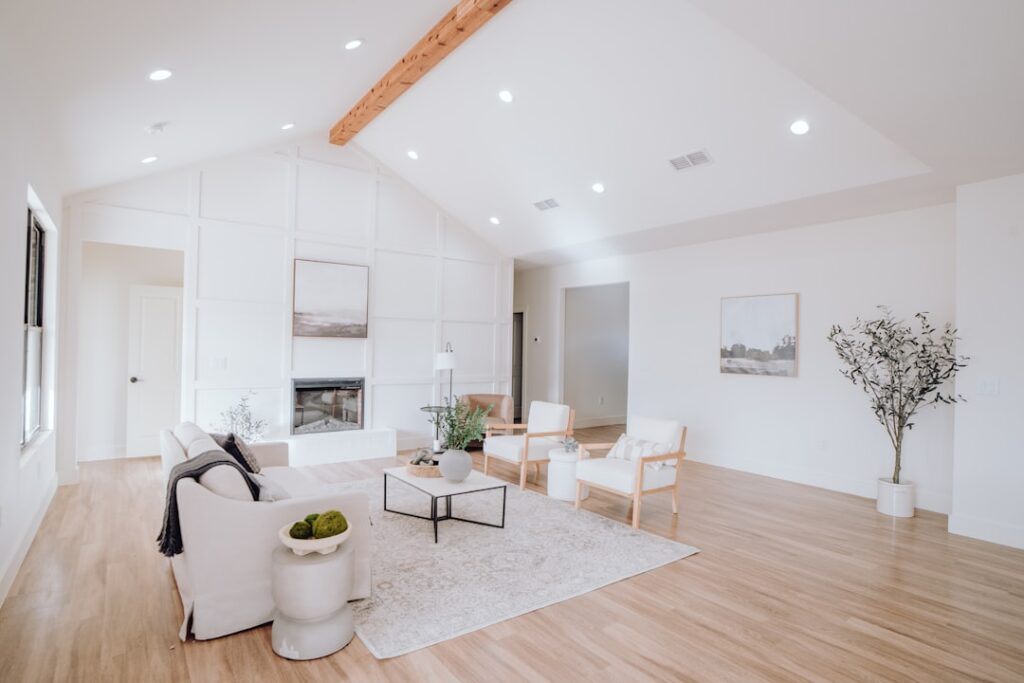
The winning locations repeat across well-designed rooms: the corner beside a fireplace, the gap between a media console and the wall, flanking an entry into the living room, beside a bookcase, or next to a sofa arm that faces open space. In each case the vase occupies a spot no furniture could use and softens a hard vertical line.
Avoid traffic lanes, spots behind doors that swing, and the zone directly beside a recliner or sofa bed mechanism. Resist symmetry unless the room is formal; one substantial vase generally beats a matched pair except when flanking a fireplace or doorway. Group with restraint if you cluster: a common designer move is a trio of the same material in three heights, say 36, 28, and 20 inches, with only the tallest holding stems. Keep at least 4 to 6 inches between the vase and baseboard so vacuuming does not become a demolition risk.
Stability and Household Safety
A 40 inch vase is a tip-over waiting for a toddler, a Labrador tail, or a robot vacuum. Take stability seriously: weight the base with sand or stones, choose designs with wide footprints over narrow-necked bottom-heavy shapes turned upside down, and set vases on a thin rubber gripper pad on hard flooring so they cannot skate. In homes with small children, museum putty or discreet earthquake gel between base and floor adds real security, and fiberglass or woven vessels remove the shattering risk entirely. If a robot vacuum roams the room, its bumper will find the vase daily; either weight the vase well or set a virtual no-go zone.
Protect the floor, too. Felt pads or a cork disc under ceramic and concrete bases prevent scratches on hardwood and stop moisture rings if you ever add fresh stems and water.
Cleaning and Seasonal Refreshes
Floor vases are dust magnets at exactly the height nobody wipes. Give the vessel a monthly pass with a microfiber cloth, and take dried stems outside twice a year for a gentle shake or a blast from a hair dryer on cool, since pampas and dried palms shed if rubbed. Faux greenery rinses under lukewarm water and drip-dries upside down. Swapping filler seasonally is the cheapest way to redecorate: bare branches in winter, blossom stems in spring, grasses through summer and fall. Keep spare fillers in a closet tube and the same vase reads brand new four times a year for about $20 per swap.
Bottom Line
Pick a vase in the 28 to 42 inch range scaled to its neighbors, favor fiberglass or heavy ceramic depending on your household’s chaos level, fill it with tall stems in odd numbers, and ballast the base. Place it in a corner that furniture cannot use, not a path that feet do. Done right, a single well-chosen floor vase delivers more presence per dollar than almost any other living room accessory.
Prefer to explore on your own?
See how new flooring looks in your actual room in seconds — free, no signup.
Try the free Floor Studio →