There is a meaningful difference between a tile setter who installs a field of squares and a true artisan who turns tile into art. A tile artist works at the intersection of craft and design, creating custom mosaics, hand-painted patterns, intricate borders, and decorative focal points that transform an ordinary surface into something memorable. If you are considering a custom tile project, this guide explains what a tile artist does, what their work costs, and how to find the right one.
- What a Tile Artist Actually Does
- Common Types of Artisan Tilework
- Where Custom Tilework Makes the Biggest Impact
- What a Tile Artist Costs
- How to Find and Hire a Tile Artist
- Working with Your Tile Artist
- Caring for Artisan Tile
- The Materials a Tile Artist Works With
- Timeline and What to Expect
- The Bottom Line
What a Tile Artist Actually Does
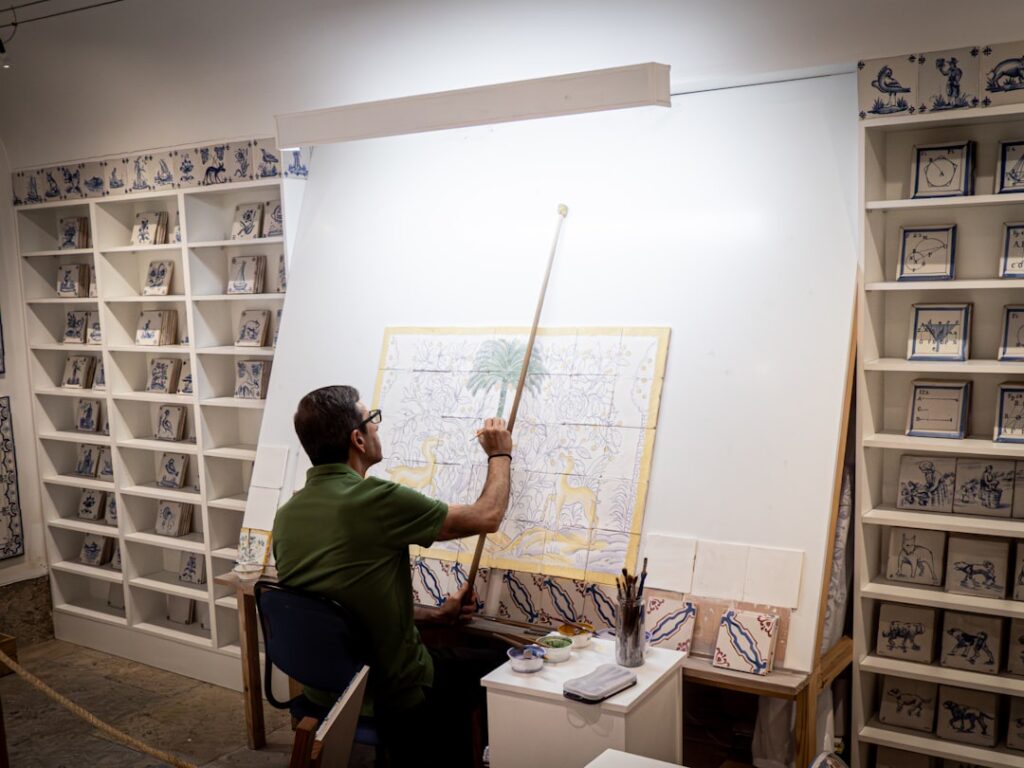
A tile artist designs and executes decorative tilework that goes beyond standard installation. Where a typical installer lays tile to a grid, an artist composes images, patterns, and color gradients, often cutting and shaping individual pieces by hand. Their work spans mosaic murals, hand-painted ceramic, geometric inlays, medallions, and custom borders. Many also create or commission the tile itself, glazing and firing pieces to achieve colors and textures you cannot buy off the shelf.
Common Types of Artisan Tilework
Tile artists work in several distinct traditions and styles:
- Mosaics: Images and patterns built from small pieces of cut tile, glass, or stone, ranging from subtle backsplash accents to full wall murals.
- Hand-painted tile: Individually painted ceramic pieces, often in Spanish, Moroccan, or Portuguese styles, fired to lock in the design.
- Geometric and encaustic patterns: Bold repeating motifs popular on floors and feature walls.
- Custom medallions and inlays: Centerpiece designs set into floors or showers as a focal point.
- Decorative borders and accents: Detailed trim work that frames a field of plain tile.
Where Custom Tilework Makes the Biggest Impact
You do not need to tile an entire room artistically to get a stunning result. The most effective custom work concentrates on focal points: a kitchen backsplash behind the range, a fireplace surround, a shower niche or accent wall, an entryway medallion, or a pool and spa waterline. Because these areas draw the eye, even a modest amount of artisan tile delivers an outsized visual payoff while keeping the project affordable.
What a Tile Artist Costs
Artisan tilework is custom labor, so pricing varies widely with complexity. Simple decorative accents and small mosaic inserts can be relatively modest additions to a standard installation. Elaborate hand-cut mosaics, custom-painted tile, and large murals run significantly higher because of the design time and meticulous hand-cutting involved. Many tile artists quote per project or per square foot of decorative area rather than at standard installation rates. Always get a detailed written estimate that separates design, materials, and installation so you understand what you are paying for.
How to Find and Hire a Tile Artist
The right artisan is part craftsperson, part designer, so vet for both. Use this approach:
- Review a strong portfolio of completed work, ideally projects similar in style to what you want.
- Ask to see in-person examples or visit a past installation if possible.
- Confirm relevant licensing and insurance, just as you would for any tradesperson.
- Discuss the design process early; a good artist will produce sketches or renderings before any tile is cut.
- Get a written contract covering the design, materials, timeline, and total cost.
Working with Your Tile Artist
The best custom projects come from collaboration. Bring inspiration images, fabric swatches, paint colors, and a clear sense of the mood you want, then trust the artist’s eye for what will actually work in tile. Be specific about the space’s function; a shower mosaic needs slip resistance and proper waterproofing, while a backsplash needs to be wipeable behind a cooktop. Discuss grout color too, since it dramatically affects how a mosaic reads, either blending the pieces together or outlining each one.
Caring for Artisan Tile
Custom tilework deserves careful maintenance to preserve its detail. Clean with pH-neutral products and soft cloths, avoiding abrasive pads that can dull glazes or scratch glass. Seal any natural stone or unglazed elements, and reseal periodically in wet areas. For hand-painted tile, skip harsh chemicals that could degrade the surface over time. Treated well, quality artisan tile keeps its color and crispness for generations.
The Materials a Tile Artist Works With
Artisan tilework is not limited to standard ceramic. A skilled tile artist may combine glass, which adds luminous color and depth, with porcelain for durability, natural stone for organic texture, and even metal or mirror accents for sparkle. Smalti, the small handmade glass pieces used in classical mosaics, produce some of the richest color found in the craft. The choice of material affects both look and function: glass and polished stone suit walls and accents, while denser, slip-resistant materials are reserved for floors and wet areas. A good artist matches the material to where the piece will live.
Timeline and What to Expect
Custom tilework takes longer than standard installation, and that is part of what you are paying for. Expect an initial consultation and design phase that may involve sketches or digital renderings, followed by sourcing or fabricating the tile, then careful layout and installation. Intricate mosaics are often pre-assembled on mesh backing in the studio, then set on site, while in-place work like a large mural is built piece by piece. Curing of thinset and grout adds time before the area can be used. Patience pays off; rushing detailed handwork is how mistakes creep into a piece meant to last decades.
The Bottom Line
Budget realistically by thinking of artisan tile as art with a function, not just a building material. Because the work is custom and labor-intensive, even a modest decorative project carries design and handcraft costs that standard tile does not. The payoff is a one-of-a-kind feature that no neighbor can duplicate and that often becomes the most-photographed detail in a room. If the full vision exceeds your budget, ask the artist about phasing the project or concentrating the artistry on a single high-impact area, which keeps costs in check while still delivering a striking, handmade focal point.
Hiring a skilled tile artist is the surest way to turn a functional surface into a true centerpiece, whether through a hand-cut mosaic, painted ceramic, or a custom medallion. Concentrate the artistry on a focal point for the biggest impact and the best value, vet for both craftsmanship and design sense, and collaborate closely on the vision. Done right, custom tilework adds character and lasting value that mass-produced tile simply cannot match.
Prefer to explore on your own?
See how new flooring looks in your actual room in seconds — free, no signup.
Try the free Floor Studio →