
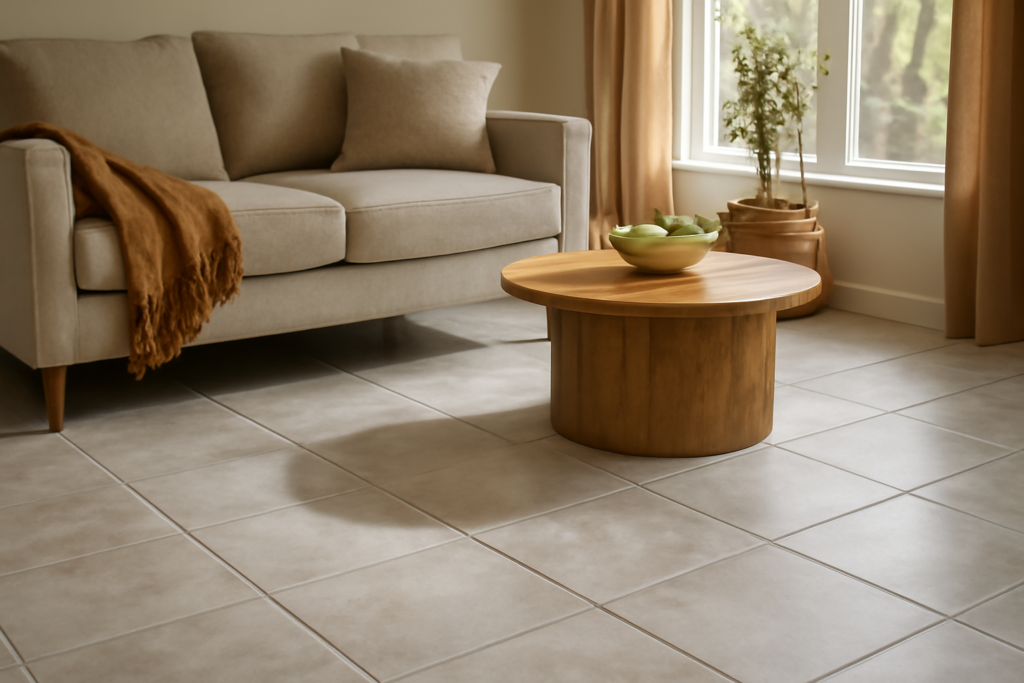
You love the look of a stone or ceramic tile floor, but not the cold, hard surface or the weekend-eating install. Tile looking LVP solves that trade-off, delivering the appearance of tile through luxury vinyl that is warmer underfoot, softer on your feet and dishes, easier to install, and fully waterproof. Modern printing and embossing have made these vinyl tiles convincing enough that guests rarely realize the floor is not real stone or ceramic. If you want the tile aesthetic without the tile drawbacks, this is the category to know.
Part of our Tile & Grout guide — explore the full guide →
What Tile Looking LVP Actually Is
Luxury vinyl comes in two shapes: planks that mimic wood (LVP) and tiles or squares that mimic ceramic and stone (often called LVT, luxury vinyl tile). “Tile looking LVP” refers to vinyl flooring printed and textured to replicate tile, whether sold as square tiles or as planks with a stone-look surface. A high-resolution photographic layer captures the veining of marble, the texture of slate, or the clean grid of ceramic, protected by a clear wear layer and mounted on a flexible or rigid core. The best products add embossing that you can feel, so the surface has the subtle texture of real stone, not just a printed picture.
Why Choose Tile Look Vinyl Over Real Tile
The advantages that draw people away from ceramic and porcelain are practical, everyday ones.
- Warmer and softer underfoot: Vinyl never feels ice-cold on a winter morning, and it is far more forgiving on your feet, back, and dropped glassware.
- Easier installation: Click-lock and peel-and-stick versions install in a day without mortar, spacers, or a wet saw.
- Waterproof: Rigid-core LVP handles bathrooms, kitchens, and basements with no worry.
- Lower cost installed: You save significantly on labor versus a tile setter.
- Quieter: It absorbs sound rather than amplifying footsteps like a hard tile floor.
Real tile still wins on ultimate durability and heat tolerance, but for most homes the vinyl trade-offs land in the homeowner’s favor.
Popular Tile Looks in LVP
The range of styles is one of the format’s biggest strengths. Common looks include:
- Marble: Elegant veining that would cost a fortune in real stone.
- Slate: Rich, textured, multi-tonal surfaces ideal for entryways and mudrooms.
- Travertine and limestone: Warm, earthy natural-stone tones.
- Concrete and cement: Modern industrial looks trending in contemporary kitchens.
- Classic ceramic: Clean squares and encaustic patterned tiles for a vintage or Mediterranean feel.
Cost of Tile Looking LVP
Tile-look vinyl covers a wide price band based on core type, wear layer, and realism. Expect roughly $2 to $7 per square foot for the material, with premium rigid-core (SPC) tiles at the upper end. Installation runs about $1 to $4 per square foot professionally, or free if you tackle the DIY click-lock or peel-and-stick versions. Compare that to real tile, where materials plus professional installation frequently reach $10 to $25 per square foot, and the savings, especially on labor, become obvious.
The Grout Question
One detail that separates convincing tile-look vinyl from the obviously-fake kind is the grout treatment. Basic products simply print a grout line into the design, which reads flat up close. Better systems use one of two approaches for realism:
- Beveled or recessed edges: The tile edges are chamfered so a real shadow line forms between tiles, mimicking a grout joint.
- Groutable LVT: Certain vinyl tiles are designed to be installed with real grout in the joints, giving the most authentic tile appearance while keeping vinyl’s comfort.
If a seamless, printed-in grout line bothers you, look for beveled-edge or groutable products, and remember that grout, real or simulated, still needs occasional cleaning to stay looking sharp.
How to Install Tile Looking LVP
- Acclimate the vinyl in the room for 24 to 48 hours per the manufacturer’s guidance.
- Prep the subfloor so it is clean, dry, and flat; rigid cores tolerate minor imperfections but not major dips or bumps.
- Plan the layout from the room’s center outward so you avoid narrow slivers at the walls and keep the tile grid balanced.
- Install the tiles. Click-lock tiles snap together and float; peel-and-stick tiles press onto the prepped subfloor; groutable tiles set and then get grouted.
- Leave expansion gaps around the perimeter for floating installs, hidden by baseboard or quarter round.
- Grout if applicable, then seal and let cure before regular use.
Caring for Tile Look Vinyl
Maintenance is far easier than real tile. Sweep or vacuum to remove grit, and damp-mop with a pH-neutral cleaner. Because it is waterproof, you can mop freely without worrying about water in grout joints, and there is no porous grout to seal on printed-grout products. Use felt pads under furniture and avoid dragging heavy appliances across the surface, which can scratch or tear the wear layer. Wipe up spills promptly to keep any recessed grout lines clean, and skip abrasive pads and harsh solvents that dull the finish.
What to Look for When Shopping
Not all tile-look vinyl is created equal, and a few specs separate the convincing products from the flimsy ones. The wear layer is the single most important number: look for at least 12 mil for residential use and 20 mil or more for busy households and pets, since a thin wear layer scratches through quickly. Check the overall thickness and core type, favoring rigid SPC or WPC cores for a solid, quiet feel over cheap flexible glue-down tiles. Finally, request a full-size sample rather than judging from a website photo, because good embossing and beveled edges only reveal themselves in person, and that texture is what sells the tile illusion once the floor is down.
Frequently Asked Questions
Does tile looking LVP feel like real tile?
It looks like tile but feels warmer and softer underfoot, which most people prefer. High-end embossed and beveled-edge products also add real surface texture and shadow lines for authenticity.
Is tile look vinyl waterproof?
Yes, rigid-core LVP and LVT are waterproof, making them well suited to bathrooms, kitchens, laundry rooms, and basements where you want a tile look without the maintenance.
Can you grout tile looking LVP?
Some products, called groutable LVT, are designed for real grout in the joints for maximum realism. Others use beveled edges or printed grout lines that need no grouting.
How much does tile looking LVP cost?
Materials run about $2 to $7 per square foot, plus $1 to $4 for professional installation. That is well below the $10 to $25 per square foot typical of real tile installed.
The Bottom Line
Tile looking LVP gives you the sophisticated look of marble, slate, travertine, or ceramic without the cold, hard, labor-intensive reality of real tile. It is warmer, softer, waterproof, easier to install, and cheaper, especially on labor. For the most convincing result, choose products with beveled edges or true groutable joints. For homeowners who want tile style with everyday comfort and a DIY-friendly install, tile-look vinyl is one of the smartest flooring choices on the market.
Prefer to explore on your own?
See how new flooring looks in your actual room in seconds — free, no signup.
Try the free Floor Studio →

