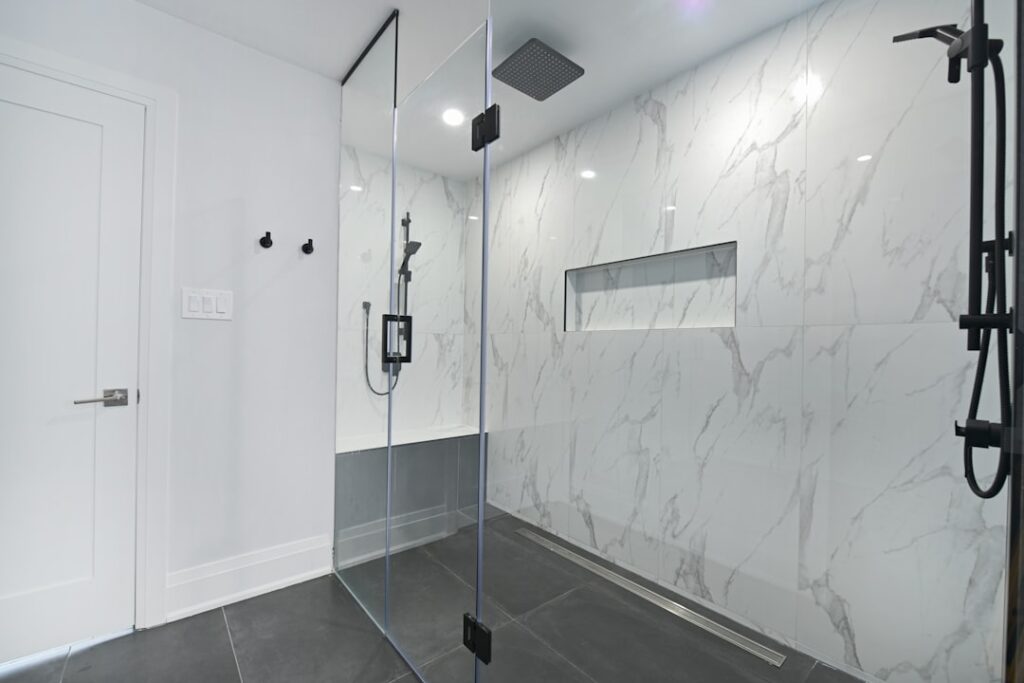
Nothing clutters a beautiful shower faster than bottles crowding the corners and a rusty caddy hanging off the showerhead. A well-built tile shower shelf solves that problem for good, giving you a permanent, waterproof spot for shampoo, soap, and razors that looks like it was always part of the design. Adding a tile shower shelf during a remodel is one of the highest-value details you can include for the money.
I have installed dozens of these, and the difference between one that lasts a lifetime and one that leaks behind the wall comes down to a few key decisions. Here is everything you should know.
Types of Tile Shower Shelves
Not every shelf is built the same way, and the right choice depends on your wall, your budget, and your timeline.
- Recessed niche — a box built into the wall cavity, tiled inside to match. The cleanest, most built-in look.
- Corner shelf — a triangular ledge mounted in a corner, either tiled or a pre-made stone or metal piece.
- Prefabricated stone or solid-surface shelf — a single slab that gets mortared to the wall face.
- Full-width ledge or bench — a horizontal shelf spanning the wall, doubling as a foot rest for shaving.
The recessed niche is the most popular because it does not stick out into the shower and it feels intentional. Corner and surface-mounted shelves are easier to add to an existing shower without opening up the wall.
Where to Place It
Placement is more important than most people think. A niche should sit roughly between 40 and 48 inches off the floor, about chest height for the average adult, so you are not bending down for the shampoo. Keep it off the wall that faces the showerhead directly, so the spray does not pool inside it.
For safety and structure, position a recessed niche between two wall studs, typically leaving you about 14 inches of interior width in standard 16-inch on-center framing. Avoid cutting into exterior walls where you would disturb insulation, and never notch a load-bearing header without proper planning. A shaving ledge for the legs works best around 12 to 18 inches off the floor.
Waterproofing Is Everything
This is where projects succeed or fail. Any shelf that penetrates the wall creates seams where water wants to sneak behind the tile, and once moisture gets into the framing you are looking at rot and mold. Modern showers use a waterproof membrane system, either a sheet membrane or a liquid-applied coating, that wraps continuously into and around the niche.
Pre-made foam niches, such as the ones from Schluter or Wedi, have become the go-to for a reason. They come pre-formed and only need their flanges sealed and coated with the matching membrane, dramatically reducing the chance of a leak compared to building a box from scratch. I use these on almost every job now.
Slope the Bottom
The interior floor of any niche or shelf must be pitched forward slightly, about 1/8 inch per foot, so water drains out instead of sitting in a puddle. A flat shelf collects standing water, soap scum, and eventually mildew. This small detail separates a professional install from an amateur one.
Choosing the Tile and Materials
You can tile the shelf to match the surrounding wall for a seamless look, or use a contrasting mosaic or accent tile to make the niche a design feature. Small mosaic sheets are popular inside niches because they conform to the slope and the finished back easily.
For solid shelves, a single piece of natural stone like marble or quartz, or a solid-surface material, gives you a clean edge with no grout lines to scrub. Whatever you choose, use a quality thinset rated for the material and finish edges with either a tile trim profile, such as a metal Schluter edge, or a bullnose tile so no raw tile edges show.
What It Costs
A recessed niche added during a tile job typically runs $150 to $400 in materials and labor when a tile setter is already on site, largely because it is incremental work. A pre-made foam niche unit itself costs roughly $30 to $80. Solid stone corner shelves range from about $20 to $60 each for the piece.
If you are retrofitting a shelf into a finished, tiled shower, expect to pay more, often $300 to $700 or beyond, because the installer has to cut into existing tile and re-waterproof. Bundling the shelf into a full shower remodel is always the more economical route.
Common Mistakes to Avoid
- Skipping the slope — a flat shelf equals standing water and mildew.
- Poor waterproofing at the flanges — the number one source of hidden leaks.
- Placing the niche opposite the door where cold drafts and splash hit it constantly.
- Making it too small — measure your tallest shampoo bottle before sizing.
- Forgetting the sealant — grout at the shelf-to-wall joint should be a flexible silicone, not rigid grout, since that seam moves.
That last point trips up a lot of DIYers. Wherever a horizontal surface meets a vertical wall, the joint flexes with temperature and moisture, so caulk it with a color-matched silicone rather than cementitious grout that will crack.
Keeping It Clean
Once installed, a tile shower shelf is easy to maintain. Wipe it down during your regular shower cleaning, squeegee or towel the interior after use to fight soap scum, and reseal natural stone or cement grout periodically. Because the surface drains and dries, you will not fight the constant grime that plagues a stick-on plastic caddy.
Done right, a tile shower shelf is a small upgrade that pays off every single day, keeps your bathing essentials organized, and adds a custom, finished feel that buyers notice. Plan the placement, insist on proper waterproofing and slope, and your tile shower shelf will stay leak-free and good-looking for the life of the shower.
Sizing and Number of Shelves
Think about what actually lives in your shower before you finalize the size. A single niche around 12 inches wide by 14 inches tall handles a couple’s shampoo, conditioner, and body wash comfortably. Tall bottles need at least 10 to 12 inches of interior height, so measure your biggest pump bottle rather than guessing.
Many homeowners opt for two smaller niches or a single niche with a middle shelf, so bottles stay separated and one shower user’s products do not crowd another’s. A horizontal divider inside a taller niche is an easy add during construction and roughly doubles the usable organization without taking up more wall.
Retrofitting Into an Existing Shower
Adding a shelf to a shower that is already tiled is possible but not trivial. A surface-mounted corner shelf, either a solid stone piece or a metal one anchored into the grout lines with waterproof adhesive, is the low-risk option and can go in during an afternoon. It sits proud of the wall, but it avoids cutting into your waterproofing.
Cutting a recessed niche into a finished shower means removing tile, opening the wall, verifying you have clear stud space with no plumbing or wiring in the way, then rebuilding and re-waterproofing the opening before re-tiling. That is real work best left to a pro, which is exactly why it is so much cheaper to plan the niche into the original build rather than wishing for it afterward.
Prefer to explore on your own?
See how new flooring looks in your actual room in seconds — free, no signup.
Try the free Floor Studio →