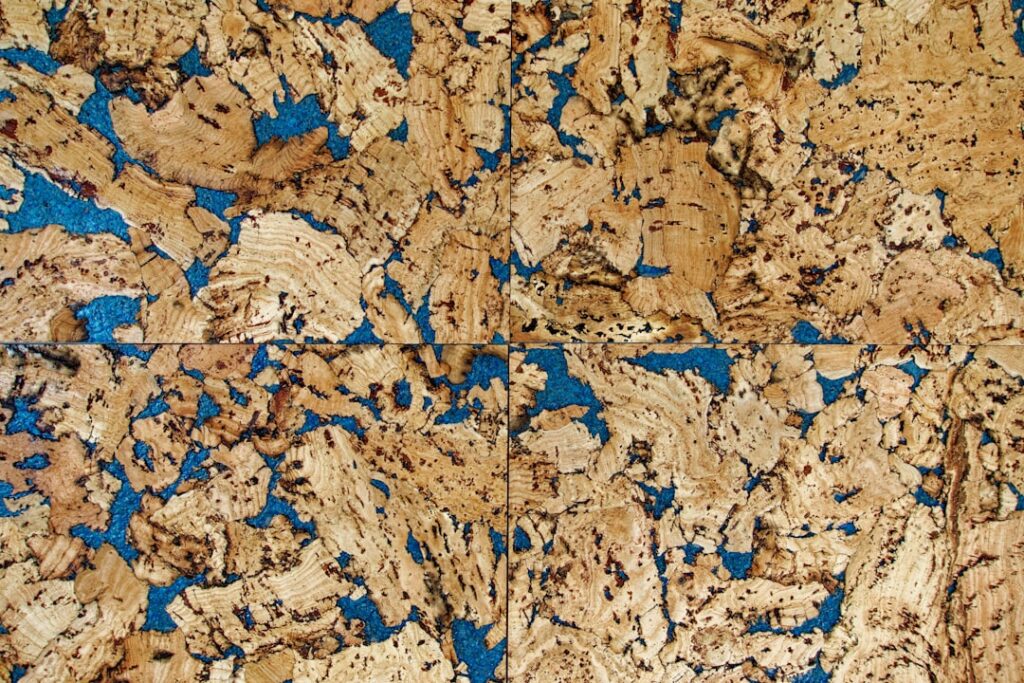
Most cork flooring on the market is sold as glue-down tiles cut from the same Portuguese plantations. Torlys cork flooring takes a different approach by laminating a cork wear surface onto an HDF core with a click-locking edge, which removes the need for adhesive and slashes installation time by roughly 60 percent. The Canadian brand has been building this construction since the late 1990s and currently sells through specialty dealers in 38 US states.
- What Makes Torlys Different From Standard Cork
- The Torlys Product Lines
- Pricing and Realistic Total Cost
- Performance in Real Homes
- Where Torlys Cork Works Best
- Installation Tips That Save Headaches
- Maintenance and Longevity
- How Torlys Compares to Competitors
- Warranty Terms Worth Reading
- Final Verdict
What Makes Torlys Different From Standard Cork
Traditional cork tiles measure 12 inches by 12 inches at around 4mm to 6mm thick and require contact cement applied to both the tile and the subfloor. Torlys planks measure roughly 35 inches by 7 inches at 11mm to 12mm total thickness. The visible cork layer sits at 3mm on most product lines, bonded to a moisture-resistant HDF core with a pre-attached cork underlay on the bottom face.
The click-edge profile is proprietary and goes by the name Uniclic. It locks on the long edge with a slight angle, then drops in on the short edge, similar to most laminate systems. A 1,200 sq ft installation that would take three days as glue-down cork can be done in a single day floating.
The Torlys Product Lines
- Torlys Cork Premier: The flagship collection with a 30-year residential warranty, 3mm cork wear layer, and 12mm overall thickness. Pricing runs $5.80 to $7.20 per sq ft.
- Torlys Cork Designer: A mid-tier line at $4.50 to $5.60 per sq ft with a 2mm wear layer and 25-year warranty.
- Torlys Cork Essentials: Entry-level at $3.40 to $4.20 per sq ft, 20-year warranty, suitable for low-traffic bedrooms and dens.
- Torlys CorkWood: A hybrid line where a wood veneer covers a cork core; runs $6.50 to $8 per sq ft.
Pricing and Realistic Total Cost
Material costs sit between $3.40 and $8 per sq ft depending on line. Installation by a Torlys-certified dealer runs $2.50 to $4 per sq ft for floating install, with no additional underlayment needed in most cases. A typical 500 sq ft living room project finishes at $3,500 to $6,000 supplied and fitted.
Compare this to Wicanders Corkcomfort at $4.20 to $6.80 per sq ft plus $3 to $5 per sq ft for glue-down install, and Torlys runs about 10 percent cheaper on the total project.
Performance in Real Homes
Cork compresses under load and recovers, which is why it feels softer underfoot than wood or LVP. Drop a heavy object and the dent typically rebounds within 24 to 48 hours. Drop the same object on laminate and you have a permanent crater.
The thermal value sits around R-1.14 per inch, which is roughly twice that of hardwood. Floors stay warmer in winter without underfloor heating, and the sound transmission class (STC) rating of 53 makes Torlys cork one of the quieter floating floors available, well above the 50-rating typically required by condo associations.
Where Torlys Cork Works Best
Bedrooms, living rooms, home offices, and play rooms suit Torlys cork ideally. The slight cushion underfoot reduces fatigue during long standing sessions, which is why it shows up in home offices and craft rooms.
Avoid Torlys cork in full bathrooms with showers or tubs that splash regularly. The HDF core, despite moisture-resistant treatment, will swell with prolonged exposure. Powder rooms work fine. Kitchens are acceptable provided you address spills within 10 to 15 minutes.
Installation Tips That Save Headaches
Acclimate the boxes flat for 48 hours in the room of installation, with the temperature held between 65°F and 75°F. Snap a line for the first row and use 3/8-inch expansion spacers around all walls, pipes, and door jambs. Cork expands and contracts roughly 0.5mm per linear foot across the seasonal humidity swing, so the gap is non-negotiable.
The pre-attached underlayment means no separate foam underlay is needed, which saves $0.30 to $0.60 per sq ft over a competing floating product. Tap blocks supplied by Torlys dealers protect the click edges; substitute scrap pieces will mushroom the tongue.
Maintenance and Longevity
Vacuum weekly with a soft-bristle head. Damp-mop monthly using a pH-neutral cleaner like Bona Hardwood Floor Cleaner or the Torlys-branded product. Never use steam mops; the moisture and heat combination delaminates the cork layer from the HDF core.
The 3mm wear layer on the Premier line can be screened and recoated with a water-based polyurethane like Bona Traffic HD at year 12 to 15, extending the floor’s life to 25 years or more. Designer and Essentials lines are not refinishable due to their thinner wear layers.
How Torlys Compares to Competitors
Against US Floors Natural Cork, Torlys offers an easier install but a thinner wear layer in most lines. US Floors uses a 4mm cork veneer on its glue-down tiles, which is roughly 33 percent more material. The trade-off is several hundred dollars in adhesive and labor.
Against Wicanders Hydrocork, Torlys offers warmer underfoot feel but less water resistance. Hydrocork is fully waterproof in commercial environments; Torlys is rated water-resistant but not waterproof.
Warranty Terms Worth Reading
Torlys offers a lifetime structural warranty on the Premier line covering the click-edge profile against manufacturing defects. The wear-layer warranty runs 30 years residential and 10 years light commercial. Coverage requires installation by an authorized Torlys dealer using the brand’s recommended underlayment configuration; DIY installation typically voids the structural portion of the warranty.
The water-resistance coverage runs 72 hours of standing water exposure on the surface. Beyond that window, the warranty does not apply. This term sits at the upper end of the laminate and engineered category but does not match the lifetime waterproof warranty offered by SPC competitors like COREtec or Karndean.
Final Verdict
Torlys cork flooring delivers genuine sound and thermal benefits with a quick floating install, making it a strong choice for living areas, bedrooms, and home offices. Pick the Premier line for spaces you will not refloor for 20 years. Budget $5,000 to $6,500 fitted for a typical 500 sq ft project, and avoid wet bathroom installations regardless of warranty language.
Prefer to explore on your own?
See how new flooring looks in your actual room in seconds — free, no signup.
Try the free Floor Studio →