Understanding tree trimming cost before you call a service prevents overpaying and helps you budget for this essential property maintenance task. Prices vary dramatically based on tree size, species, condition, and where you live — a simple trim on a small ornamental tree might cost $75 while a large oak could run $1,500 or more.
- Average Tree Trimming Costs
- Cost by Tree Size
- Small Trees (Under 25 Feet)
- Medium Trees (25-50 Feet)
- Large Trees (50-75 Feet)
- Very Large Trees (Over 75 Feet)
- Cost by Type of Trimming
- Factors That Affect Price
- DIY vs. Professional Tree Trimming
- When to Trim Your Trees
- Finding a Qualified Arborist
- Tips for Saving Money
- Frequently Asked Questions
We’ve compiled real-world pricing data and expert advice so you know exactly what to expect. Whether you’re maintaining a single shade tree or managing a property full of mature specimens, this guide has you covered.
Average Tree Trimming Costs
The national average tree trimming cost falls between $250 and $700 per tree. Most homeowners pay around $475 for professional trimming of a single medium-sized tree. However, prices range from as low as $75 for a small ornamental tree to $2,000 or more for a large, mature hardwood in a difficult location.
Most tree services price jobs by the tree rather than by the hour, though some smaller operations charge hourly rates of $50 to $150 per worker. For multi-tree jobs, many companies offer package discounts of 10-25% when trimming three or more trees in a single visit.
Emergency tree trimming — after storm damage, for example — typically costs 50-100% more than scheduled maintenance trimming due to urgency, hazardous conditions, and after-hours labor.
Cost by Tree Size
Tree height is the primary factor in determining tree trimming cost. Here’s what to expect by size category:
Small Trees (Under 25 Feet)
Cost: $75 – $300 per tree. This includes ornamental trees like dogwoods, Japanese maples, crape myrtles, and young fruit trees. Most can be trimmed with pole saws and loppers from the ground, requiring minimal equipment. Small trees are the most practical candidates for DIY trimming.
Medium Trees (25-50 Feet)
Cost: $200 – $700 per tree. This category covers mature fruit trees, medium maples, birches, and many conifers. Crews typically need ladders or bucket trucks, and the increased height means more safety considerations and debris to manage.
Large Trees (50-75 Feet)
Cost: $500 – $1,200 per tree. Large oaks, elms, pines, and mature hardwoods fall in this range. These jobs always require bucket trucks or climbing gear. The volume of branches to cut, lower, and remove is substantial, and the risk factor increases significantly.
Very Large Trees (Over 75 Feet)
Cost: $1,000 – $2,500+ per tree. Think towering pines, old-growth oaks, and mature cottonwoods. These jobs require experienced climbing arborists, heavy equipment, and significant safety precautions. If the tree is near structures or power lines, costs escalate further due to the precision required.
Cost by Type of Trimming
Different types of trimming serve different purposes and vary in cost:
Crown cleaning ($100 – $500). Removes dead, dying, and diseased branches from the canopy. This is the most common type of maintenance trimming and should be done every 3-5 years on most trees.
Crown thinning ($200 – $800). Selectively removes interior branches to increase light penetration and air circulation without changing the tree’s overall shape. Thinning reduces wind resistance and weight on heavy limbs. Typically removes 10-20% of the canopy.
Crown raising ($150 – $600). Removes lower branches to increase clearance beneath the tree. Common reasons include clearance for mowing, pedestrian paths, driveways, and structures. Crown raising is straightforward but affects the tree’s proportions if overdone.
Crown reduction ($200 – $1,000). Reduces the overall size of the tree’s canopy by cutting branches back to lateral branches that can assume the terminal role. This is more complex than simple topping (which should never be done) and requires skill to maintain the tree’s natural form.
Vista pruning ($300 – $1,200). Strategic trimming to create or maintain a specific view while preserving tree health. Common in hillside and waterfront properties where trees block desirable views.
Hazard trimming ($200 – $1,500). Removes branches that pose immediate risks to structures, power lines, or people. Often urgent and priced accordingly. Utility companies sometimes cover the cost of trimming near power lines.
Factors That Affect Price
Beyond tree size and trimming type, several factors influence your final tree trimming cost:
Tree species. Some species are inherently more difficult or time-consuming to trim. Dense hardwoods like oaks and hickories take longer to cut than softwoods. Trees with thorns (like honey locust) or heavy sap (like pines) require extra care and cleanup. Palm trees, while not technically trimmed the same way, cost $100 to $500 depending on height.
Tree health and condition. Diseased or storm-damaged trees are more hazardous to work on. Dead branches can break unpredictably, and compromised tree structure increases the risk of failure during the job. Expect a premium for working on trees in poor condition.
Accessibility. Trees in open yards with easy equipment access cost less than trees hemmed in by structures, fences, or other trees. If a bucket truck can’t reach the tree and climbing is required, costs increase. Backyard trees accessible only through a narrow side gate are among the most expensive to service.
Proximity to structures. Trees overhanging homes, garages, pools, or sheds require more careful branch lowering to avoid property damage. Each branch may need to be roped and lowered rather than dropped, which is significantly more time-consuming.
Power line proximity. Only certified line-clearance arborists may work within 10 feet of power lines. This specialized work costs more and may involve coordination with your utility company.
Geographic location. Tree trimming rates in major metropolitan areas run 25-50% higher than rural areas. The Southeast and Midwest tend to have lower prices than the Northeast and West Coast.
DIY vs. Professional Tree Trimming
Some trimming jobs are safe for DIY, while others absolutely require professionals:
Safe for DIY:
- Small ornamental trees you can reach from the ground
- Low branches (under 10 feet) on medium trees
- Dead branches under 3 inches in diameter
- Routine maintenance on fruit trees
- Hedge and shrub trimming
Hire a professional for:
- Any branch you can’t reach from the ground with a pole saw
- Branches larger than 6 inches in diameter
- Trees near power lines (never DIY this)
- Trees overhanging structures
- Dead or diseased trees with unpredictable branch stability
- Any work requiring a chainsaw above ground level
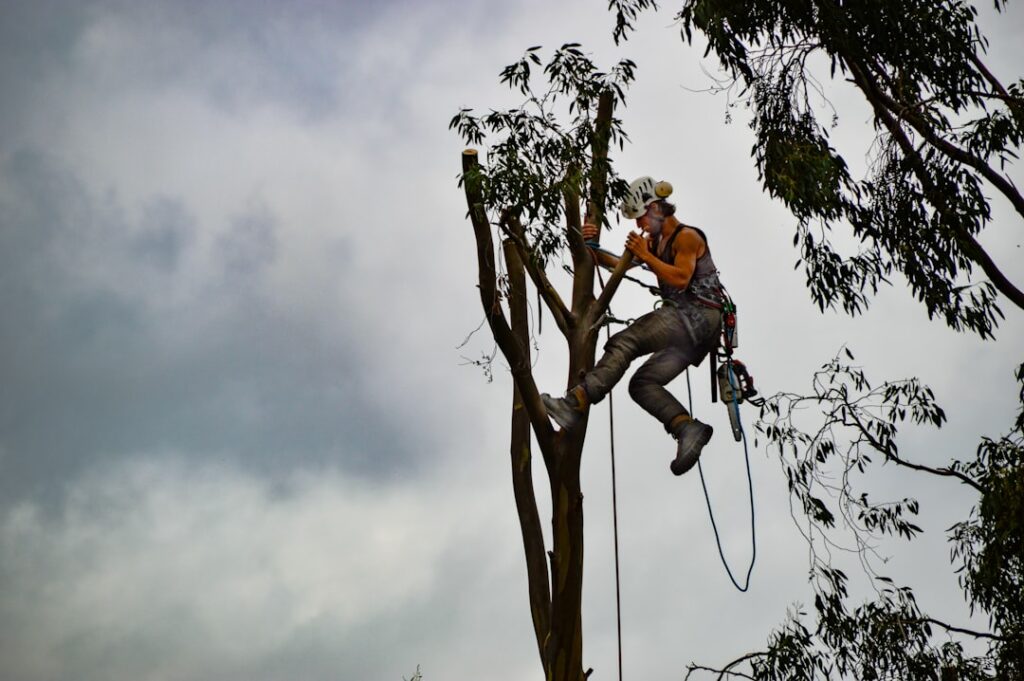
DIY tree trimming tools include bypass loppers ($25-$60), a pole saw ($50-$200), and hand pruning saws ($20-$50). For an investment of $100-$300 in quality tools, you can handle basic maintenance on small trees indefinitely. But climbing trees with chainsaws is how people get seriously injured or killed — leave that to trained professionals with proper equipment and insurance.
When to Trim Your Trees
Timing affects both tree health and cost. Here’s the best schedule:
Late winter to early spring (February-March) is ideal for most deciduous trees. The tree is dormant, so trimming causes minimal stress. Without leaves, the branch structure is visible, making it easier to identify what needs removal. Disease transmission is also lowest during dormancy.
Summer trimming works for corrective pruning and removing water sprouts. It’s also the best time to identify and remove dead branches, which are obvious when surrounding branches are leafed out.
Fall is generally the worst time to trim. Trees are preparing for dormancy, and fresh cuts heal slowly. Fungal spores are abundant in autumn air, increasing disease risk through pruning wounds.
Species-specific timing: Spring-flowering trees (dogwood, cherry, magnolia) should be trimmed immediately after blooming. Oaks should only be trimmed during dormancy to prevent oak wilt disease transmission. Elms are best trimmed in late fall or winter to avoid Dutch elm disease.
Scheduling trimming during the off-season (late fall through early spring) can also save you money, as tree services are less busy and may offer lower rates.
Finding a Qualified Arborist
Not all tree services are equal. Here’s how to find a reputable one:
- ISA certification: Look for arborists certified by the International Society of Arboriculture. This credential requires passing an exam, continuing education, and demonstrates professional knowledge
- Insurance: Verify general liability insurance (minimum $1 million) and workers’ compensation coverage. Ask for certificates and call the insurance company to confirm they’re current
- No topping: Any company that recommends or agrees to top your trees is not following professional arboricultural standards. Topping destroys tree structure, promotes weak regrowth, and shortens tree life
- Written estimates: Get detailed written proposals specifying exactly which trees, what type of trimming, and what’s included (cleanup, stump grinding, etc.)
- References: Ask for references from recent jobs similar to yours and actually call them
Get three quotes minimum. Prices can vary 50-100% between companies for the same job, so shopping around pays off. Be cautious of door-to-door tree services offering bargain prices — they’re often uninsured, unlicensed, and may cause more damage than good.
Tips for Saving Money
Here are practical ways to reduce your tree trimming cost without sacrificing quality:
Bundle multiple trees. Most companies offer 10-25% discounts when trimming several trees in one visit. If your neighbors also need trimming, organizing a group discount can save everyone money.
Schedule during the slow season. Late fall through early spring is typically the off-season for tree services. You may negotiate lower rates when crews aren’t booked solid.
Handle cleanup yourself. Some companies offer reduced rates if you agree to handle ground cleanup, brush chipping, and disposal. This can save $100-$300 per tree but means you’re dealing with significant debris.
Maintain regular trimming schedules. Trees trimmed on a regular 3-5 year cycle develop good structure and require less dramatic (and expensive) work than neglected trees. Preventive trimming is always cheaper than corrective trimming or emergency removal.
Skip the stump grinding. If a tree needs to come down, stump grinding is typically quoted separately at $100-$400. If the stump isn’t in the way, you can skip it or handle it later with a chemical stump remover.
Frequently Asked Questions
How much does it cost to trim a large oak tree?
Trimming a mature oak tree (50-75 feet tall) typically costs $500 to $1,500 depending on the extent of trimming needed, accessibility, and proximity to structures. Very large oaks over 75 feet can run $1,500 to $2,500. Oaks should only be trimmed during dormancy to prevent oak wilt disease.
How often should trees be trimmed?
Most shade and ornamental trees benefit from professional trimming every 3-5 years. Fruit trees should be pruned annually for optimal production. Fast-growing species like willows, poplars, and silver maples may need attention every 2-3 years. Young trees being structurally trained should be pruned every 1-2 years.
Does homeowners insurance cover tree trimming?
Standard homeowners insurance does not cover routine tree trimming or maintenance. However, if a storm damages a tree and it falls on your home, insurance typically covers the removal. Some policies also cover removal of trees that have fallen and are blocking driveways or accessible structures. Check your policy for specifics.
Can I trim a tree on the property line?
You generally have the right to trim branches that overhang onto your property, up to the property line. However, you cannot enter your neighbor’s property to do so, and you’re responsible for any damage if the trimming harms the tree’s health. For large or shared trees, talk to your neighbor first and consider splitting the cost of professional trimming.
Is tree topping the same as trimming?
No, and topping should never be done. Topping involves cutting main branches back to stubs, which destroys the tree’s natural structure, promotes weak and hazardous regrowth, creates entry points for disease, and often kills the tree over time. Proper trimming preserves the tree’s form and health. Any company that recommends topping should be avoided.