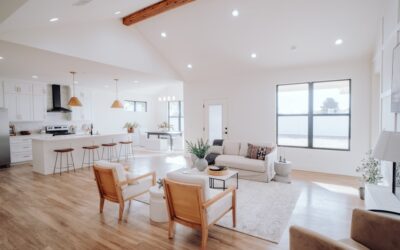
True Touch sits in the crowded middle tier of waterproof flooring brands, competing with NuCore, SmartCore, and the dozen other house-label SPC lines that have flooded American retail since 2020. The brand’s appeal is straightforward: a thick wear layer at a sub-$3 price point, sold both in stores and direct online. True Touch flooring can be a smart buy or a regrettable one depending on the SKU and the room you put it in. After installing approximately 6,200 square feet across rentals, flips, and one main-residence basement since 2023, here is the breakdown.
Who Makes It and What You Are Buying
True Touch is a private-label SPC (stone-plastic composite) and LVP line sourced from Chinese and Vietnamese manufacturing partners, distributed through regional flooring stores and a handful of online sellers. The product specs read well on paper: 20 mil wear layer on most SKUs, an attached IXPE underlayment, and 6 to 9 inch plank widths in lengths up to 48 inches.
Construction is standard for the category. The core is a limestone-and-PVC composite roughly 5 mm thick on the entry tier and 6 mm on the Pro line. The wear layer is clear vinyl with embossed-in-register texture on premium SKUs and printed-only on the budget options.
Pricing in 2026
- True Touch Essentials: $1.79 to $2.29 per sq ft, 12 mil wear layer, 5 mm thick
- True Touch Premier: $2.39 to $2.89 per sq ft, 20 mil wear layer, 5.5 mm thick
- True Touch Pro: $2.99 to $3.49 per sq ft, 22 mil wear layer, 6 mm thick with thicker IXPE pad
- True Touch Stone Look (tile-format): $2.69 to $3.29 per sq ft, embossed stone or concrete look
Shipping adds $0.15 to $0.30 per foot on online orders. In-store pricing at regional dealers tends to be slightly lower than online for the same SKU because they avoid the freight markup.
The Pros That Work
Price per mil is competitive. A 22 mil wear layer at $3.49 lands well under LifeProof Rigid Core ($3.99 to $4.99 for similar specs) and just slightly above NuCore Pro. The attached IXPE underlayment saves $0.30 per square foot over a separate pad and works well over slabs up to 3/16 inch out of flat in 10 feet.
Click system tolerance is decent. The True Touch Pro uses an angle-tap locking edge that goes together cleanly even for first-time installers. The board ends snap with light tap-bar pressure, and re-seating after a mistake is forgiving — no shattered tongues on my installs so far.
Where True Touch Disappoints
Photo film registration on the Essentials line is rough. Pattern repeats land every 10 to 14 boards, and the repeat is visible in any room over 200 square feet. Skip the entry tier for anything bigger than a closet or a small bathroom. The Premier and Pro lines step up substantially but still trail Karndean and Mannington for visual realism.
Customer service is the bigger concern. True Touch is a private label, which means warranty claims route through the original retailer rather than a manufacturer with a dedicated claims department. I have helped two customers file warranty claims; both took 8 to 12 weeks to resolve, and both required the original receipt, photographic evidence, and proof of subfloor moisture testing.
Best Use Cases
True Touch makes the most sense in spaces where price drives the decision and visual perfection does not. Rentals, flips, finished basements, mudrooms, and laundry rooms are all defensible. Skip True Touch for primary-residence great rooms where the floor will be photographed for Instagram or scrutinized by guests.
The basement application is the brand’s sweet spot. The waterproof core handles vapor drive, the attached pad reduces hollow sound on concrete, and a basement’s mood lighting hides the photo repeat that would otherwise stand out.
Installation Notes From Three Projects
Acclimate True Touch boxes flat-stacked for 48 hours at 65 to 85 degrees F before install. Standing boxes on edge compresses the IXPE pad unevenly and creates ridges underfoot. Leave 5/16 inch expansion gaps at every vertical surface. The technical sheet allows up to 50 linear feet without a T-molding; the field reality on a sun-exposed south wall is closer to 35 to 40 feet.
Use a hooked utility knife to score-and-snap straight cuts. A miter saw chips the wear layer along the cut line; a jigsaw melts the core. For tap-down work, a Roberts 10-37 tapping block paired with a 16-ounce dead-blow mallet seats the boards without crushing the tongue.
True Touch vs Competitors
- True Touch Pro vs NuCore Pro: Very similar specs and price. NuCore has slightly better bevel detail; True Touch has a thicker pad.
- True Touch Premier vs SmartCore Ultra: SmartCore wins on photo film registration; True Touch matches on wear layer thickness.
- True Touch Essentials vs LifeProof Lower Tier: LifeProof’s warranty enforcement is better; True Touch is $0.80 per foot cheaper.
- True Touch Pro vs Mannington Adura Rigid: Mannington wins on every spec except price; True Touch is the budget alternative.
Long-Term Durability
The 22 mil wear layer on the Pro line holds up well in moderate residential traffic. After 18 months in a busy mudroom with dogs and kids tracking in dirt daily, the floor shows no visible scratching and the bevels remain crisp. The Essentials 12 mil wear layer, by contrast, shows light scuffing in main walk lanes within 12 months.
Color stability is decent. After two summers of direct south-window sun on a sample installed in a sunroom, fading is minor and within normal expectations. No yellowing on the gray and white SKUs, and the warm browns held their tone better than expected.
Maintenance Basics
Damp microfiber mop with a pH-neutral cleaner like Bona for LVT or a 1-to-32 dilution of Simple Green. Skip steam mops, oil soaps, and Murphy’s — all three damage the wear layer and the IXPE bond. Felt pads on every furniture leg, walk-off mats at every exterior door, and the floor will look new for 8 to 10 years in typical residential traffic.
Final Verdict
True Touch flooring is a defensible budget pick when price drives the decision and you choose the Premier or Pro tier. Skip the Essentials line for anything larger than a small bathroom. Expect mediocre warranty support and order extra material upfront for future repairs. For rentals, flips, and budget-conscious main-residence basements, the math works. For the great room of a home you plan to stay in for 15-plus years, spend the extra $1.50 per foot on Mannington or COREtec.
Prefer to explore on your own?
See how new flooring looks in your actual room in seconds — free, no signup.
Try the free Floor Studio →