Understanding the types of carpet texture is the fastest way to narrow down thousands of carpet options into a short list that fits your rooms. Texture refers to how the yarn is cut, looped, or twisted at the surface, and it drives everything from how soft the carpet feels to how well it hides footprints and holds up under heavy traffic. Two carpets in the same color and fiber can perform completely differently based on texture alone.
Shoppers often fixate on color and price while overlooking construction, then wonder why their plush bedroom carpet looks matted in a year or why footprints show constantly. This guide covers the major surface styles, how each wears, and which rooms suit them, so you can match the right texture to the way you actually live.
Cut Pile vs Loop Pile Basics
Every carpet texture starts as a choice between cut pile and loop pile. In cut pile, the yarn loops are sheared at the top, leaving upright tufts that feel soft and luxurious. In loop pile, the yarns stay looped and uncut, creating a firmer, more durable surface. Many styles combine both, and understanding this foundation makes the named textures easier to grasp.
Cut pile tends to feel plusher but shows tracks and vacuum marks. Loop pile hides traffic better and resists crushing but can snag, which matters in homes with pets. The named textures below are variations built on these two approaches.
Plush and Saxony
Plush carpet, sometimes called velvet, is a dense cut pile with an even, smooth surface that feels formal and elegant. Saxony is a close cousin with slightly longer, twisted yarns. Both deliver a soft, uniform look ideal for formal living rooms and bedrooms where the surface reads like a manicured lawn.
The trade-off is visibility. These textures show footprints, vacuum lines, and furniture indentations clearly, and they mat down in high-traffic paths. Reserve them for low-to-moderate traffic rooms where their smooth luxury is the whole point rather than family rooms and hallways.
Textured (Trackless) Cut Pile
Textured cut pile is the best-selling residential style for good reason. The yarns are twisted and set at varying heights, and the tips are often crimped so light reflects unevenly. The result hides footprints, vacuum marks, and everyday dirt far better than plush, earning the nickname trackless carpet.
This forgiving nature makes it the go-to for family rooms, bedrooms, stairs, and general-use spaces. It balances softness and practicality, which is why builders and homeowners default to it when they want one carpet that works almost anywhere in the house.
Frieze and Shag
Frieze carpet uses highly twisted, long yarns that curl and kink at the surface, giving a casual, textured, almost rumpled appearance. Because the fibers point in many directions, frieze is outstanding at hiding footprints and tracks, and the tight twist makes it durable in busy areas. Shag is the longer, more dramatic relative, prized for its retro plushness but harder to clean.
- Frieze: durable, hides traffic, great for active households and casual rooms.
- Shag: ultra-soft and cushioned, best in low-traffic lounges; long fibers trap dirt and need deeper cleaning.
Berber and Level Loop
Berber and level loop carpets keep the yarn loops intact and uncut, all at the same height. This produces a firm, flat, hard-wearing surface that resists crushing and hides dirt well, which makes it a favorite for basements, home offices, and high-traffic commercial-style spaces. Classic Berber often features flecks of color against a neutral background.
The main caution is snagging. A single pulled loop can run, and pet claws are the usual culprit. If you love the durable, low-maintenance look but have cats or dogs, choose a small, tight loop rather than a large chunky one to reduce the risk.
Cut-and-Loop (Patterned) Carpet
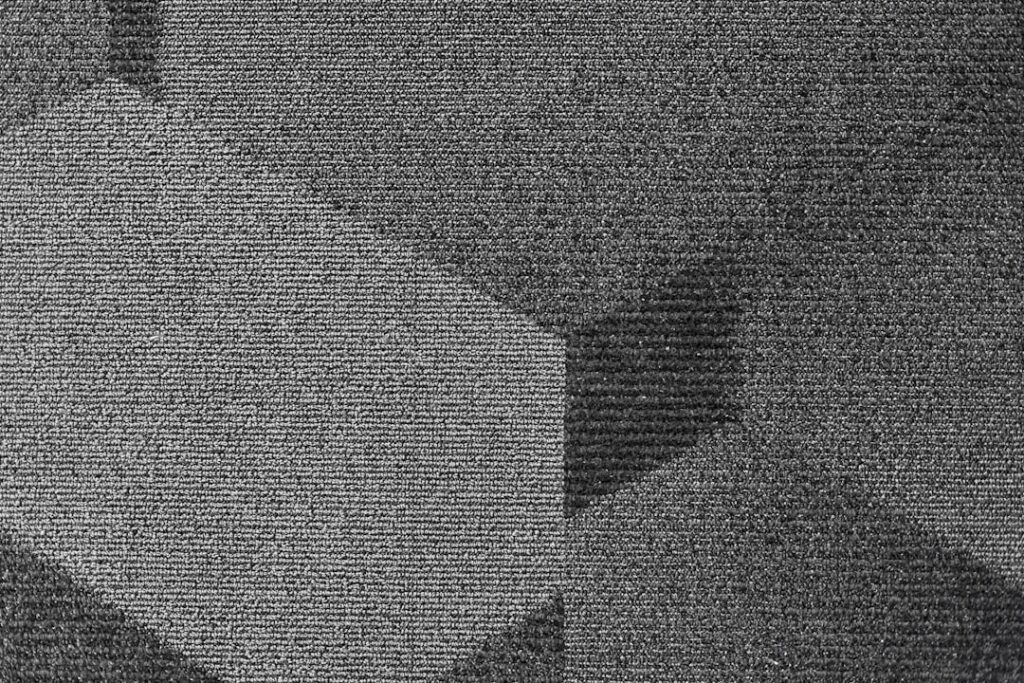
Cut-and-loop combines sheared and looped yarns in the same carpet to create sculpted patterns, from subtle pin-dots to bold geometric designs. The contrast between soft cut tufts and firm loops adds visual depth and, like textured styles, helps camouflage dirt and wear.
Because the pattern itself masks tracks and stains, cut-and-loop suits stairs, hallways, and family rooms that need both durability and a decorative surface. It bridges the gap between plain functional carpet and something with genuine design character, which is why designers reach for it when a room needs texture without a loud color.
How Twist and Density Affect Texture
Two specifications quietly control how any texture performs over time: twist level and density. Twist counts how many times the yarn is turned per inch, and a higher twist, roughly 5 to 6 turns, holds its shape far better than a loose 3-turn yarn that unravels and matts. Frieze carpets rely on very high twist, which is exactly why they resist crushing in busy rooms.
Density measures how tightly the tufts are packed into the backing. Press your fingers into a sample and try to reach the backing; if you feel it easily, the carpet is sparse and will flatten quickly regardless of its texture name. A dense, high-twist textured cut pile outperforms a cheap, loosely tufted version of the same style, so always ask for these numbers before you judge a carpet by its surface look alone.
Texture, Softness, and Fiber Type
Texture works hand in hand with fiber choice. Nylon is the most resilient fiber and springs back well, making it ideal for high-twist textured and frieze styles in busy areas. Polyester and the newer triexta fibers feel exceptionally soft and take rich colors, pairing nicely with plush and shag where softness is the goal. Wool, the natural premium option, brings a luxurious hand to plush and Saxony textures.
Softer fibers in a plush construction feel wonderful but show wear faster, while a slightly firmer nylon in a textured build lasts longer with less visible traffic. Deciding how much you value plush softness versus long-term appearance retention helps you land on the right texture-and-fiber combination for each room.
Matching Texture to Traffic and Rooms
Choosing well comes down to honest assessment of each room’s use. Use this quick pairing as a starting point:
- Formal living room or master bedroom: plush or Saxony for a smooth, luxurious look.
- Family room, kids’ rooms, general use: textured cut pile for its trackless forgiveness.
- Busy hallways and stairs: frieze or cut-and-loop for durability plus pattern.
- Basements and offices: level loop or Berber for crush resistance and easy cleaning.
- Low-traffic lounges: shag when maximum softness outweighs maintenance.
Also weigh fiber and twist quality alongside texture; a well-constructed textured carpet outlasts a cheaply made plush every time. Ask for the twist level and density rating, since higher numbers signal better resilience regardless of style.
Final Considerations Before You Buy
Texture affects more than looks. It changes how often you vacuum, how visible daily life is on the floor, and how many years the carpet lasts. A busy household with pets and kids is nearly always happier with a textured, frieze, or loop surface than with a smooth plush that broadcasts every footprint.
Once you know the types of carpet texture and how each behaves, request samples and walk on them barefoot, press furniture into them, and view them under your own lighting. The right texture, matched to the right room, is what separates a carpet that still looks good in a decade from one that disappoints within a year.