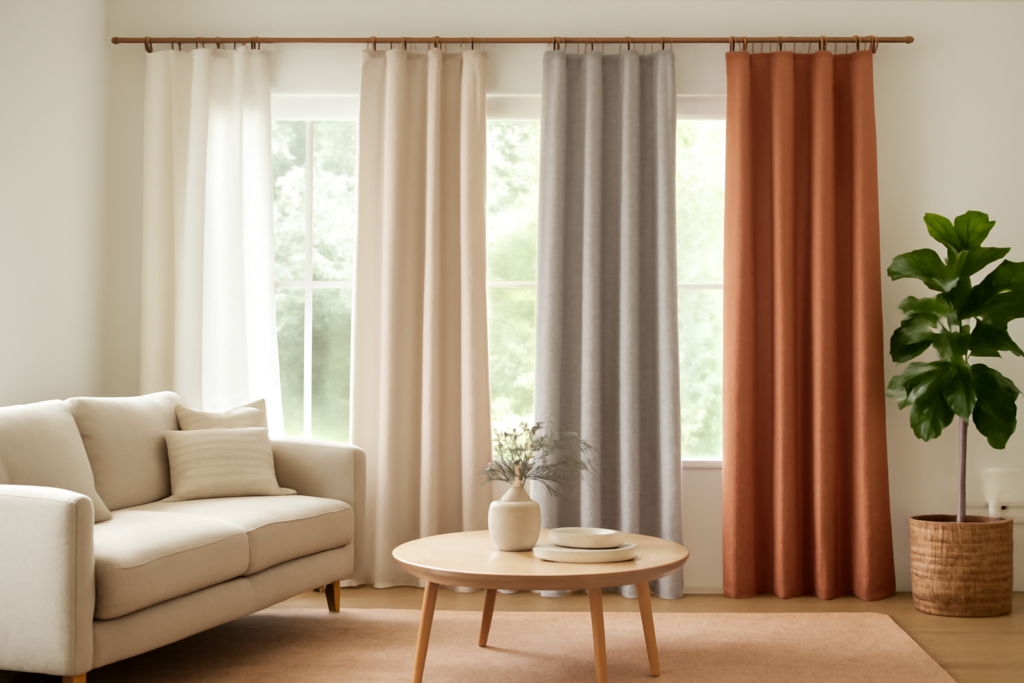
Curtains do far more than cover a window. The right panels frame a view, soften hard surfaces, control light, and pull an entire room together, while the wrong ones make a space feel dated or cramped. Knowing the types of curtains for living room use helps you choose by function and style rather than guessing in the store aisle. This guide breaks down fabrics, header styles, lengths, and how to layer them for a polished result.
- Start With Function
- Curtain Types by Fabric and Opacity
- Sheer Curtains
- Light-Filtering Curtains
- Room-Darkening and Blackout Curtains
- Thermal and Insulated Curtains
- Header Styles That Set the Look
- Choosing the Right Length
- Layering for Style and Function
- Color and Pattern Tips
- Measuring and Hanging
- Choosing the Right Rod and Hardware
- Caring for Living Room Curtains
- The Bottom Line
Start With Function
Before falling for a color, decide what your curtains need to do. A living room with a stunning view and good privacy may want only light, airy sheers. A room facing the street or the afternoon sun may need heavier panels or blackout lining. Most living rooms benefit from a layered approach that handles both light and privacy at different times of day.
Curtain Types by Fabric and Opacity
Sheer Curtains
Sheers are lightweight, translucent panels that filter daylight into a soft glow while preserving the view. They offer little privacy on their own, especially at night, but they excel at brightening a room and adding movement. Sheers work beautifully as the inner layer beneath heavier drapes.
Light-Filtering Curtains
A step up in weight, light-filtering curtains in cotton or linen blends diffuse light and add daytime privacy without darkening the room completely. They strike a comfortable middle ground for many living rooms, letting in a gentle glow while softening harsh sun.
Room-Darkening and Blackout Curtains
For media rooms or homes with strong sun, room-darkening and blackout panels block most or nearly all incoming light. They also add insulation, helping with energy bills, and dampen outside noise. In a living room that doubles as a movie space, a blackout lining makes a real difference.
Thermal and Insulated Curtains
Thermal curtains carry a special lining that slows heat transfer, keeping warmth in during winter and out during summer. They are a smart choice for large picture windows that lose energy, and many also help darken the room.
Header Styles That Set the Look
The way a curtain attaches to the rod, called the header, shapes its drape and formality:
- Rod pocket: a sewn channel the rod slides through, casual and gathered, best for lightweight panels
- Grommet (eyelet): metal rings along the top create even, modern folds and glide easily
- Pinch pleat: tailored, evenly spaced pleats for a classic, formal look
- Tab top: fabric loops over the rod for a relaxed, casual feel
- Pencil pleat: tightly gathered folds suited to traditional rooms and layering
Grommet and pinch-pleat headers are the most popular for living rooms because they hang cleanly and slide smoothly.
Choosing the Right Length
Length has an outsized effect on how put-together a room looks. The most common options:
- Float: panels stop about half an inch above the floor, crisp and easy to clean
- Kiss: panels just touch the floor for a tailored look that requires precise measuring
- Puddle: extra fabric pools on the floor for a romantic, dramatic effect
For most living rooms, aim for floor length rather than short, sill-length panels, which tend to look dated. Hang the rod high and wide, several inches above the window frame and extending beyond it, to make windows appear larger and ceilings taller.
Layering for Style and Function
The most flexible living rooms layer two treatments: sheers behind heavier drapes. By day, you draw back the drapes and let the sheers soften the light. At night, you close the drapes for privacy and warmth. A double curtain rod makes this easy. Layering also adds depth and a designer feel that single panels cannot match.
Color and Pattern Tips
Curtains can blend in or stand out, and both approaches work. Panels close to your wall color make the room feel larger and calmer, while a bold color or pattern becomes a focal point. Solid neutrals are the safest long-term choice since they survive changing decor, while patterns add personality at the cost of flexibility. Consider how the curtain fabric interacts with your flooring and furniture to keep the palette cohesive.
Measuring and Hanging
Accurate measuring prevents the most common disappointment, panels that are too short or too narrow. Measure the window width and add 8 to 12 inches on each side so curtains clear the glass when open. For fullness, the combined panel width should be roughly two to two and a half times the window width. Hang the rod four to six inches above the frame, or higher toward the ceiling for a grander feel.
Choosing the Right Rod and Hardware
The rod is more than a place to hang fabric; it shapes the whole look. Match the rod finish to your room’s other metals, whether that is brushed nickel, matte black, or warm brass. For heavier drapes, choose a sturdy rod at least three-quarters of an inch in diameter so it does not sag across a wide window. Decorative finials add a finished touch at the ends. If you plan to layer sheers behind drapes, a double rod handles both layers cleanly. Make sure the brackets are anchored into studs or use proper wall anchors, since fully loaded curtain panels are heavier than they look.
Caring for Living Room Curtains
Curtains collect dust, pollen, and pet hair over time, so a little upkeep keeps them fresh. Vacuum panels with an upholstery attachment every few weeks, or shake them out and air them periodically. Check the care label before washing, since many lined and pleated curtains are dry-clean only, while simpler cotton and polyester panels can often be machine washed on a gentle cycle and hung to dry to avoid wrinkles. A handheld steamer is the easiest way to smooth out creases without taking the panels down. Rotating or closing curtains evenly also helps them fade uniformly if they get strong sun.
The Bottom Line
The best of the many types of curtains for living room spaces is the one that matches how you use the room. Combine sheers for daytime softness with heavier or blackout panels for privacy and light control, choose a header and length that suit your style, and hang them high and wide. Get those basics right and your curtains will frame the room beautifully while doing real work, day and night.