Choosing among the many types of tubs for bathroom projects shapes how the whole room functions, from how it looks to how you bathe and how much you spend. A tub is one of the largest fixtures in any bathroom, and the style you pick affects plumbing, available space, and even resale appeal. With options ranging from compact alcove models to dramatic freestanding soakers, the right choice depends on your space, budget, and how you actually use the bath. This guide walks through the main types so you can decide with confidence.
Alcove Tubs
The most common style in American homes, the alcove tub fits into a three-walled recess with one finished apron facing the room. It is the standard tub-shower combination most people grew up with.
- It is space-efficient and ideal for smaller or shared bathrooms.
- It is the most affordable option and easy for plumbers to install.
- It works perfectly with a shower for combined bathing.
The tradeoff is limited design flair, since only one side shows. If you want a practical, budget-friendly tub for a family bathroom, the alcove remains the dependable default.
Freestanding Tubs
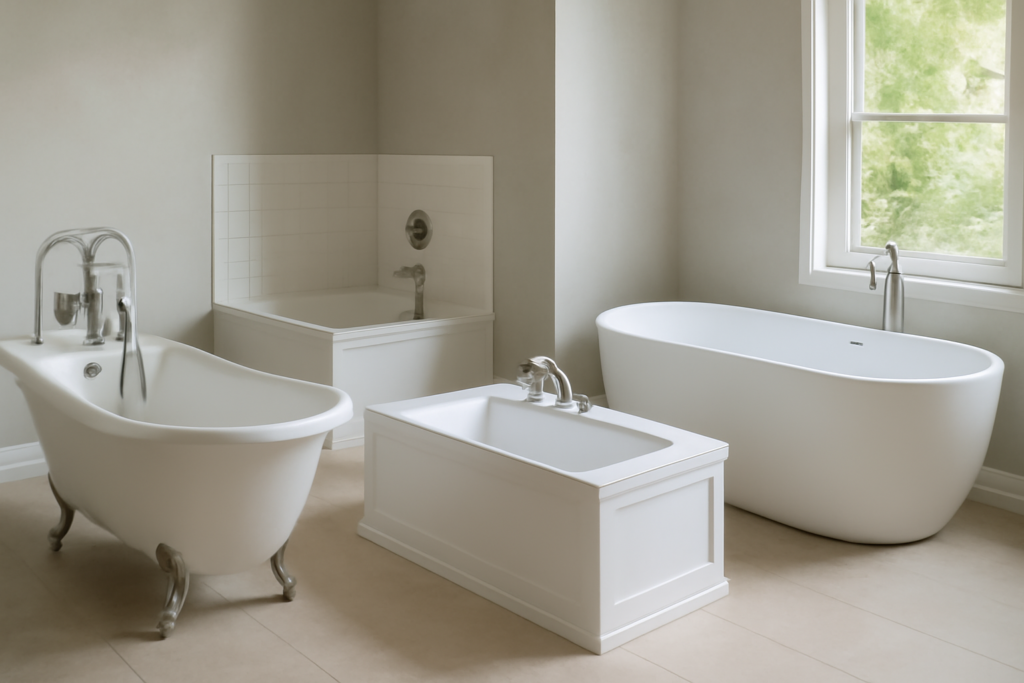
Freestanding tubs stand alone as a centerpiece, finished on all sides and not attached to any wall. They range from classic clawfoot designs to sleek modern ovals and are the statement choice in spa-style bathrooms.
They deliver dramatic visual impact and flexible placement, but they demand more floor space, often require special floor-mounted plumbing, and rarely pair with a shower. They also tend to cost more, both for the fixture and the installation. For a primary bath where you want a luxurious focal point, a freestanding tub is hard to beat.
Drop-In and Undermount Tubs
These tubs are installed into a custom deck or surround that you finish with tile, stone, or another material. The difference is the rim: a drop-in tub’s edge rests on top of the deck, while an undermount tub is set beneath it for a seamless look.
- They offer a custom, built-in appearance that integrates with your design.
- The deck surround creates handy ledges for toiletries.
- Undermount versions make cleaning the deck easier with no exposed rim.
The downside is higher cost and labor, since you are building and finishing a surround. These tubs suit larger bathrooms and homeowners who want a tailored, high-end result.
Soaking and Whirlpool Tubs
Defined more by function than placement, these tubs prioritize the bathing experience. Soaking tubs are deeper than standard models, letting you submerge for a relaxing, full-body soak, and many freestanding or drop-in tubs are designed as soakers.
Whirlpool and air-jet tubs add powered jets for hydrotherapy, circulating water or air for a massaging effect. They cost more, use more water, and require electrical hookups and regular cleaning of the jet system, but they bring a spa experience home. Choose a soaker for quiet relaxation or a jetted tub if you want active hydrotherapy.
Walk-In Tubs
Designed with accessibility in mind, walk-in tubs feature a watertight door and a low threshold so you can step in without climbing over a high wall. They typically include a built-in seat and grab bars.
- They are ideal for aging in place or for anyone with mobility challenges.
- Many include therapeutic jets and quick-drain features.
- They improve bathroom safety and independence.
The drawbacks are a higher price, a longer fill-and-drain time since you sit inside while it fills, and a larger footprint. For households prioritizing safety and long-term accessibility, a walk-in tub is a worthwhile investment.
Tub Materials and Costs
Material affects weight, warmth, durability, and price. Acrylic is lightweight, warm to the touch, and affordable, the most popular choice. Fiberglass is the budget option but less durable. Enameled steel and cast iron are heavy and long-lasting, with cast iron holding heat exceptionally well but requiring a reinforced floor. General installed costs vary widely:
- Alcove tubs: roughly $400 to $1,500 plus installation.
- Drop-in and undermount tubs: roughly $700 to $3,000 plus the surround and labor.
- Freestanding tubs: roughly $1,000 to $5,000 plus installation.
- Walk-in tubs: roughly $2,500 to $8,000 or more installed.
Plumbing changes, flooring reinforcement, and surround materials can add significantly, so plan the full project budget rather than just the tub price.
Sizing and Space Planning
The right tub has to fit not just the room but the way you move through it, so measure carefully before falling for a model. Standard alcove tubs run about 60 inches long, but soaking and freestanding tubs vary widely, and a deep soaker holds far more water than a standard tub, which affects both your water heater and your floor’s load.
- Confirm the tub fits the available footprint with room to walk and open the door comfortably.
- Check the path from the door to the bathroom, since large freestanding tubs can be hard to maneuver into place.
- Verify your water heater can fill a deep soaker without running cold.
- For heavy cast iron or large soakers, confirm the floor structure can bear the loaded weight.
Planning these dimensions early prevents the frustrating discovery that a beautiful tub will not fit through the doorway or overwhelms the room once installed.
Plumbing and Installation Factors
Switching tub types often means changing the plumbing, which is one of the biggest hidden costs of a bathroom remodel. An alcove replacement that keeps the existing layout is the simplest swap, while moving to a freestanding tub frequently requires relocating the drain and supply lines, sometimes through the floor.
Faucet placement is part of this equation. Freestanding tubs may need a floor-mounted filler, a wall-mounted spout, or a deck-mounted faucet, and each choice affects the plumbing work. Whirlpool and air-jet tubs add an electrical requirement for the pump, which must be installed to code. Walk-in tubs need their door seals and drains plumbed precisely to avoid leaks. Because these factors drive a large share of the project cost, get a clear quote that covers plumbing and any electrical work, not just the price of the tub itself.
Choosing the Right Tub
The best tub for your bathroom balances your space, budget, and how you bathe. For a compact family bath, an alcove tub-shower combo is practical and economical. For a luxurious primary suite, a freestanding soaker makes a stunning centerpiece. If accessibility is a priority, a walk-in tub protects independence for years. Measure your space carefully, confirm your floor can handle the weight of heavier materials, and account for plumbing and installation before you buy. Match the type to your real needs, and your new tub will serve you well for the life of the bathroom.