Choosing the right vacuum for hardwood floors means finding a machine that picks up dust, pet hair, and debris without scratching or dulling the finish. Not every vacuum is up to the task. Stiff bristle brushes, heavy wheels, and poor suction control can do more harm than good on wood surfaces.
- Why Hardwood Floors Need a Specific Vacuum
- Key Features to Look For
- Soft or Rubber Brush Roll
- Suction Control
- Rubber or Felt-Lined Wheels
- Good Edge Cleaning
- HEPA Filtration
- Types of Vacuums for Hardwood Floors
- Features That Damage Hardwood Floors
- Vacuuming Tips for Hardwood Floors
- Budget Considerations
- Maintenance for Your Vacuum
- Final Thoughts
This guide explains the features that matter most, reviews the main vacuum types, and helps you narrow down the best option for your hardwood flooring and household needs.
Why Hardwood Floors Need a Specific Vacuum
Hardwood floors are more vulnerable to surface damage than carpet. Fine grit and sand act like sandpaper when dragged across the finish by a spinning brush roll. Heavy, rigid wheels can leave scuff marks. And exhaust air blowing downward can scatter dust rather than collecting it.
The right vacuum for hardwood addresses all of these concerns while still providing enough suction to pull dust from between plank seams and corners. It should transition smoothly between hard floors and area rugs without requiring manual adjustments.
Key Features to Look For
Soft or Rubber Brush Roll
A soft-bristle or rubber brush roll is the single most important feature for hardwood floors. Traditional stiff nylon brushes designed for carpet can scratch wood finishes over time. Soft felt or rubber rollers grip dust and hair without abrasion. Many models now offer a dedicated hard-floor brush head that disables the spinning brush entirely, relying on direct suction instead.
Suction Control
Adjustable suction prevents the vacuum from grabbing lightweight area rugs or creating too much friction against the floor surface. Lower suction settings also reduce exhaust airflow that can blow dust around.
Rubber or Felt-Lined Wheels
Hard plastic wheels can scratch and scuff wood floors. Look for models with soft rubber or felt-covered wheels that glide smoothly without leaving marks.
Good Edge Cleaning
Dust accumulates along baseboards and in the gaps between planks. A vacuum with strong edge suction and a low-profile head that reaches under furniture and into corners will keep hardwood floors genuinely clean rather than just looking passable.
HEPA Filtration
HEPA filters capture 99.97 percent of particles down to 0.3 microns, preventing fine dust from being blown back into the room through the exhaust. This is especially valuable on hard floors where airborne dust settles visibly on the surface within hours of cleaning.
Types of Vacuums for Hardwood Floors
Stick Vacuums
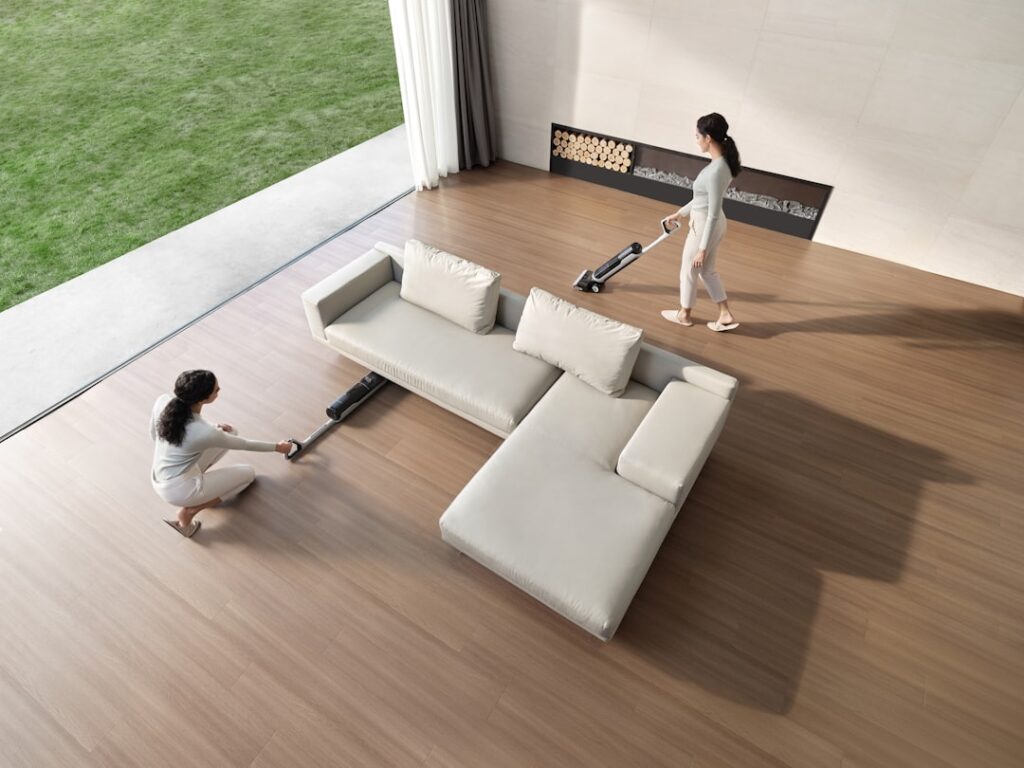
Stick vacuums are the most popular choice for hardwood floors in 2026. They are lightweight, cordless, easy to maneuver, and quick to grab for daily touch-ups. The best stick vacuums now deliver suction comparable to full-size uprights, with run times of 40 to 60 minutes on a charge.
The main limitation is dust bin capacity. Small bins mean frequent emptying during larger cleaning sessions. Battery life can also be a constraint in homes over 2,000 square feet.
Best for: daily maintenance, smaller homes, and households that prefer quick, frequent cleanings over weekly deep cleans.
Canister Vacuums
Canister vacuums have long been the professional’s choice for hard floors. The motor and dust collection sit in a wheeled canister connected to the cleaning head by a flexible hose. This design puts less weight on the floor, allows excellent maneuverability, and typically provides the strongest suction of any vacuum type.
The hard-floor brush heads available for canister vacuums are purpose-built for the task, with natural bristles or felt strips that glide across wood without scratching. The long hose reach also makes it easy to clean under furniture and up stairways.
Best for: thorough whole-house cleaning, larger homes, and anyone who prioritizes cleaning performance over convenience.
Upright Vacuums
Uprights are the traditional American vacuum style and remain the best sellers overall. For hardwood floors, look for models with a hard-floor mode that lifts or disables the brush roll and adjusts the suction head height for flat contact with the floor.
The weight of an upright can be a drawback on wood floors. Heavier models press harder against the surface and are more likely to leave scuffs, especially when turning. If you go with an upright, choose one under 15 pounds with soft rubber wheels.
Best for: households with a mix of carpet and hardwood that want one vacuum for everything.
Robot Vacuums
Robot vacuums handle daily dust maintenance automatically, which is valuable on hardwood floors where dust is visible almost immediately after cleaning. The best models navigate systematically, return to their charging dock when the battery runs low, and empty their own dust bins into a base station.
Robot vacuums are supplemental tools rather than complete replacements for a manual vacuum. They handle surface dust and pet hair well but miss corners, edges, and tight spaces. Pair a robot with a stick or canister vacuum for the best results.
Best for: daily automated maintenance between deeper cleanings.
Features That Damage Hardwood Floors
Knowing what to avoid is as important as knowing what to look for.
Beater bars. The aggressive rotating brush designed to agitate carpet fibers will scratch and dull hardwood finishes. If the vacuum has a beater bar, it must be fully disengageable for hard-floor use.
Hard plastic wheels without padding. These scratch and scuff, especially when turning on the spot.
Downward exhaust. Vacuums that blow air straight down scatter dust and debris rather than collecting it. Look for rear or upward exhaust designs.
No height adjustment. A vacuum head that sits too low creates excessive friction and suction lock against the floor. Adjustable height ensures proper airflow and easy movement.
Vacuuming Tips for Hardwood Floors
Even with the right vacuum, technique matters for keeping hardwood floors in top condition.
Vacuum with the grain. Moving the vacuum parallel to the wood grain pushes debris out of the micro-grooves in the surface rather than across them.
Clean the brush roll regularly. Hair and string wrapped around the roller can trap grit against the floor. Check and clean the brush roll after every few uses.
Vacuum frequently. Daily or every-other-day vacuuming prevents grit from accumulating. Sand and dirt particles are the primary cause of hardwood floor scratching, and they do their damage when walked on, not when they first land.
Use doormats and area rugs. Trapping dirt at entryways reduces the amount that reaches your hardwood floors. Vacuum the mats and rugs as frequently as the floors themselves.
Skip the steam mop. While not a vacuum feature, it is worth mentioning that steam mops can damage hardwood finishes and force moisture into seams. A vacuum followed by a lightly damp microfiber mop is the safest cleaning routine.
Budget Considerations
Quality stick vacuums suitable for hardwood floors range from 200 to 600 dollars. Canister vacuums run 200 to 800 dollars. Uprights with good hard-floor modes cost 150 to 500 dollars. Robot vacuums with reliable navigation and self-emptying bases range from 300 to 1,000 dollars.
Spending more generally gets you better filtration, longer battery life on cordless models, larger dust bins, and more refined brush roll designs. For hardwood-heavy homes, investing in a purpose-built hard-floor vacuum pays off in fewer scratches and better cleaning performance over the life of the machine.
Maintenance for Your Vacuum
A well-maintained vacuum protects your floors better and lasts longer. Empty the dust bin or replace bags before they are completely full for maximum suction. Wash or replace filters according to the manufacturer’s schedule. Check wheels and brush rolls for trapped debris monthly. Store the vacuum in a dry location to prevent motor issues.
Final Thoughts
The best vacuum for hardwood floors is one that combines strong suction with a soft touch. Prioritize a soft or rubber brush roll, gentle wheels, and adjustable suction over raw power. A lightweight stick vacuum handles daily maintenance beautifully, while a canister or quality upright provides the deep cleaning muscle for weekly sessions.
Whichever type you choose, frequent vacuuming is the simplest and most effective way to keep your hardwood floors looking their best for years to come.
Prefer to explore on your own?
See how new flooring looks in your actual room in seconds — free, no signup.
Try the free Floor Studio →