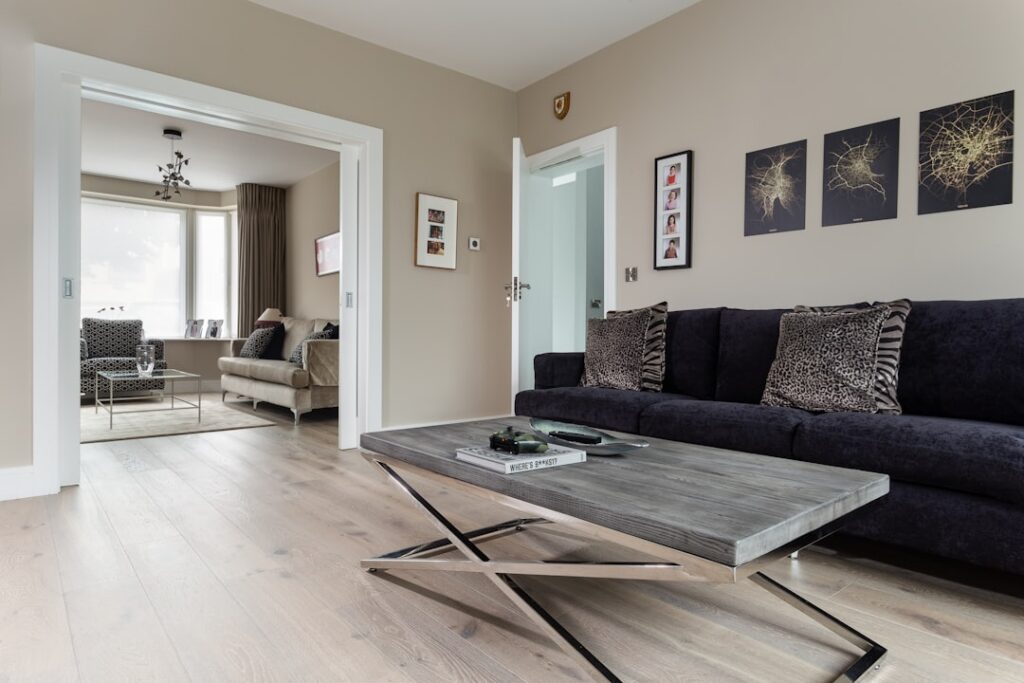
Shopping for furniture, cabinets, or flooring, you will run into two surfaces that look similar from across the room but could not be more different underneath. The veneer vs laminate question trips up a lot of homeowners because both wrap an inexpensive core in an attractive face, yet one is genuine wood and the other is a printed image. Understanding that single distinction changes how you judge price, durability, repairability, and long-term value.
This guide lays out exactly what each material is, how they are made, where each performs best, and which one deserves your money for a given project. By the end you will be able to spot the difference and choose with confidence.
What Wood Veneer Is
Wood veneer is a thin slice of real hardwood, often around 1/40 to 1/8 inch thick, peeled or sawn from a log and glued to a stable substrate such as plywood, MDF, or particleboard. Because it is authentic timber, veneer has real grain, natural color variation, and the warmth that only wood provides. No two sheets are identical, and fine furniture makers prize veneer for letting them use precious species, like walnut burl or quartersawn oak, economically and in dimensionally stable panels.
Crucially, because veneer is real wood, it can be stained, and in thicker versions it can sometimes be lightly sanded and refinished, though the thin layer means there is little room for error.
What Laminate Is
Laminate is a manufactured surface built from layers. At its core is a fiberboard or particleboard base. On top sits a printed decorative layer, essentially a high-resolution photograph of wood, stone, or another material, sealed under a clear, tough wear layer of melamine resin. There is no real wood on the surface at all; the wood look is an image. Flooring laminate adds an embossed texture so the surface feels grained, but it is still a print beneath a plastic-like coating.
Because the wear layer is hard resin, laminate is engineered for scratch and stain resistance, which is precisely why it dominates the budget flooring market.
The Core Difference at a Glance
Everything else flows from one fact: veneer is real wood, laminate is a printed image under resin. That drives the practical contrasts:
- Authenticity: veneer is genuine timber with unique grain; laminate is a repeating photographic pattern.
- Durability against scratches: laminate’s resin wear layer usually resists scratches and scuffs better.
- Repairability: minor veneer damage can sometimes be sanded or refinished; laminate cannot be refinished and is replaced when worn.
- Moisture: both dislike water, but quality laminate often handles humidity and spills better than thin veneer.
- Feel and value: veneer reads as higher-end and warmer; laminate reads as practical and economical.
Durability and Everyday Performance
For sheer resistance to daily abuse, laminate generally wins. Its melamine wear layer shrugs off scratches from pets, chair legs, and dropped utensils far better than a delicate wood veneer, which can be scratched through to the substrate. Laminate also resists fading and surface staining well. Veneer, being real wood, is more vulnerable to scratches, dents, water rings, and UV color change, and once that thin wood layer is breached, you see the substrate beneath. In a busy household, laminate’s toughness is a genuine advantage.
Cost, Looks, and Repairability
On price, laminate is typically the more affordable of the two, which is a big part of its appeal for budget projects. Veneer costs more because it uses real wood and more skilled fabrication, but it delivers an authenticity laminate cannot fully replicate, especially up close where a repeating print pattern can become noticeable. Repairability also separates them:
- A scratched or water-marked veneer can sometimes be touched up, lightly sanded, or refinished by a skilled hand.
- Damaged laminate cannot be sanded or refinished; the affected board or panel is simply replaced.
- Veneer’s natural look ages and develops character; laminate stays uniform until it wears out.
How to Tell Them Apart
In a showroom or a secondhand store, you can usually identify which material you are looking at with a few quick checks. Real wood veneer reveals itself through subtle clues, while laminate gives itself away on close inspection:
- Look for repeating grain: if the exact same knot or grain pattern appears on multiple pieces, you are looking at a printed laminate.
- Check the edges: veneer often shows real wood grain wrapping the edge, while laminate edges may reveal the fiberboard core or a separate edge band.
- Feel the surface: quality veneer has the warmth and slight irregularity of wood, while laminate feels uniformly smooth or has a regular embossed texture.
- Examine corners and wear spots: chips on laminate expose the brown or gray core beneath the image, a dead giveaway.
Knowing these tells helps you shop honestly, especially when a seller describes a piece simply as wood. The label can be vague, but the surface rarely lies once you know what to look for.
Maintenance and Care Differences
The two surfaces ask for different care routines. Veneer, being real wood, prefers gentle treatment: dust regularly, clean with products made for wood, avoid soaking it with water, and keep it out of harsh direct sun that can fade and dry the surface. Periodic conditioning suits some veneered furniture. Laminate is far more low-maintenance, tolerating a damp cloth and standard cleaners, though you should still avoid standing water at seams where moisture can swell the core.
Neither material loves moisture, but for very different reasons. Veneer can lift or check if water penetrates the thin wood layer, while laminate can swell where liquid reaches the fiberboard through seams or damaged edges. In both cases, wipe spills promptly and protect joints. Match your care routine to the material and either surface will look good for years.
Which One Should You Choose?
The right pick depends on the project and your priorities. Choose veneer when authenticity, warmth, and a high-end appearance matter most, such as statement furniture, quality cabinetry, and pieces you want to last and age gracefully. Choose laminate when budget, scratch resistance, and easy maintenance lead the list, such as flooring in high-traffic areas, rental properties, kids’ rooms, and any space where practicality outranks prestige.
There is no universally superior option in the veneer vs laminate debate; there is only the better fit for your use, budget, and tolerance for upkeep. If you want real wood character and are willing to baby the surface a bit, veneer rewards you. If you want a worry-free surface that handles real life and costs less, laminate is hard to beat. Inspect samples in person, run your hand across the surface, and look closely for repeating patterns, and the difference will become obvious.
Prefer to explore on your own?
See how new flooring looks in your actual room in seconds — free, no signup.
Try the free Floor Studio →