Walk into any Home Depot garden center between March and June and the pallet mountain by the entrance is almost always the same product. Vigoro mulch is Home Depot’s exclusive house garden brand, and its bagged mulch line — especially the $2-to-$4 colored wood mulch that anchors the chain’s famous spring “5 for $10” sales — moves by the trainload. Exclusive house brands invite a fair question: is this decent mulch or just cheap mulch? The answer varies meaningfully across the line, because Vigoro spans everything from dyed recycled wood to premium cypress to shredded rubber, and the products behave very differently in a bed. Here is what is actually in each bag, what it covers, and where each type belongs in your yard.
The Core Line: Colored Wood Mulch
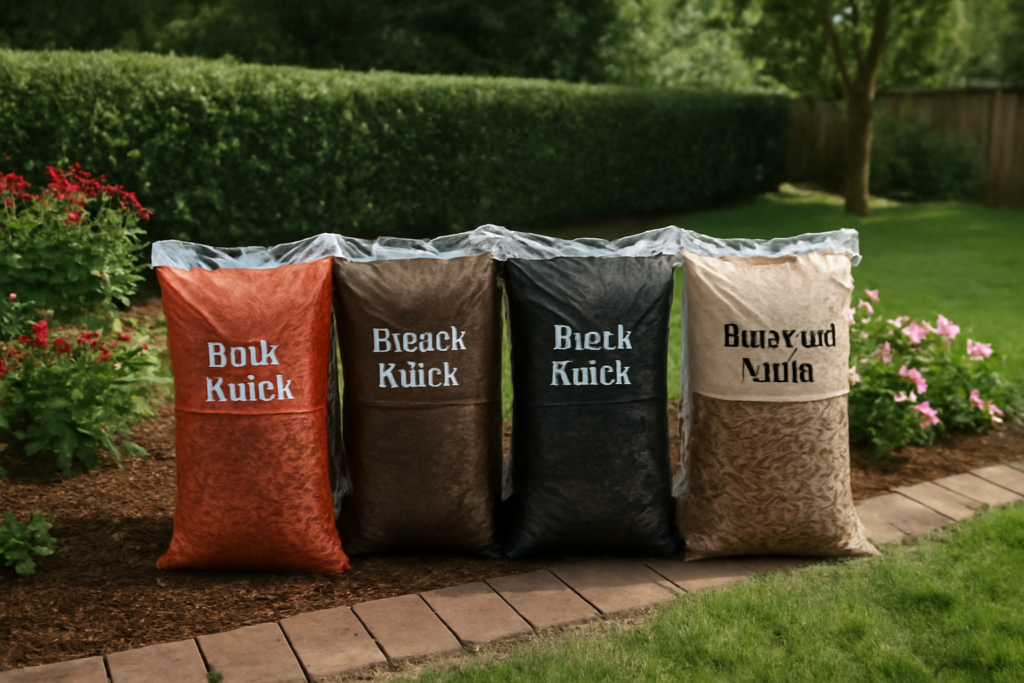
Vigoro’s volume product is colored wood mulch in 2-cubic-foot bags, sold in red, black, and brown. The feedstock is primarily recycled and reground wood — pallet lumber, forestry byproduct, and mill residue — chipped to a medium shred and tumbled with colorant. The dyes are iron oxide (red and brown) and carbon black, the same mineral pigments used across the industry, and they are non-toxic to plants, pets, and soil life. Regular price floats around $3.75 to $4 per bag, but the headline is the promotion: Home Depot drops colored Vigoro to 4-or-5-bags-for-$10 repeatedly around Easter, Memorial Day, and Father’s Day, which works out to $2 to $2.50 a bag. At that price, no bulk delivery under 10 yards competes once you count the delivery fee.
Performance is what you would expect from recycled wood shred: it suppresses weeds well at proper depth, holds soil moisture, and looks crisp for a season. Color retention is guaranteed for 12 months, and in practice black holds tone best, brown fades to tan by late summer in full sun, and red shifts toward orange-pink. Because reground pallet wood is drier and less resinous than bark, it breaks down somewhat faster than premium bark mulch — plan on refreshing a 2-inch top layer annually.
Premium and Natural Options
Beyond the colored core, the line includes several natural products worth knowing. Vigoro cypress mulch blend, usually $3 to $4.50 per bag, is lighter in color, naturally insect-resistant thanks to cypress oils, and slower to decompose than reground hardwood — a good pick around foundations and in beds where you want two seasons per application. Pine bark nuggets (small, medium, and large sizes) suit shrub beds and acid-loving plantings like azaleas and blueberries; nuggets resist matting and last two to three years, though they float and migrate in heavy downpours, so keep them off slopes and drainage paths. Depending on region, stores also stock Vigoro pine straw and a natural undyed hardwood, both useful when you want the bed to read organic rather than uniform.
Rubber Mulch: A Different Product Entirely
Vigoro recycled rubber mulch, at roughly $7 to $10 per 0.8-cubic-foot bag, is shredded tire crumb colored to mimic wood. It never decomposes, never feeds soil, and costs several times more per covered foot — which makes it wrong for plant beds and right for exactly two places. The first is playgrounds: a 6-inch layer of rubber mulch provides certified fall-height protection and does not compact, splinter, or attract insects, which is why commercial playgrounds use it. The second is decorative zones with zero planting, like a strip between a fence and a shed, where a permanent no-maintenance surface beats annual re-mulching. In garden beds, skip it; plants gain nothing, summer heat makes it smell faintly of tire, and removing thousands of rubber shreds later is a miserable job.
Coverage Math That Saves You a Second Trip
Under-buying mulch is the classic Saturday mistake. One 2-cubic-foot bag covers 12 square feet at a 2-inch depth or 8 square feet at 3 inches. Run the numbers before the store trip:
- Measure bed square footage (length x width, estimate curves generously).
- At 2 inches deep: divide square feet by 12 to get bag count.
- At 3 inches deep: divide by 8.
- Add 10 percent for settling and inevitable thin spots.
A typical suburban front foundation bed of 200 square feet needs 17 bags at 2 inches or 25 bags at 3 inches. At sale pricing that is $34 to $63 — and at 25-plus bags you are also approaching the point where a bulk yard (one cubic yard equals 13.5 of these bags) becomes worth comparing if you have a truck. For weed suppression, 2 to 3 inches is the target; more is not better, because 4-plus inches suffocates roots and invites artillery fungus and sour mulch problems.
Application Technique the Pros Use
Edge first: cut a clean 4-inch-deep spade edge or install steel edging so mulch has a defined stopping line — crisp edges are 80 percent of the professional look. Pull weeds and lay down a pre-emergent like Preen if the bed has a weed history; skip plastic sheeting and even landscape fabric under wood mulch, since fabric blocks the decomposition-to-soil pipeline and turns into a weed-rooted mess within three years. Spread mulch with a rake to even depth, then run the critical detail: pull mulch back 2 to 3 inches from every trunk and stem. Volcano mulching against bark holds moisture on the trunk, rots the cambium, and invites borers — it kills more landscape trees than drought does. Water the finished bed lightly to settle dye and knock down dust. Fresh iron-oxide colorant can rub off on hands, concrete, and dog paws until it is rain-set, so give colored mulch 24 dry hours before heavy contact and sweep stray shreds off driveways before they stain.
Vigoro vs. Scotts, Preen, and Bulk Suppliers
Against Scotts Earthgro (the Lowe’s-side equivalent, and a fellow sale-priced recycled-wood product) Vigoro is functionally interchangeable — buy whichever chain’s promotion is running. Scotts Nature Scapes and Preen-branded mulch cost $1 to $2 more per bag and offer finer, more consistent texture plus, in Preen’s case, built-in pre-emergent herbicide; those are legitimate upgrades for high-visibility front beds. Bulk mulch from a local landscape supplier runs $25 to $50 per cubic yard for double-shredded hardwood and beats bagged pricing on any project over about 3 yards, with the tradeoffs of delivery fees, a driveway pile, and variable quality. Vigoro’s lane is clear: small-to-medium projects, sale timing, and the convenience of clean stackable bags you can haul in a sedan trunk.
Timing, Storage, and Troubleshooting
Mulch in late spring after soil warms — an April layer in northern states traps cold and slows perennials, while a late-May application locks in warmth and moisture right as summer arrives. Fall mulching works too, insulating roots ahead of winter, and clearance pricing in September often beats even the spring sales. Unopened bags store fine through winter if kept dry and off the ground; a pallet or a couple of scrap 2x4s under the stack prevents the bottom bags from wicking soil moisture and going anaerobic. If an opened bag smells sharply of vinegar or ammonia, that is sour mulch — wood that fermented in the sealed bag — and dumping it straight against tender plants can burn foliage. Spread it somewhere open for a day or two to off-gas first and it becomes perfectly usable. One more troubleshooting note: the small tan puffballs that sometimes appear on wood mulch are artillery fungus, which shoots tar-like spores onto nearby siding and cars. It thrives in aged hardwood mulch kept constantly damp in shade; if you have had it, switch those beds to pine bark nuggets or cypress, which resist it.
Bottom Line
Vigoro mulch is exactly what a house brand should be — unglamorous, consistent, and priced to win. The colored wood line is a legitimate best-buy during Home Depot’s multi-bag promotions, and the 12-month color guarantee holds up acceptably if you accept some fading as normal physics rather than a defect. Choose cypress or pine bark where longevity matters more than the deepest color, reserve rubber for playgrounds and plant-free zones, and put your savings into buying enough bags to reach a real 3-inch depth, because a thin layer of premium mulch loses to a proper layer of budget mulch every time. Stack the sale, edge the beds, keep it off the trunks, and your landscape will look professionally maintained for about the cost of two pizzas a season.