Walk down the cleaning aisle and you will find dozens of bottles promising to make your floors shine, but the wrong one can leave your vinyl cloudy, streaky, or permanently dull. Choosing the right vinyl flooring cleaning products matters more than most homeowners realize, because vinyl’s wear layer is sensitive to the harsh chemicals, waxes, and abrasives that work fine on tile or stone. The best products are pH-neutral, residue-free, and gentle enough for daily use. This guide covers the store-bought cleaners worth buying, the budget DIY mixes that rival them, and the products you should keep far away from your floor.
What to Look For in a Vinyl Cleaner
Three qualities separate a good vinyl cleaner from a floor-dulling mistake. First, it should be pH-neutral, meaning neither strongly acidic nor alkaline, so it lifts dirt without etching the finish. Second, it should be residue-free and rinse clean, since film buildup is the leading cause of streaky, sticky floors. Third, it should be wax-free; wax and polish products create a haze on luxury vinyl plank that is difficult to strip off later.
Avoid anything labeled “mop and shine,” “oil soap,” or “wax,” no matter how appealing the promise of gloss. That shine is a coating, and on vinyl it clouds and attracts dirt within weeks.
Best Store-Bought Cleaners
A handful of commercial products are formulated specifically for resilient vinyl and consistently deliver clean, streak-free results.
- Rejuvenate No Bucket Floor Cleaner: A pH-neutral spray-and-mop cleaner that dries without residue. Runs about $8 to $12 for a 32-ounce bottle and works well for daily maintenance.
- Bona Hard-Surface Floor Cleaner: A trusted, water-based, residue-free formula safe for LVP and tile. Around $10 to $15 for a spray bottle, with refillable gallon jugs to cut cost.
- Zep Neutral pH Floor Cleaner: A concentrate you dilute yourself, making it one of the most economical picks at roughly $12 per gallon that yields many buckets of solution.
- Armstrong Once ‘n Done: A no-rinse resilient-floor cleaner made by a longtime flooring manufacturer, easy to find and gentle on wear layers.
Any of these outperforms a general-purpose all-in-one spray, which often contains alkaline degreasers that dull vinyl over time.
The Best DIY Cleaning Solutions
You do not have to spend money to clean vinyl well. Two homemade mixes handle nearly everything.
Everyday Vinegar Solution
Mix one cup of white vinegar into one gallon of warm water. The mild acidity cuts light grime and dries without film. Add a single drop of ammonia-free dish soap for a greasier kitchen floor, then follow with a plain-water pass to rinse. This is the cheapest effective cleaner you can make.
Deeper-Clean Soap Mix
For heavier dirt, a few drops of pH-neutral dish soap in a gallon of warm water lifts built-up grime. The key is to use very little soap; too much leaves the exact sticky residue you are trying to avoid, and it always needs a clean-water rinse afterward.
Tools That Make a Difference
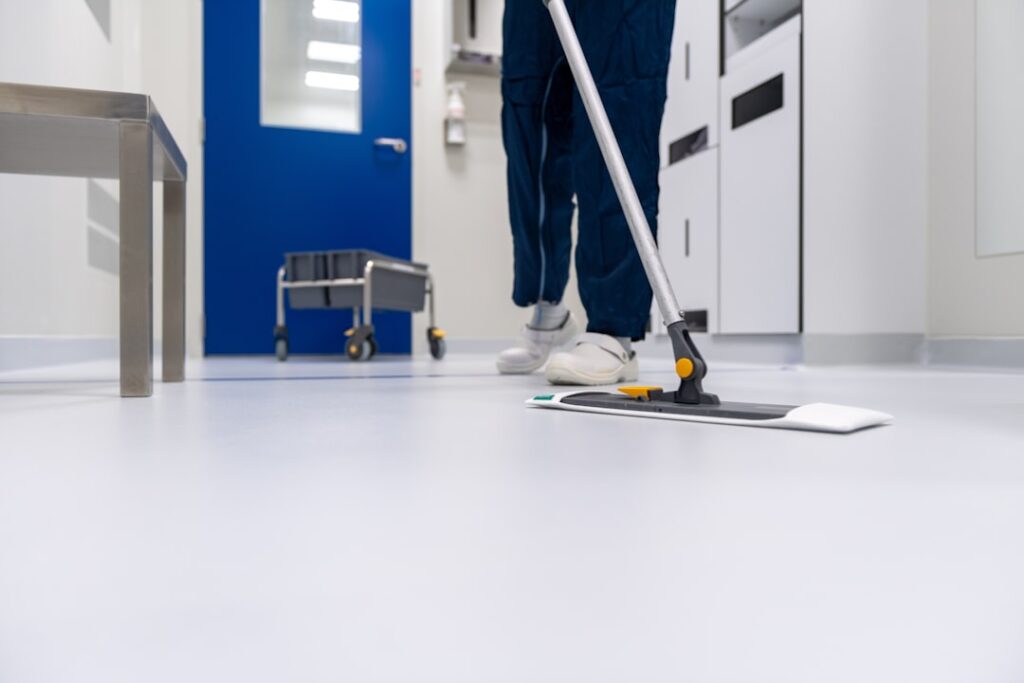
The cleaner is only half the equation. A microfiber flat mop is the single best tool for vinyl, because it glides without scratching and holds just enough moisture to clean without flooding the seams. Pair it with a soft-bristle broom or a vacuum set to hard-floor mode, which turns off the beater bar that can scuff the surface. Keep two buckets when deep cleaning, one for cleaning solution and one for rinse water, so you are not just pushing dirty water around. A dry microfiber cloth for a final buff removes any streaks before they set.
Products to Avoid on Vinyl
Knowing what not to buy protects your floor as much as any cleaner. Steer clear of the following:
- Oil soaps and wax cleaners such as traditional wood soaps, which leave a dulling film
- Abrasive powders and scouring pads, which scratch the wear layer
- Bleach and ammonia at full strength, which can discolor and dry out the vinyl
- Acetone, paint thinner, and harsh solvents, which melt and cloud the surface
- Steam mops, whose heat and moisture can loosen adhesive and void warranties
Even some popular multi-surface sprays fall into the wrong category because of their high alkalinity. When in doubt, check the label for a neutral pH claim before it touches your floor.
Choosing Products by Vinyl Type
Not all vinyl is identical, and the small differences change which products work best. Luxury vinyl plank and tile with a thick 20-mil wear layer tolerate a slightly wider range of cleaners, though pH-neutral is still the safe default. Sheet vinyl and thinner budget planks with a 6-to-12-mil wear layer are more delicate and show haze faster, so stick strictly to gentle, residue-free formulas on those.
Printed and embossed textures need a cleaner that rinses fully, because any film settles into the grooves and quickly turns tacky. Glossy vinyl shows streaks more than a matte finish, which makes a residue-free product and a dry-buff pass especially important. If you have a rigid-core SPC or WPC floor, the same neutral cleaners apply, and the waterproof core gives you a bit more forgiveness with moisture, though you should still avoid flooding the seams.
How Much to Spend and How Often to Buy
Cleaning vinyl is genuinely inexpensive when you buy smart. A concentrate like Zep at roughly $12 per gallon makes dozens of buckets of solution and can last a busy household a year or more, easily the best value in the category. A ready-to-use spray such as Bona or Rejuvenate costs $8 to $15 and lasts a few months of weekly cleaning, with refillable gallon jugs cutting the long-term cost further.
The DIY vinegar mix costs pennies per bucket and handles routine maintenance, so many homeowners keep a commercial cleaner on hand only for deeper cleans. Whatever you choose, resist the temptation to overbuy specialty products; a single neutral cleaner plus household vinegar covers nearly every situation a vinyl floor throws at you, and a crowded cabinet of harsh sprays only tempts you to reach for the wrong one.
Building a Simple Cleaning Routine
The best results come from consistency, not intensity. Sweep or dust-mop daily in high-traffic areas to keep abrasive grit off the surface, since grit is what actually wears down the finish. Damp-mop weekly with your chosen neutral cleaner, and reserve a deeper wash for monthly or as spills demand. Wipe spills as they happen rather than letting sugary liquids dry into sticky spots.
It also helps to spot-treat rather than deep-clean the whole floor every time. A quick wipe of a single scuff or spill with a damp cloth keeps the surface presentable without exposing the entire floor to repeated mopping, which over years is gentler on the wear layer. Keep a spray bottle of your diluted cleaner and a stack of microfiber cloths within reach so small messes never have a chance to build up into the sticky film that forces a full scrub.
Stick with gentle, residue-free products and a soft microfiber mop, and vinyl is genuinely one of the easiest floors to keep looking new. The right vinyl flooring cleaning products cost only a few dollars a month and can add years to how long your floor keeps its factory finish, which makes the small effort of choosing correctly well worth it. Buy one good neutral cleaner, keep a jug of white vinegar on hand, skip the waxes and steam mops, and your floor will reward you with a clean, streak-free shine for as long as you own it.
Prefer to explore on your own?
See how new flooring looks in your actual room in seconds — free, no signup.
Try the free Floor Studio →