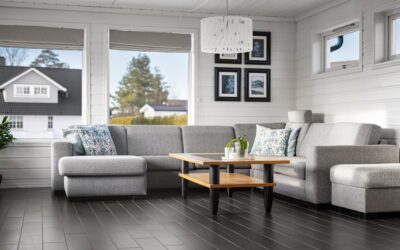
A flooring rep once told me the highest compliment he ever got was a customer arguing that the showroom sample “had to be real oak.” It was not. Modern vinyl flooring that looks like hardwood has crossed a threshold where the good stuff genuinely fools people at standing height, but the gap between convincing and obviously-plastic is wide and predictable. It comes down to five features you can check on any sample. Learn them and you will never install a floor that gives itself away the moment someone walks in.
- Why Vinyl Can Now Mimic Wood So Well
- The Five Features That Sell the Illusion
- Species and Color Choices That Read as Real
- Texture Options Beyond Standard Embossing
- What the Realistic Options Cost
- Where It Beats the Real Thing
- The Honest Limits
- How to Shop Samples Like a Pro
- Common Installation Mistakes That Give It Away
- Pairing It With Your Decor
- Frequently Asked Questions
Why Vinyl Can Now Mimic Wood So Well
The realism revolution came from two technologies. First, high-definition photographic printing captures real wood boards at high resolution, reproducing grain, mineral streaks, knots, and color transitions that older vinyl could only approximate. Second, embossing presses physical texture into the plank surface. When the texture is aligned with the printed grain, called embossed-in-register, your eye and your fingertips agree that they are touching wood. That agreement is the whole trick.
The Five Features That Sell the Illusion
When you compare samples, judge them on these, in order of importance:
- Embossed-in-register texture: run your finger across the grain. If the grooves you feel match the grain you see, it will read as real. Flat or randomly textured surfaces give it away.
- Print repetition: lay several planks side by side. Premium lines use 20 to 50 unique board images; cheap ones repeat every third or fourth plank, and the eye catches the pattern instantly.
- Plank proportions: real modern hardwood is wide and long. Choose planks at least 7 inches wide and 48 inches long; narrow strips look like vinyl.
- Beveled edges: micro-beveled or painted-groove edges define each board so the floor does not look like one printed sheet.
- Matte finish: genuine wood has a low, soft sheen. Glossy vinyl looks plastic under light.
Species and Color Choices That Read as Real
The most convincing vinyl mimics species with natural color variation and visible grain, because that variation hides the print repeats. White oak, hickory, and reclaimed or wire-brushed looks are especially forgiving. Uniform, dead-flat colors like a solid dark espresso are harder to pull off, because any repeated print or seam shows against the even field. If you want a low-risk realistic look, choose a mid-tone oak or hickory with visible grain and subtle plank-to-plank color shifts.
Texture Options Beyond Standard Embossing
Better lines add surface treatments that echo real wood finishing techniques:
- Wire-brushed: fine grooves along the grain that mimic brushed hardwood and hide scuffs well
- Hand-scraped: irregular sculpted texture imitating antique planed boards, great for rustic looks
- Sawn or distressed: saw-mark and character detail for reclaimed-wood styles
These textures do double duty: they add realism and they camouflage everyday scratches and dents better than a smooth surface.
What the Realistic Options Cost
Realism tracks price closely. Expect these material ranges:
- Basic wood-look LVP: $1.50 to $2.50 per sq ft, flat texture, repeating prints, looks like vinyl
- Mid-tier with EIR and 12 to 20 mil wear layer: $2.50 to $4.50 per sq ft, genuinely convincing
- Premium wide-plank EIR with 20 to 28 mil wear layer: $4.50 to $7 per sq ft, showroom-fooling realism
The jump from basic to mid-tier is the most important dollar you will spend. Below about $2.50 per square foot, you are usually buying flat-textured, print-repeating vinyl that looks like what it is.
Where It Beats the Real Thing
Beyond looks, wood-look vinyl earns its place through performance. It is waterproof, so it belongs in bathrooms, kitchens, mudrooms, and basements where solid hardwood cannot go. It resists the humidity-driven cupping and gapping that plague real wood. Rigid-core click planks float over most subfloors as a weekend DIY project, and the floor never needs sanding or refinishing. For a home with kids, pets, and busy entryways, wood-look vinyl gives you the aesthetic of hardwood with almost none of the maintenance.
The Honest Limits
Vinyl will not add the resale prestige of genuine hardwood, and it cannot be refinished; when the wear layer eventually gives out, you replace it rather than sand it. Very close up, or barefoot in bright raking light, a trained eye can still spot the repeat pattern on cheaper products. But at normal viewing distance and with a quality EIR plank, the difference disappears for almost everyone who walks across it.
How to Shop Samples Like a Pro
Never judge wood-look vinyl from a photo or a single showroom plank on a stand. Order or collect several full-size samples and test them the way you will actually live with them. Lay four or five planks together on the floor in the room where they will go, then look at them under that room’s real lighting, both daylight and your evening lamps, because sheen and color shift dramatically with the light source. Walk to the far side of the room and view them at standing distance, which is how everyone who enters your home will see the floor. Then get down and run your fingers across the grain to feel whether the texture is embossed-in-register. This ten-minute test reveals print repeats and plastic sheen that a quick showroom glance hides.
Common Installation Mistakes That Give It Away
Even a great plank can look fake if it is installed carelessly. The most common error is failing to randomize the planks: pulling boards straight from one box in order can cluster identical prints together, creating obvious repeats. Mix planks from several open boxes as you lay them so the pattern reads as random natural variation. The second mistake is lining up end joints in a regular staircase pattern, which looks manufactured; stagger seams randomly by at least 6 to 8 inches. The third is skimping on the perimeter expansion gap, which causes buckling that no realistic print can disguise. Get these right and the floor reads as genuine wood; get them wrong and even premium vinyl looks like a rushed job.
Pairing It With Your Decor
The illusion holds better when the rest of the room supports it. Real wood trim, baseboards, and stair treads that coordinate with the vinyl’s tone reinforce the impression of an authentic wood floor. Area rugs break up large expanses and reduce the chance of anyone studying the pattern for repeats. And matching the plank’s undertone, warm or cool, to your wall colors and furniture keeps the whole space cohesive, so the floor never becomes the odd element that draws a second, skeptical look.
Frequently Asked Questions
Can vinyl flooring really look like real hardwood?
Yes. Premium vinyl with embossed-in-register texture, wide long planks, low-repeat prints, beveled edges, and a matte finish is convincing enough that most people cannot tell it from hardwood at standing height. The realism drops sharply on budget products with flat texture and repeating prints.
What is the most realistic wood-look vinyl?
The most realistic options combine embossed-in-register texture with 20-plus unique plank images, widths of 7 inches or more, micro-beveled edges, and a matte finish. Wire-brushed and hand-scraped textures on oak or hickory prints read as especially authentic.
Is wood-look vinyl better than laminate for realism?
Both can look convincing, and high-end laminate arguably edges out vinyl on texture depth. The deciding factor is usually water: wood-look vinyl is fully waterproof, so it is the better choice in kitchens, baths, and basements where realism plus moisture resistance both matter.
How can I tell if wood-look vinyl is good quality?
Feel the surface for embossed texture that lines up with the grain, lay several planks together to check for print repeats, confirm the wear layer is at least 12 mil, and look for a matte rather than glossy finish. Wide, long planks with beveled edges are the final tell.
Does wood-look vinyl add home value?
It adds appeal and can help a home sell faster because it looks current and is low-maintenance, but it does not carry the resale premium of genuine hardwood. For rentals, basements, and busy family homes, its durability and waterproof performance make it the smarter investment.
Prefer to explore on your own?
See how new flooring looks in your actual room in seconds — free, no signup.
Try the free Floor Studio →