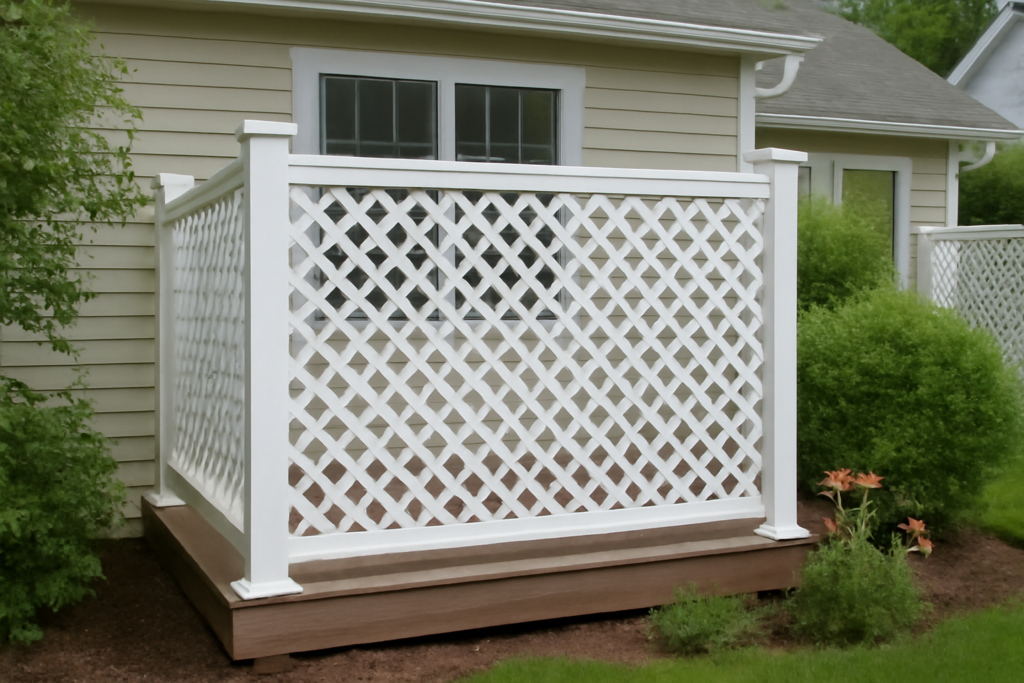
Wood lattice looks great for a season or two, then it splinters, grays, and starts to rot the moment it touches damp ground. Vinyl lattice solves that with a maintenance-free PVC panel that never needs painting and shrugs off moisture, insects, and rot. Homeowners reach for it to skirt decks, add garden privacy, hide unsightly areas, and support climbing plants. If you want the classic crisscross look without the upkeep, vinyl lattice is the practical answer.
What Vinyl Lattice Is
Vinyl lattice is a panel made of rigid PVC strips woven or molded into the familiar crisscross pattern. Standard panels typically come in 4-foot by 8-foot sheets and a range of thicknesses. Because the color runs through the material, scratches do not expose a different shade, and the surface never needs sealing or staining. It stands up to rain, sun, and humidity far better than wood.
The trade-off compared with wood is that vinyl can become brittle in extreme cold and may flex more, so it benefits from a supporting frame in most applications.
Common Uses
- Deck and porch skirting: closing off the open space beneath while allowing airflow
- Privacy screens: blocking views of patios, hot tubs, or seating areas
- Garden trellises: supporting climbing vines, roses, and vegetables
- Fence accents and toppers: adding decorative height and openness
- Concealment: hiding trash cans, AC units, or crawl space access
The open pattern lets air circulate, which is why it is so popular for deck skirting where ventilation prevents moisture buildup underneath.
Privacy Versus Standard Lattice
Vinyl lattice comes in two main styles. Standard, or square, lattice has larger openings for an open, airy look and good ventilation. Privacy lattice uses smaller, tighter openings that block more of the view while still allowing some airflow. Choose standard lattice for trellises and decorative skirting where you want airflow and light, and privacy lattice where screening sightlines matters most, such as around a hot tub or patio seating.
How to Install Vinyl Lattice
A solid frame is the secret to a clean, lasting installation.
- Measure the opening and cut panels to size with a fine-tooth saw or jigsaw; support the panel to prevent cracking.
- Build a frame from pressure-treated lumber or vinyl lattice framing channels to hold the panel edges.
- Set the framed panels in place, leaving a small gap for expansion since vinyl moves with temperature.
- Fasten with exterior screws through the frame, not by driving screws hard into the brittle lattice itself.
- For skirting, include at least one removable section for access to the space beneath the deck.
Always leave room for thermal expansion. Vinyl expands in heat and contracts in cold, and a panel installed too tightly can buckle or crack.
Maintenance
This is where vinyl lattice really earns its keep. There is no painting, staining, or sealing. To clean it, simply spray it down with a garden hose, and for stubborn dirt or mildew use a soft brush with mild soap and water. It will not rot, attract termites, or splinter. An occasional rinse keeps it looking fresh for many years, which is a sharp contrast to the regular scraping and repainting wood lattice demands.
Vinyl Versus Wood Lattice
The decision between vinyl and wood usually comes down to upkeep versus appearance. Wood lattice is cheaper up front, accepts paint and stain, and has a natural look some homeowners prefer, but it demands ongoing maintenance and eventually rots, warps, or splinters, especially where it meets damp soil. Vinyl costs more initially but never needs painting, will not rot or attract termites, and keeps its finished look for many years with nothing more than an occasional rinse.
Over a typical decade of ownership, vinyl often comes out cheaper once you account for the paint, sealer, and replacement panels wood requires. If you want a do-it-once project, vinyl is the practical pick; if you want a specific stained-wood aesthetic and do not mind the maintenance, wood still has its place.
Tips for a Clean, Lasting Result
A few details separate a tidy installation from a saggy, rattling one. Always frame the panels rather than leaving edges loose, since unsupported vinyl flexes and can crack. Use a fine-tooth blade and support the panel fully when cutting to avoid chipping. Pre-drill screw holes and avoid overtightening, which can crack the brittle material. Leave a small expansion gap at panel edges so the vinyl can move with temperature swings without buckling. For deck skirting, plan at least one removable section for access to plumbing, wiring, or storage beneath the deck. These small steps keep the lattice looking crisp and functioning well for the long haul.
Colors and Style Options
Vinyl lattice comes in more variety than many people realize. White is the most popular for a clean, classic look that complements white trim and railings, while tan and almond blend with neutral siding. Some brands offer gray, brown, and even black for a more modern or low-contrast appearance. Beyond color, the pattern itself varies: the standard diagonal crisscross is the most common, but you can also find square grid patterns for a more contemporary feel and decorative panels with smaller, tighter weaves. Choosing a color that matches your existing trim or deck rather than fighting it gives the most polished, intentional result.
Common Applications in Detail
It helps to picture exactly how vinyl lattice solves everyday problems around the home. Beneath a raised deck, framed lattice panels close off the open space, keep out animals and debris, and allow the airflow that prevents moisture buildup, all while looking finished. Around a patio or hot tub, a freestanding lattice screen blocks sightlines for privacy without fully walling off the breeze. In the garden, a lattice trellis gives climbing vines, clematis, and pole beans something sturdy to grab, and unlike wood it will not rot at the base where it meets damp soil. It can also hide AC condensers, pool equipment, and trash bins while still letting them breathe.
Cost and What to Expect
A standard 4×8 vinyl lattice panel generally runs in the range of roughly twenty to forty dollars, with privacy and heavier-duty panels costing more. Framing materials, screws, and any saw rental add to the total, but the overall project remains affordable. Factor in that you will likely never spend money maintaining it, which makes vinyl more economical than wood over its lifetime. Available in white, tan, and a few other colors, vinyl lattice offers a clean, durable, low-effort way to finish off decks, screen spaces, and support a thriving garden.
Prefer to explore on your own?
See how new flooring looks in your actual room in seconds — free, no signup.
Try the free Floor Studio →