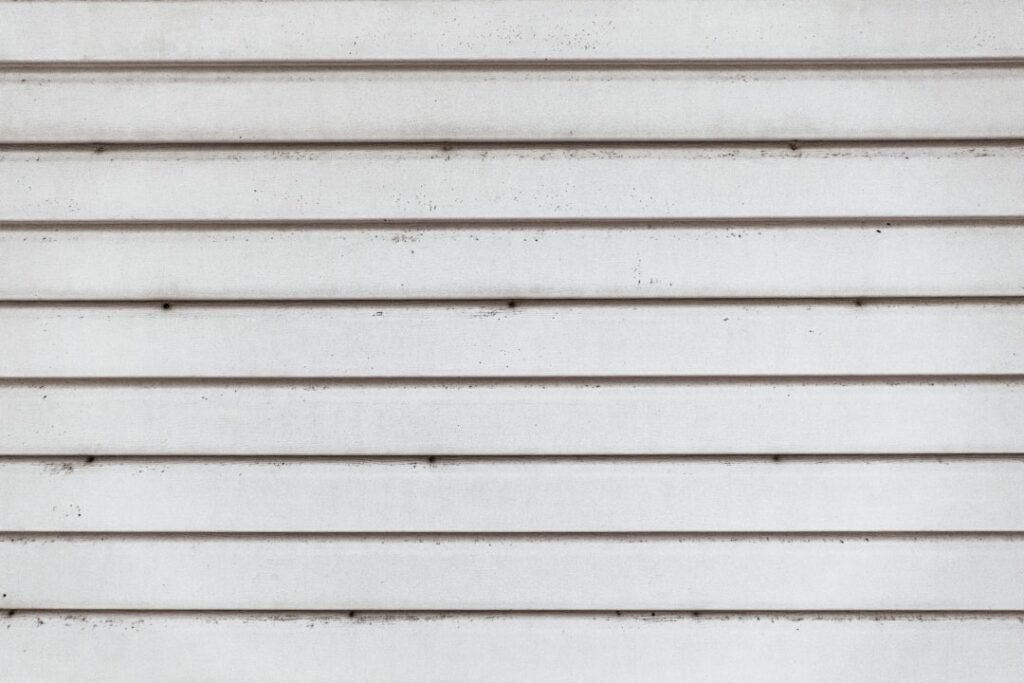
Search any supplier for vinyl siding sheets 4×8 and you will hit a confusing truth: conventional house siding does not come that way. Standard vinyl siding is extruded in long, narrow interlocking strips — typically 12 feet long — not in plywood-sized sheets. What does exist in the 4-by-8 format is a family of adjacent products: solid PVC flat panels, mobile home skirting, faux stone and brick panels, FRP liner sheets, and vertical-format cladding that approximates sheet coverage. Each solves a different problem, and buying the wrong one wastes real money. Here is what is actually on the market in sheet form, what it costs, and where each belongs.
- Why Traditional Siding Isn't Made in Sheets
- Option 1: Solid PVC Flat Sheets and Beadboard Panels
- Option 2: Mobile Home Skirting Panels
- Option 3: Faux Stone, Brick, and Shake Sheets
- Option 4: Vertical Siding as Sheet-Style Coverage
- Option 5: Interior and Utility Liner Panels
- Buying Notes: Where the Sheet Formats Are Sold
- Matching the Product to the Project
Why Traditional Siding Isn’t Made in Sheets
Horizontal vinyl siding works because each narrow course locks to the one below and hangs loosely on nails, letting the material expand and contract along its length — vinyl moves as much as 1/2 inch over 12 feet between winter and summer. A rigid 4×8 sheet nailed on all sides has nowhere to move; it would buckle in July and crack in January. Sheets also cannot shed water the way lapped courses do. So manufacturers reserve the sheet format for products designed around those limits: panels with expansion-tolerant fastening slots, groove profiles that hide movement joints, or applications like skirting where appearance and airflow matter more than weathertightness. Knowing that engineering backstory keeps you from nailing a flat sheet to a house wall and learning the lesson the expensive way.
Option 1: Solid PVC Flat Sheets and Beadboard Panels
The closest literal match to “vinyl sheet” is solid cellular PVC panel stock. Brands like AZEK and Versatex sell flat 4×8 (and 4×10) sheets in thicknesses from 1/4 to 1 inch, and beadboard-grooved versions for porch ceilings and wainscot. These are trim-grade products: fully waterproof, workable with woodworking tools, paintable, and priced accordingly at $80 to $250 per 4×8 sheet depending on thickness. Their proper uses are soffits, porch ceilings, gable accents, dormer cheeks, and skirting on elevated structures — detail areas, not broad walls. Install with stainless trim screws, gap the edges 1/8 inch per 8 feet for movement, and back the panels with framing every 16 inches so they stay flat. For a covered porch ceiling, a grooved PVC sheet at $120 delivers a painted-wood look that will never peel — one of the best uses of the format.
Option 2: Mobile Home Skirting Panels
Skirting is where most 4×8-ish vinyl sheet searches should land. Manufactured-home skirting systems use ribbed or faux rock vinyl panels — common sizes run 16 inches wide by 8 feet tall along with wider sheet formats — locked into a top-front channel and ground track. Plain ribbed vinyl skirting costs $2 to $4 per square foot for panels plus $200 to $500 of track and trim for a typical single-wide; a full 14×70 single-wide kit lands around $700 to $1,400. Upgraded simulated rock or brick skirting sheets in reinforced vinyl or polypropylene run $6 to $12 per square foot but shrug off string trimmers and hail far better. Whatever panel you pick, code and common sense both want ventilation — roughly 1 square foot of vent per 150 square feet of enclosed crawl area — and an access panel.
Option 3: Faux Stone, Brick, and Shake Sheets
The fastest-growing corner of the sheet-format world is molded polymer cladding that mimics masonry. Panels from brands like GenStone, NextStone, and Novik are typically polyurethane or polypropylene rather than pure vinyl, sized in the 2-to-4-foot range per piece with interlocking edges — sold by the square foot at $4 to $12 for polypropylene and $8 to $15 for dense polyurethane foam panels. They install over sheathing or existing walls with screws through slotted holes, and a homeowner can face a foundation strip, chimney chase, or accent gable in a weekend. Compare that with $25 to $50 per square foot for real stone veneer installed and the appeal is obvious. Two cautions: cheap versions repeat their mold pattern noticeably on large walls, and every brand relies on its own matching corners and ledges, which can equal the panel cost on small jobs.
Option 4: Vertical Siding as Sheet-Style Coverage
If the goal is “cover a wall fast with vertical lines,” the correct vinyl product is board-and-batten vertical siding rather than a literal sheet. Panels run about 10 feet long and cover 10 to 12 inches of width each, locking edge to edge with concealed nailing hems that handle expansion properly. Coverage economics feel sheet-like — $2 to $5 per square foot in materials, $4 to $9 installed — and the format is fully rated as primary house cladding, which flat PVC sheets are not. For sheds and shops, another legitimate sheet-format answer is actually outside the vinyl family: 4×8 engineered wood panels (T1-11 or LP SmartSide panels at $35 to $75 per sheet) sheath and side in one step, which is why they, not vinyl sheets, dominate that use.
Option 5: Interior and Utility Liner Panels
One more true 4×8 product often swept into this search: FRP (fiberglass-reinforced plastic) and PVC liner panels, sold at $30 to $70 per sheet. These smooth, cleanable panels line garage walls, workshops, wash bays, and commercial kitchens, installing over drywall or plywood with adhesive and rivets plus PVC division bars. They are interior-grade — UV exposure yellows and embrittles them outdoors — but for a hose-down utility space they are exactly right, and a two-car garage can be lined for $600 to $1,000 in materials.
Buying Notes: Where the Sheet Formats Are Sold
Distribution differs by category, which explains why a single store search comes up empty. Cellular PVC sheets live at lumberyards and pro dealers more than big-box stores, which typically stock only trim boards and a limited 4×8 selection; expect to special-order thicknesses beyond 1/2 inch. Skirting systems are strongest at manufactured-housing suppliers and online kit sellers, where full-perimeter packages with track and vents price better than piecing parts locally. Faux stone panels split between big-box shelves (NextStone and house brands) and direct-from-manufacturer sales (GenStone quotes by project). FRP sheets are a stock item at every big-box store near the drywall aisle. Freight is the hidden line: rigid 4×8 plastic sheets ship as oversize freight at $75 to $200 per order, so a local pickup source can beat a cheaper online price the moment shipping is added. Whatever you order, buy the matching trim system in the same transaction — division bars, corners, and tracks are the parts that go out of stock and out of production first.
Matching the Product to the Project
Run the decision by application and the confusion disappears. House walls: use standard lapped or vertical vinyl siding, never flat sheets. Porch ceilings, soffits, and trim details: cellular PVC sheet or beadboard. Under a mobile home or deck: skirting systems, vented. Foundation faces, chimney chases, and accent walls: interlocking faux stone or brick panels. Sheds and outbuildings: engineered wood panel siding, or vertical vinyl if you want zero maintenance. Wet interior utility walls: FRP or PVC liner sheets. Prices span from $30 to $250 per sheet-equivalent across those categories, so a precise match is worth the ten minutes of thought.
Whichever direction fits, honor the two rules that govern all rigid plastics outdoors: leave the manufacturer’s specified expansion gaps and never drive fasteners dead tight. Sheet-format vinyl products fail from restrained movement far more often than from weather — and both failures are entirely preventable with a loose screw and a 1/8-inch gap.
A final sanity check before you order anything labeled as a vinyl sheet: confirm the product is rated for your exposure. Manufacturers print it plainly — exterior cladding, skirting, soffit, or interior liner — and the ratings are not interchangeable. An interior FRP sheet on a sunny wall chalks and yellows within two summers; an unvented skirting job invites moisture problems under the floor it was meant to dress up. Matched to its rating, though, every product in this roundup is a durable, low-maintenance answer, and most install with nothing more exotic than a circular saw, a drill, and a level Saturday.