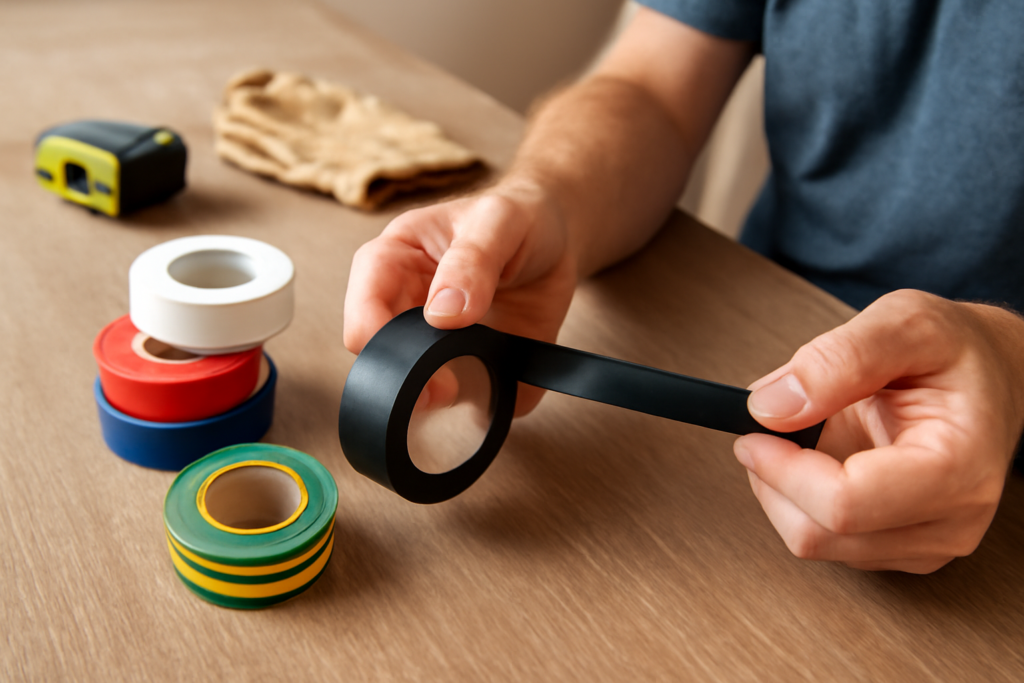
It looks like ordinary tape on the roll, but its tough, stretchy, abrasion-resistant backing makes it one of the most useful items in any toolbox. Vinyl tape is a flexible PVC-based adhesive tape used for everything from marking floors and color-coding to insulating electrical connections and repairing surfaces. Knowing the different types and what each does best will help you reach for the right roll instead of a generic tape that peels up in a week.
What Vinyl Tape Is
Vinyl tape uses a polyvinyl chloride (PVC) film as its backing, coated with a pressure-sensitive adhesive. The PVC film gives the tape its signature qualities: it stretches and conforms to irregular surfaces, resists moisture and abrasion, and holds up to wear better than paper-based tapes. That combination of flexibility and durability is why vinyl tape shows up in warehouses, electrical panels, gyms, and garages alike.
Main Types of Vinyl Tape
The category covers several specialized products. Match the type to the job:
- Vinyl electrical tape: Insulating tape for wrapping electrical connections. It stretches to conform and resists moisture, but it must be rated for electrical use and applied to de-energized wiring.
- Floor marking tape: Heavy-duty vinyl made to mark walkways, work zones, and hazards on warehouse and shop floors. It resists foot and cart traffic.
- Color-coding and lane tape: Bright solid colors and striped safety patterns for organizing and directing.
- Vinyl repair and patch tape: Used to patch vinyl, tarps, and inflatables.
- Vinyl masking tape: A durable masking option for tough painting and finishing jobs.
Common Uses Around the Home
Vinyl tape earns its keep in many projects:
- Floor and aisle marking: Outline parking spots in the garage, mark a home gym layout, or create safety lines in a workshop.
- Electrical insulation: Wrap and protect electrical splices and terminals using properly rated electrical tape.
- Color coding: Organize tools, cords, and bins by color.
- Repairs: Patch a torn tarp, pool liner, or vinyl seat with a compatible repair tape.
- Bundling and sealing: Secure cables and seal seams where flexibility matters.
How Vinyl Tape Differs From Other Tapes
Compared to common alternatives, vinyl tape has distinct strengths. Unlike paper masking tape, it stretches and resists moisture and tearing, so it survives outdoor and high-wear use. Unlike cloth duct tape, it leaves less residue and conforms better to curves and corners, and floor-grade vinyl resists traffic better. Electrical vinyl tape specifically provides insulation that general-purpose tapes do not. The trade-off is that vinyl tape is usually pricier than basic masking tape and is not meant for delicate surfaces where its strong adhesive could lift paint.
Application Tips
Getting vinyl tape to stick and stay takes a little prep:
- Clean the surface: Wipe away dust, grease, and moisture. Vinyl tape bonds poorly to dirty or oily surfaces.
- Make sure it is dry: Adhesives perform best on dry surfaces at moderate temperatures.
- Apply with tension where appropriate: For electrical wrapping, stretch the tape slightly as you wind for a snug, conforming seal.
- Press firmly: Burnish floor and marking tape down hard, especially the edges, so traffic does not catch and peel it.
- Cut cleanly: Use scissors or a knife for straight floor-marking lines rather than tearing.
For electrical work, only use tape rated for the voltage and application, work on de-energized circuits, and if you are unsure about wiring safety, consult a licensed electrician.
What Vinyl Tape Costs
Vinyl tape is inexpensive relative to its usefulness, though prices vary by type and quality. Basic electrical tape is among the cheapest, while wide, heavy-duty floor marking tape and specialty repair tapes cost more per roll because of their thickness and adhesive strength. Buying a quality roll for floor marking pays off, since cheap tape lifts and curls under traffic and you end up redoing the job. For occasional use, a few assorted rolls cover most household needs.
Temperature and Surface Considerations
Vinyl tape’s adhesive performance changes with conditions, and knowing this prevents frustrating failures. Most vinyl tapes bond best when applied at moderate temperatures on a clean, dry surface; cold surfaces and freezing conditions can keep the adhesive from grabbing, while extreme heat can soften it. The tape itself handles a reasonable range of temperatures once adhered, which is why it works outdoors and on equipment, but always check the product’s rated temperature range for demanding applications. Porous, rough, or dusty surfaces undermine adhesion, so floor marking on a sealed, smooth concrete floor lasts far longer than on a flaking or oily one. When in doubt, clean and dry the surface first and press the tape firmly to maximize contact.
Storage and Shelf Life
Like any adhesive product, vinyl tape lasts longer when stored properly. Keep rolls in a cool, dry place out of direct sunlight, since heat and UV exposure can degrade both the adhesive and the PVC backing over time. Store rolls flat or hanging rather than resting on their edges, which can deform the roll and make the tape harder to apply cleanly. Most vinyl tapes have a usable shelf life of a year or more when stored well, but old tape that has dried out, yellowed, or lost its tack should be replaced, since failed adhesive defeats the purpose. Buying only what you will use within a reasonable time avoids waste, especially for specialty types you reach for rarely.
Choosing the Right Roll
Start with the job. For wiring, buy properly rated electrical tape. For garage or shop floors, choose heavy-duty floor marking tape in a high-visibility color. For organizing, grab a multipack of colors. For repairs, match the tape to the material you are patching. Vinyl tape is one of those quiet workshop staples that, once you have the right type on hand, you will find yourself reaching for again and again.
When you shop, pay attention to width and thickness as well as type, since a wider, thicker floor-marking tape stands up to traffic better than a thin roll, and a longer length per roll often costs less per foot for big jobs. Read the product description to confirm the tape suits your surface and conditions, especially for outdoor or electrical use where the wrong rating can fail or be unsafe. With a small assortment of the right vinyl tapes stored properly, you will be ready to mark, insulate, organize, and repair around the house for a long time to come.
Prefer to explore on your own?
See how new flooring looks in your actual room in seconds — free, no signup.
Try the free Floor Studio →