Walk into any Indian showroom today and you will find vitrified tiles occupying more shelf space than natural stone, marble, and ceramic combined. Vitrified flooring has dominated the middle-class housing market since the early 2000s because it offers a polished, stone-look surface at a fraction of the cost of Italian marble. Manufactured by fusing silica and clay at over 1,200°C, vitrified tiles achieve a near-zero water absorption rate and a hardness that rivals granite. Understanding the sub-types and price brackets protects you from overpaying for something a dealer calls “premium” but is really entry-level stock.
What Vitrified Actually Means
The word “vitrified” comes from the Latin vitrum, meaning glass. During manufacturing, the tile body is fired until the silica particles partially fuse, creating a glass-like matrix that gives the finished product its low porosity (under 0.5% water absorption by weight) and high compressive strength. This is fundamentally different from standard ceramic tile, which remains more porous and softer.
In India, the three dominant categories are full-body vitrified, glazed vitrified tile (GVT), and polished glazed vitrified tile (PGVT). Each has a different surface structure, wear resistance, and price point.
Main Types You Will See in Indian Showrooms
- Full-body vitrified (double-charge) — colour runs through the tile body, scratch-hides well
- Soluble salt — entry-level, design is a thin printed layer, wears out in 5-8 years
- Glazed Vitrified Tile (GVT) — ink-jet printed design under a glass glaze layer
- Polished Glazed Vitrified Tile (PGVT) — GVT with a high-gloss polished finish
- Nano polished — extra nano-coating for stain resistance
Vitrified Flooring Prices in India
Pricing varies sharply by brand, tile size, and finish. Current rates across Mumbai, Delhi, Bengaluru, and Ahmedabad dealers:
- Soluble salt 600x600mm — ₹40 to ₹55 per sq ft
- Double-charge 600x600mm — ₹55 to ₹85 per sq ft
- Standard GVT 600x1200mm — ₹65 to ₹110 per sq ft
- Premium PGVT 800x1600mm — ₹90 to ₹180 per sq ft
- Large format 1200x2400mm slabs — ₹150 to ₹320 per sq ft
- Installation labour — ₹25 to ₹60 per sq ft depending on city
Major Indian manufacturers — Kajaria, Somany, Orient Bell, Nitco, Asian Granito, and Simpolo — all run annual discount windows before Diwali. Stocking up then can save 15-25%.
Pros of Vitrified Flooring
The value proposition is simple. A PGVT tile that looks almost identical to Statuario marble costs roughly one-eighth the price of real marble and needs zero polishing over its lifetime. Water absorption below 0.5% means no staining from tea, turmeric, coconut oil, or kitchen masalas. The hardness rating (Mohs 6-7) handles dragged furniture without chipping.
Cleaning is effortless. A weekly mop with warm water and a mild detergent like Colin Floor Cleaner keeps the surface looking new. Unlike marble, there is no need for specialist sealants every two years.
Cons and Buyer Traps
Not all vitrified tiles are equal. Soluble salt products are still widely sold at low prices but fade badly under direct sunlight within five years. The pigment sits only on the top 1-2mm of the tile, so any scratch exposes the white body beneath. Check the tile cross-section — if the colour does not run all the way through, it is soluble salt or GVT with shallow printing.
Joint staining is another common issue. Cement-based grout absorbs dirt and darkens in 1-3 years. Switch to epoxy grout (MYK Laticrete Spectralock or Pidilite Roff) for ₹15-₹30 extra per sq ft of joint — it stays clean for 10+ years.
How to Spot Quality at the Showroom
- Check water absorption certification — must be below 0.5% for Group BIa
- Tap the tile gently — a clear ringing sound indicates proper vitrification
- Measure diagonal corners — premium tiles are within ±0.5mm tolerance
- Look at the back — it should show homogeneous colour, not grey cement body
- Ask for the ISO 13006 or IS 15622 test certificate
Installation Notes
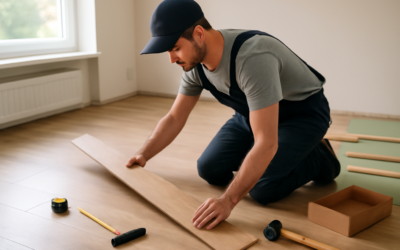
Large-format vitrified tiles (600x1200mm and above) require an experienced mason and a tile-laying adhesive rather than traditional cement mortar. Use a C2TE-grade tile adhesive such as MYK Laticrete 335 or Roff Polymer Modified Tile Adhesive. Back-butter every tile to eliminate voids beneath, which cause hollow spots and cracking under load.
Allow a 2-3mm joint width minimum for thermal expansion, even with rectified edges. Skipping the joint to chase a “seamless” look causes tenting within 12-18 months, especially in north Indian cities with large summer-winter temperature swings.
Maintenance and Lifespan
With correct installation and epoxy grout, a premium PGVT floor lasts 25-40 years in residential use. Daily care involves sweeping with a soft broom and weekly damp mopping with pH-neutral cleaner. Avoid acidic cleaners like toilet acid or undiluted lime juice on polished surfaces — they etch the glaze over repeated exposure.
Final Buying Advice
For most Indian homes, double-charge or standard GVT at ₹55-₹85 per sq ft delivers the best balance of value and durability. Upgrade to PGVT for entry foyers, living rooms, and any space where a marble look matters. Always buy 8-10% extra for future repairs — exact shade matching is impossible if you need replacement tiles five years later, since batches vary by firing run. Used thoughtfully, vitrified flooring delivers the appearance of premium natural stone at a realistic middle-class budget.
Prefer to explore on your own?
See how new flooring looks in your actual room in seconds — free, no signup.
Try the free Floor Studio →