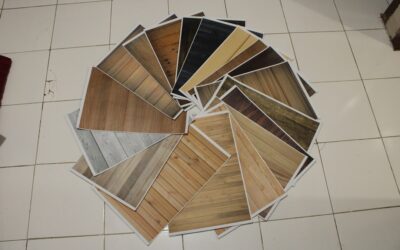
The wallboard vs drywall question trips up homeowners, contractors, and even some inspectors because the terms overlap by 90 percent. In modern American construction, “wallboard” is an umbrella category that includes drywall, plywood paneling, fiber-cement board, and a handful of older materials, while “drywall” specifically refers to gypsum board, the white panels in 4×8, 4×10, and 4×12 sheets that have dominated residential interior wall finish since the 1960s. The remaining 10 percent of distinctions matters when you are spec’ing a bathroom, a garage, or a fire-rated assembly. Get the wrong product into the wrong wall and you fail inspection.
The Plain-English Definitions
Drywall is gypsum core sandwiched between two layers of paper. The 1894 patent by Augustine Sackett and the 1916 commercial introduction by US Gypsum as Sheetrock displaced lath-and-plaster as the dominant interior wall finish by the late 1950s. Today, USG, National Gypsum (Gold Bond), CertainTeed, and Georgia-Pacific (ToughRock) make virtually all the drywall sold in the United States.
Wallboard, by contrast, refers to any rigid sheet material installed as an interior wall or ceiling finish. That includes gypsum drywall, but it also covers cement board (Durock, HardieBacker), magnesium-oxide board (MgO), wood-fiber tongue-and-groove paneling, and the now-rare asbestos panels found in pre-1980 homes. When a building inspector or framer says “wallboard,” context dictates which subcategory they mean, and you should ask.
How the Two Terms Are Used in Practice
On a construction site, drywall almost always means standard 1/2-inch or 5/8-inch gypsum board. When a contractor says “hang the wallboard tomorrow,” they usually mean the same thing because gypsum drywall is the default. The distinction sharpens when specialty applications enter the conversation. A bathroom shower surround requires cement board, not drywall, because gypsum dissolves under sustained moisture. A garage ceiling separating living space above requires 5/8-inch Type X fire-rated drywall per IRC R302.6.
Manufacturers further confuse the issue by branding. USG sells Sheetrock UltraLight Panels Mold Tough, which is drywall. Georgia-Pacific sells DensGlass Gold, which is a fiberglass-mat-faced gypsum sheathing that some specs call “wallboard” and others call “exterior gypsum.” Both are technically gypsum products, but only the first goes inside finished living space.
Material and Performance Differences
Standard 1/2-inch drywall weighs about 1.6 lbs per square foot, costs $13 to $18 per 4×8 sheet, and handles cutting with a utility knife and T-square. Fire-rated 5/8-inch Type X drywall weighs 2.3 lbs per sq ft, costs $18 to $26 per 4×8 sheet, and is required for one-hour fire-rated assemblies per ASTM E119 testing.
Cement board (HardieBacker 500, Durock NextGen) weighs 3 lbs per sq ft, costs $14 to $22 per 3×5 sheet, and requires carbide-tipped scoring tools or a specialized cement-board shears like the Hilti or Pactool RS501. Magnesium-oxide board, less common but growing in green-building specs, weighs 1.8 lbs per sq ft and costs $34 to $52 per 4×8 sheet, with the advantage of mold, fire, and termite resistance in one product.
Where Code Demands Specific Products
The 2024 IRC dictates specific wallboard products by location. Section R702.4.2 requires cement, fiber-cement, glass mat gypsum, or fiber-reinforced gypsum backers behind tile in wet areas, standard paper-faced drywall is not allowed in tub or shower surrounds. Section R302.6 requires 1/2-inch gypsum on the garage side of walls separating garages from living spaces and 5/8-inch Type X gypsum on the ceiling if habitable rooms are above.
Fire-rated party walls between attached townhomes require either 5/8-inch Type X drywall, double 1/2-inch layers, or shaft-wall assemblies per UL design numbers referenced in IBC Chapter 7. Drywall in commercial occupancies must meet ASTM C1396 standards, and the inspector will check stamping on each sheet during inspection.
Cost Comparison for a Typical Remodel
For a 12-foot by 14-foot bedroom with 8-foot ceilings, total surface area runs about 520 sq ft of walls and 168 sq ft of ceiling, requiring 22 sheets of 4×8 drywall plus 10 percent waste. Materials run $310 to $440 for standard 1/2-inch and $440 to $620 for 5/8-inch Type X. Hanging and finishing labor adds $1.50 to $3.00 per sq ft, putting total installed cost at $1,300 to $2,400 for a finished room.
For a bathroom, the same room with a tub-shower surround adds 80 to 100 sq ft of cement board at $14 to $22 per 3×5 sheet plus an alkali-resistant fiberglass mesh tape and modified thinset bonding. Total bathroom remodel rough materials hit $580 to $920 before finishes.
When to Specify Each Material
Use standard 1/2-inch paper-faced gypsum drywall on all interior walls and ceilings except where moisture, fire, or impact resistance demands an upgrade. Use 5/8-inch Type X on garage ceilings under habitable rooms, on party walls in townhomes, on the corridor side of multifamily walls, and on the underside of stair landings serving habitable rooms above.
Specify mold-resistant paperless drywall (USG Sheetrock Mold Tough, National Gypsum XP) in laundry rooms, basements, and bathrooms outside the immediate shower zone. Reserve cement board for the actual wet zone, the tub surround, shower walls, and shower floor. Use DensGlass or similar fiberglass-faced sheathing on exterior walls under siding when extra moisture and mold resistance is warranted.
Common Misconceptions Worth Clearing Up
Homeowners often think Sheetrock is a different product than drywall. It is not. Sheetrock is simply the USG brand name for their gypsum board, the same way Kleenex is a brand name for facial tissue. Contractors use the terms interchangeably on residential job sites without consequence.
Another common confusion: some homeowners believe green board is fully waterproof and can be used inside showers. It is moisture-resistant, not waterproof, and the 2024 IRC explicitly prohibits gypsum-based products as backing for tile in wet zones. Cement board, fiber-cement board, or glass-mat gypsum sheathing is required behind tile in showers and tub surrounds.
Finally, blue board is not standard drywall. It is a specialized gypsum panel designed to bond with veneer plaster finishes, used in custom homes where a smooth plaster look is specified. Blue board costs $18 to $26 per sheet but requires a skilled plasterer to finish, total installed cost often exceeds $5 per sq ft compared to $2 to $3 for standard drywall.
The Bottom Line for Most Homeowners
For 90 percent of residential conversations, the wallboard vs drywall distinction does not change what you order, what gets installed, or what the inspector approves. Both terms refer to gypsum board in default usage. The exceptions, wet areas, fire-rated assemblies, exterior applications, and high-impact spaces, demand specific products by code, and that is where the language matters. Always confirm with your contractor exactly which subcategory of wallboard appears on the materials list before signing off.