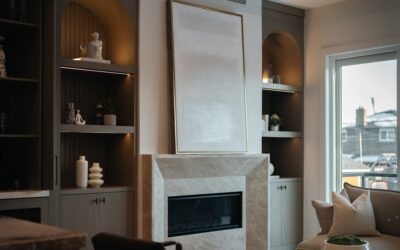
Wallpaper officially shed its 1970s reputation about five years ago and has since become the fastest-growing category at every major home center, with peel-and-stick sales tripling between 2021 and 2025. The latest wallpaper trends reflect a shift away from minimalist white walls toward textured, color-saturated, nature-inspired surfaces that homeowners can install without a contractor. After helping clients choose papers for everything from rental powder rooms to 3,500-square-foot custom builds, here’s what’s actually selling and what’s worth your money this year.
- Peel-and-Stick Goes Mainstream
- Bold Botanicals Replace Neutral Florals
- Grasscloth and Textured Naturals
- Murals That Feel Like Custom Art
- Warm Earth Tones Replace Cool Grays
- Geometric and Mid-Century Revivals
- Cost and Installation Reality Check
- Where Wallpaper Works and Where It Fails
- Frequently Asked Questions
Peel-and-Stick Goes Mainstream
Removable wallpaper is no longer a renter’s compromise. Brands like Tempaper, Chasing Paper, and Wallshoppe now offer the same designs in both traditional paste-the-wall and peel-and-stick formats, often by the same artists. Pricing runs $40-$80 per roll for peel-and-stick versus $50-$120 for traditional, and installation time drops from a full day to under three hours for an average accent wall.
The catch is durability. Peel-and-stick lifts at corners after 5-7 years and shows seams more than pasted paper. For long-term installations in primary living spaces, traditional pre-pasted vinyl from York Wallcoverings or Thibaut still wins.
Bold Botanicals Replace Neutral Florals
Subtle pastel florals dominated 2020-2023. The current direction is darker, larger-scale, and more graphic. Think oversized monstera leaves on a charcoal ground, midnight-blue magnolia branches, and burnt-orange palm fronds. Designer labels like House of Hackney, Cole & Son, and Schumacher are setting the tone with prints that feel closer to art than decoration.
Use these large patterns on a single accent wall in a small room (powder rooms, dining nooks, behind a bed) rather than wrapping all four walls. The eye needs a resting point.
Grasscloth and Textured Naturals
Grasscloth, sisal, jute weave, and cork wallcoverings have moved from the back of design catalogs to the front. The texture adds warmth and dimension that flat paint cannot replicate, and the natural fibers also absorb sound, making them ideal for home offices and bedrooms.
- Real grasscloth, $80-$200 per roll, hand-applied with clay paste
- Faux grasscloth (vinyl), $40-$90 per roll, kid- and pet-friendly
- Cork wallcovering, sound-absorbing and naturally insulating
- Linen-textured paper, subtle with no visible weave
True grasscloth has natural color variation between strips, which some homeowners love and others hate. View samples in your room’s actual lighting before committing to a $1,200 wall.
Murals That Feel Like Custom Art
Wall murals printed in multiple panels can cover entire walls with continuous landscapes, abstract paintings, or vintage maps. Companies like Photowall, Murals Your Way, and Anewall let you upload custom images or browse 10,000+ designer options. Pricing runs $200-$700 for an average 8×10 foot wall, less than a single piece of original art.
Murals work best in entryways, dining rooms, and feature walls behind sofas. Avoid them in kitchens unless you choose a vinyl-coated version that wipes clean.
Warm Earth Tones Replace Cool Grays
The cool gray and crisp white palette that defined 2015-2022 is giving way to terracotta, sage green, mustard, dusty rose, and chocolate brown. Wallpaper colorways follow the same direction, with major lines like Farrow & Ball and Morris & Co. expanding their warm-tone offerings.
Even traditional damasks now ship in clay reds and forest greens instead of beige and pale blue. The shift reflects a broader move toward rooms that feel cozy and lived-in rather than gallery-clean.
Geometric and Mid-Century Revivals
Hexagons, scallops, and oversized art deco fans are dominating bathrooms, kids’ rooms, and entryways. The look pairs especially well with brass fixtures and natural wood, both of which are also trending. Wallpaper from designers like Justina Blakeney and Rebecca Atwood blends geometry with organic textures for a softer take.
Pro tip: hang geometric paper on the ceiling instead of the walls in a small powder room. The surprise factor adds character without overwhelming the space, a technique called the “fifth wall.”
Cost and Installation Reality Check
An average 12×12 room takes 4-6 double rolls. At $50-$100 per roll, materials run $200-$600. Professional installation adds $40-$80 per roll for labor, bringing total cost to $400-$1,200 for a full room. Peel-and-stick on a single accent wall stays under $200 if you DIY.
For comparison, painting the same room costs $150-$400 including primer and two coats. Wallpaper is the premium option, but it lasts 10-15 years versus 5-7 years for paint in high-traffic areas.
Where Wallpaper Works and Where It Fails
Best rooms: powder rooms, dining rooms, primary bedrooms, entryways, and home offices. These spaces have controlled humidity and benefit from the visual impact. Skip wallpaper in steamy bathrooms with poor ventilation, kitchens behind cooktops, basements with moisture issues, and laundry rooms unless you choose vinyl-faced commercial-grade product.
For full bathrooms with showers, install vapor-resistant paste-the-wall vinyl with the seams sealed using clear silicone caulk. Always run the exhaust fan during and 20 minutes after showers to keep humidity below 60%. Without proper ventilation, even the best vinyl paper peels at edges within 2-3 years.
Always paper one wall at a time and let the seams cure 24 hours before judging. Fresh paste creates wet shiny spots that disappear once the adhesive sets, so resist the urge to recut or reapply panels in the first day.
Frequently Asked Questions
How long does peel-and-stick wallpaper last?
Most peel-and-stick papers stay put for 3-7 years with normal use. Heat, humidity, and direct sun shorten that timeline. Premium brands like Tempaper hold up longer than budget options.
Can you wallpaper over textured walls?
Lightly textured walls (orange peel) accept wallpaper after a skim coat of joint compound. Heavy knockdown or popcorn requires sanding flat or installing 1/4-inch drywall over the top before papering.
What is the most popular wallpaper trend right now?
Large-scale botanicals on dark backgrounds and natural grasscloth textures lead 2026 sales. Both reflect the broader shift toward warmer, more layered interiors.
Is wallpaper out of style?
Far from it. The category has grown 200%+ since 2019 and major manufacturers continue to expand their lines. Wallpaper trends now favor bold accent walls over wall-to-wall coverage.