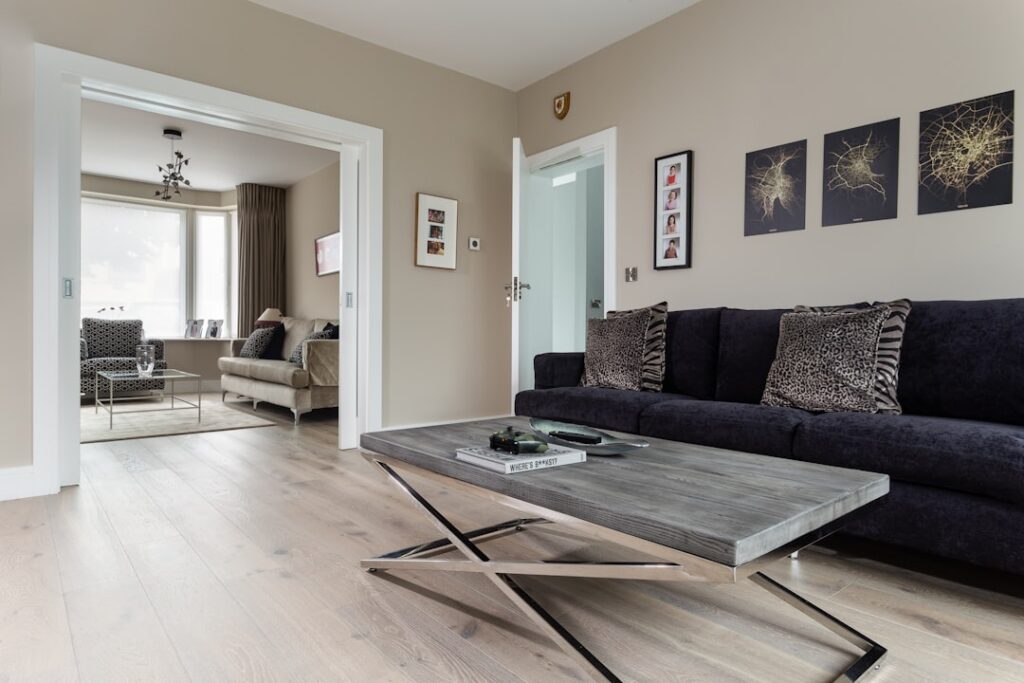
Walnut laminate flooring delivers the rich, chocolate-brown beauty of real walnut hardwood at a fraction of the cost. Modern manufacturing has made laminate so realistic that many homeowners and guests cannot tell the difference from real wood at a glance — especially in the warm, dark tones that walnut is known for.
- What Is Walnut Laminate Flooring?
- Benefits of Walnut Laminate Flooring
- Dramatically Lower Cost
- Superior Scratch Resistance
- Easy DIY Installation
- Consistent Color
- Low Maintenance
- Fade Resistant
- Limitations of Walnut Laminate Flooring
- Choosing the Best Walnut Laminate
- Walnut Laminate Flooring Costs in 2026
- Installation Tips
- Walnut Laminate vs. Alternatives
- Maintaining Walnut Laminate Floors
- Final Thoughts
If you love the look of walnut but cannot justify the $8 to $16 per square foot price tag of solid or engineered walnut hardwood, laminate offers a compelling alternative. This guide covers how to choose the best walnut laminate, what to expect from the material, and how it compares to real walnut and other flooring options.
What Is Walnut Laminate Flooring?
Walnut laminate is a multi-layer flooring product that replicates the appearance of walnut hardwood through high-resolution photography and textured embossing. The construction consists of:
- Wear layer — a clear aluminum oxide or melamine overlay that provides scratch, stain, and fade resistance
- Design layer — a high-resolution photographic image of walnut wood grain
- Core — high-density fiberboard (HDF) that provides structural strength and click-lock compatibility
- Backing layer — a moisture-resistant layer that adds dimensional stability and prevents warping
The best walnut laminate products feature embossed-in-register (EIR) technology, where the physical texture of the surface is synchronized with the printed wood grain image. This means you feel actual grain texture where you see it, creating a remarkably realistic experience.
Benefits of Walnut Laminate Flooring
Dramatically Lower Cost
Walnut laminate costs $1.50 to $5 per square foot — roughly one-third to one-fifth the price of real walnut hardwood. For a 500-square-foot project, the savings can be $3,000 to $5,000 or more.
Superior Scratch Resistance
Laminate’s aluminum oxide wear layer is harder than actual walnut wood. Real walnut has a Janka rating of only 1,010 lbf, making it susceptible to scratches and dents. Laminate resists scratches from pet claws, furniture legs, and daily wear far better.
Easy DIY Installation
Click-lock laminate is one of the most DIY-friendly flooring products available. Most homeowners can install a room in a single day with no special tools beyond a utility knife, tapping block, and rubber mallet.
Consistent Color
Real walnut varies significantly from board to board and changes color over time (lightening with UV exposure). Walnut laminate maintains consistent color indefinitely, which some homeowners prefer.
Low Maintenance
Laminate requires only sweeping and occasional damp mopping. No refinishing, no special cleaners, no humidity management beyond normal household conditions.
Fade Resistant
Unlike real walnut, which lightens noticeably with UV exposure, quality walnut laminate resists fading and color change — even in sun-drenched rooms.
Limitations of Walnut Laminate Flooring
- Not real wood — despite excellent realism, close inspection reveals that laminate is a printed surface. It lacks the depth and warmth of genuine walnut.
- Cannot be refinished — once the wear layer is damaged, the floor must be replaced. Solid walnut can be sanded and refinished multiple times.
- Water sensitive — standard laminate swells when exposed to standing water. The HDF core absorbs moisture through seams and edges. For wet areas, choose waterproof flooring instead.
- Sound — laminate can produce a hollow, tapping sound without proper underlayment.
- Does not add home value — real walnut hardwood increases property value; laminate generally does not.
- Repetitive patterns — budget laminate may have only a few unique plank designs, creating visible pattern repetition. Premium products use more unique plank images.
Choosing the Best Walnut Laminate
AC Rating
The AC (Abrasion Class) rating indicates durability:
- AC3: Residential — suitable for bedrooms and light-traffic areas
- AC4: General residential and light commercial — good for living rooms, kitchens, and home offices
- AC5: Heavy commercial — maximum durability for any residential application
For most homes, AC4 provides the best balance of durability and value.
Thickness
Walnut laminate ranges from 7 mm to 14 mm in thickness. Thicker planks (10 mm+) feel more solid underfoot, produce less hollow sound, and better hide minor subfloor imperfections.
Plank Width and Length
Wide planks (7 inches+) and long planks (48 inches+) create a more realistic appearance because real walnut flooring is typically installed in wide, long planks. Narrow, short planks look more like laminate.
Texture
Look for embossed-in-register (EIR) texture that matches the printed grain pattern. This is the single biggest factor in realism. Random embossing (texture that does not match the print) looks artificial up close.
Water Resistance
If you plan to install walnut laminate in a kitchen or near an entryway, choose a water-resistant version with sealed edges and a water-resistant HDF core. These products handle spills much better than standard laminate.
Walnut Laminate Flooring Costs in 2026
- Budget walnut laminate: $1.00 to $2.00 per square foot
- Mid-range walnut laminate: $2.00 to $3.50 per square foot
- Premium walnut laminate (EIR, 12mm+): $3.50 to $5.50 per square foot
- Underlayment: $0.25 to $0.75 per square foot
- Professional installation: $2 to $4 per square foot (labor)
For a 300-square-foot room with mid-range walnut laminate, underlayment, and professional installation, expect to pay between $1,275 and $2,475 total — compared to $3,300 to $6,600 for real walnut hardwood.
Installation Tips
- Acclimate planks for 48 hours in the installation room.
- Install underlayment if not pre-attached — it improves comfort, reduces noise, and provides a moisture barrier.
- Leave 1/4-inch expansion gaps at all walls, cabinets, and fixed objects.
- Run planks in the direction of the longest wall or toward the primary light source for the most natural appearance.
- Stagger end joints by at least 12 inches between rows.
- Mix planks from multiple boxes to randomize any slight variation between production batches.
- Undercut door casings for a clean, professional look at doorways.
Walnut Laminate vs. Alternatives
- Walnut laminate vs. real walnut: Real walnut has unmatched authenticity, warmth, and value. Laminate is 60-80% less expensive, more scratch-resistant, and easier to maintain — but cannot be refinished and does not increase home value.
- Walnut laminate vs. walnut-look LVP: LVP is waterproof and can be used in kitchens and bathrooms. Laminate has better scratch resistance and a more rigid, wood-like feel underfoot. For wet areas, LVP is the clear winner.
- Walnut laminate vs. engineered walnut: Engineered walnut has a real wood surface and can be refinished once or twice. It costs more than laminate but adds property value and has a more authentic look and feel.
- Walnut laminate vs. dark-stained oak laminate: Both achieve a dark wood look. Walnut patterns have more flowing, open grain while oak patterns show more prominent cathedral grain. Personal preference determines the winner.
Maintaining Walnut Laminate Floors
- Sweep or vacuum regularly with a hard-floor setting (no beater bar).
- Damp mop with a spray mop — minimal water, no soaking.
- Never use steam mops — the heat and moisture can damage laminate.
- Wipe spills immediately — do not let water sit on the surface.
- Use felt pads under furniture legs.
- Avoid wax or polish products — they can leave a hazy residue on the wear layer.
- Use laminate-specific cleaners or a simple solution of water with a few drops of dish soap.
Final Thoughts
Walnut laminate flooring is the smart choice for homeowners who want the dark, rich aesthetic of walnut wood without the premium price tag or the maintenance demands of real hardwood. The best modern walnut laminate products are genuinely impressive — realistic textures, accurate color reproduction, and durability that actual walnut cannot match.
The trade-offs are real but manageable: you give up the authenticity of real wood, the ability to refinish, and any added home value. In return, you get a beautiful floor that resists scratches, costs a fraction of the price, and looks stunning from day one. For most homeowners, that is an excellent deal.
Pair walnut laminate in living areas and bedrooms with tile or vinyl in bathrooms and kitchens for a whole-home solution that balances beauty, practicality, and budget.
Prefer to explore on your own?
See how new flooring looks in your actual room in seconds — free, no signup.
Try the free Floor Studio →