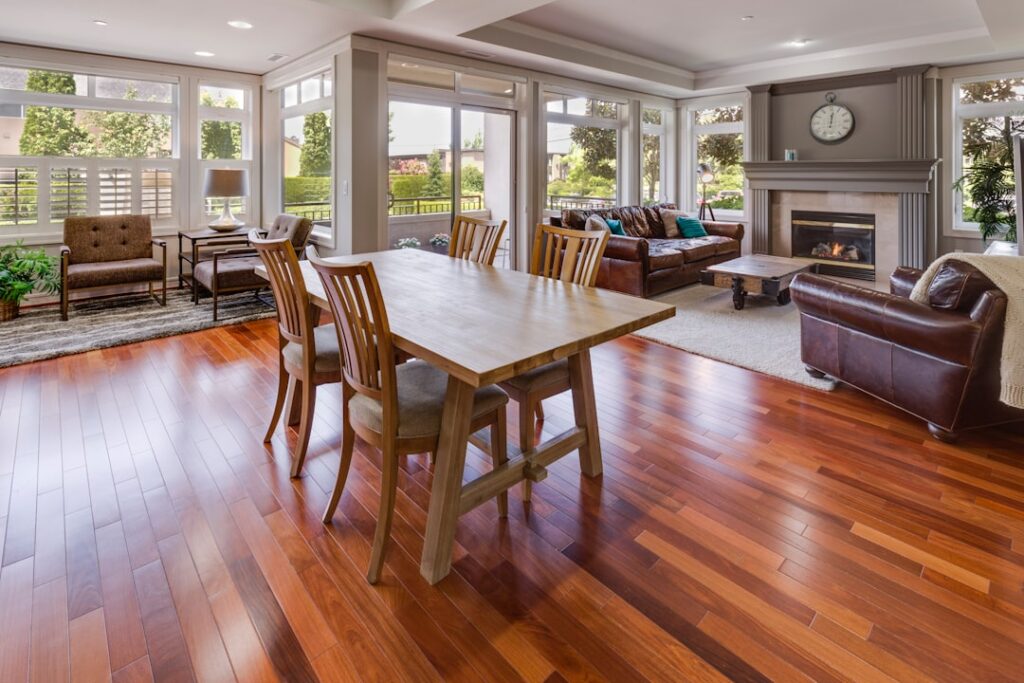
Two of the most beloved hardwoods rarely look as good as when they’re played off each other. Walnut oak flooring can mean a few things: walnut and oak boards mixed in one floor, oak stained to mimic walnut’s deep brown, or simply choosing between the two species. Each route delivers a rich, warm, sophisticated look, but the cost, durability, and authenticity differ sharply. Knowing which “walnut oak” you actually want saves money and prevents disappointment.
Understanding the Two Species
Oak and walnut are both American hardwood staples with very different personalities. Oak, especially red and white oak, is hard, widely available, affordable, and prized for its pronounced grain that takes stain beautifully. Walnut is softer and pricier, with a naturally deep chocolate-brown color, smooth grain, and a luxurious feel. On the Janka scale, white oak runs about 1,360 lbf and red oak 1,290, while American black walnut sits lower around 1,010, meaning walnut dents more easily than oak.
That hardness gap is the central tradeoff. Walnut wins on color and elegance; oak wins on durability and value.
Walnut-Stained Oak: The Budget Path
Many homeowners want walnut’s dark, rich tone without walnut’s price or softness. The answer is staining oak to a walnut shade. Because oak is harder and cheaper, you get a more dent-resistant, budget-friendly floor that reads as deep brown from across the room. The catch is honesty: stained oak shows oak’s bolder grain pattern, not walnut’s smoother figure, so up close it looks like dark oak rather than true walnut. For most rooms, that’s a perfectly handsome result at a fraction of the cost.
Mixing Walnut and Oak in One Floor
The most striking option is laying genuine walnut and oak together, using the contrast as a design feature. Lighter oak and dark walnut can create borders, feature strips, parquet patterns, or a deliberately blended random mix. This approach is dramatic and custom, but it demands careful planning so the two species’ different hardness and movement don’t cause uneven wear or gapping. It’s also the most expensive route and usually a job for an experienced installer.
Pros of the Walnut-Oak Look
However you achieve it, this pairing brings real advantages.
- Warm, upscale appearance — deep browns read as luxurious and timeless.
- Design flexibility — contrast strips, borders, and blends allow custom looks.
- Refinishable — solid versions of both woods can be sanded and refinished multiple times.
- Hides dust and minor debris — darker tones disguise crumbs better than pale floors.
- Strong resale appeal — real hardwood remains a sought-after feature.
The Honest Cons
Dark, rich floors have a few well-known drawbacks worth planning around.
- Walnut’s softness — genuine walnut dents and scratches more easily than oak; not ideal for big dogs or heavy traffic without a tough finish.
- Shows dust and scratches — dark floors reveal fine dust, pet hair, and surface scuffs more than mid-tones.
- Cost — real walnut is among the pricier domestic species.
- Sun fading — walnut can lighten over time in direct sunlight, while stained oak may show its true color as the stain wears.
- Matching repairs — blended or stained floors can be tricky to patch invisibly.
Cost Expectations
Budget guides your choice here. Oak flooring typically runs $4 to $9 per square foot for material, and staining it to a walnut tone adds little if any cost. Genuine walnut flooring usually runs $8 to $15 per square foot or more, with engineered walnut sometimes a bit less. Mixed-species custom floors cost the most because of the material and the skilled labor. Professional installation adds roughly $3 to $8 per square foot across the board. For the walnut look on a budget, stained oak is the clear value winner.
Finishing and Care Tips
Whatever you choose, protect it with a durable finish. A quality oil-modified or water-based polyurethane, ideally with several coats, helps walnut resist the dents and scratches it’s prone to. A satin or matte sheen hides fine scuffs and dust far better than high gloss, which is wise for dark floors. Use felt pads under furniture, keep grit off with mats and regular sweeping, and damp-mop with a pH-neutral wood cleaner. To slow sun fading, use blinds or UV-filtering film on bright windows.
Design Ideas That Show Off the Contrast
If you go the mixed-species route, a few proven layouts make the most of walnut and oak together. A dark walnut border framing a field of lighter oak defines a room elegantly, like a built-in rug. Alternating wide planks creates a subtle striped effect that reads as sophisticated rather than busy. For a true statement, a parquet or herringbone pattern combining the two woods turns the floor into the focal point of the room. In open-concept homes, a walnut feature strip can visually separate the kitchen from the living area without a wall.
For the stained-oak approach, the design freedom comes from the stain itself. You can dial the tone from a medium chocolate to a near-espresso, and a reactive or layered stain on oak’s open grain produces depth that flat dark paint can never match. Pair deep brown floors with lighter walls and cabinetry to keep the room from feeling heavy, and add warm metal accents like brass or bronze to complement the wood’s undertones. Thoughtful pairing is what elevates this look from merely dark to genuinely refined. Lighting plays a role too: dark floors absorb light, so a room with the walnut-oak look benefits from generous natural light and layered lamps to keep it from feeling closed in. In smaller spaces, a slightly lighter stain or wider planks helps the floor read as open rather than heavy.
Which Walnut Oak Floor Is Right for You?
If you love the deep, rich look but want durability and value, walnut-stained oak is the smart, practical choice. If you crave authentic walnut’s smooth grain and feel and your traffic is gentle, genuine walnut rewards the splurge. If you want a true showpiece and have the budget, mixing both species creates a custom floor nobody else has. Decide whether color, durability, or authenticity matters most to you, match the material to your traffic, and finish it well. The walnut-oak combination is timeless when chosen with eyes open.
Prefer to explore on your own?
See how new flooring looks in your actual room in seconds — free, no signup.
Try the free Floor Studio →