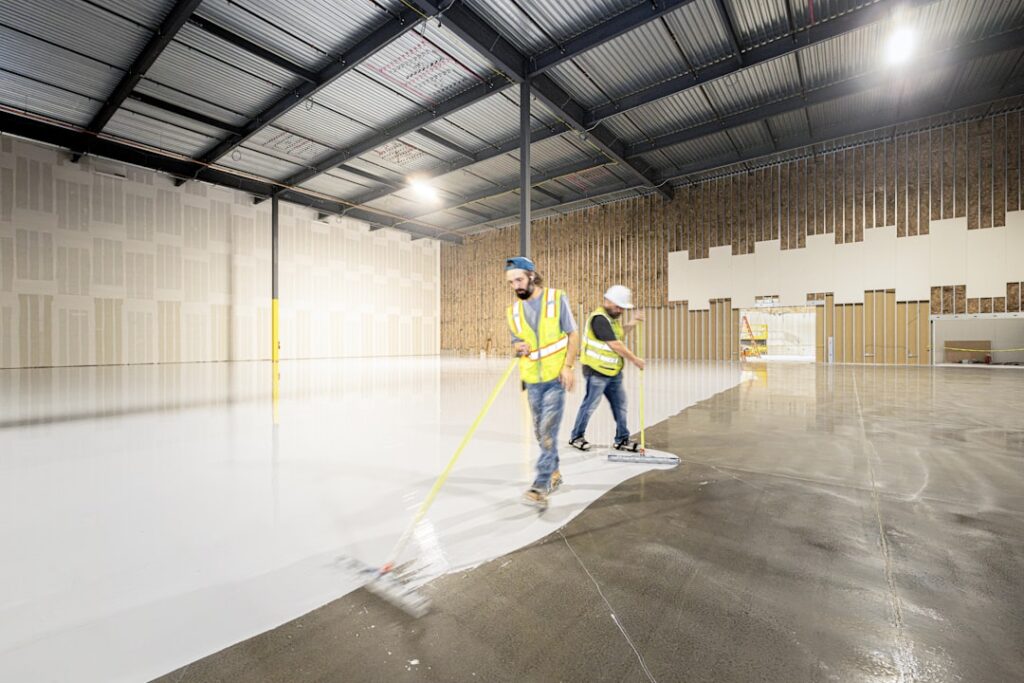
A warehouse floor scrubber is a powered machine that washes, scrubs, and squeegees large hard floors in a single pass, leaving them clean and nearly dry behind it. While the name points at industrial spaces, the same machines serve garages, workshops, fitness studios, and large home shops where a mop simply cannot keep up with the square footage.
If you maintain a big concrete or epoxy-coated floor, the right scrubber turns a half-day chore into a quick lap around the room. Here is how to choose, run, and care for one.
How a Floor Scrubber Works
The mechanics are straightforward. A solution tank dispenses water mixed with detergent onto the floor. Rotating brushes or pads agitate the surface to break up grime. A vacuum-powered squeegee then lifts the dirty water off the floor into a recovery tank, so the surface is walkable almost immediately. You refill the clean tank, dump the recovery tank, and repeat.
Because the machine recovers its own water, you are not pushing dirt around with a string mop or waiting an hour for puddles to dry. That single-pass, dry-behind-you design is the whole reason these machines exist.
Walk-Behind vs. Ride-On
The first big decision is whether you walk or ride. Each fits a different scale of space:
- Walk-behind scrubbers: best for areas up to roughly 20,000 sq ft. Cleaning paths run from about 17 to 28 inches. They are compact, easier to maneuver around racking and equipment, and far cheaper to buy.
- Ride-on scrubbers: built for 20,000 sq ft and up. Cleaning paths of 28 to 45 inches let one operator cover huge floors quickly. They cost more and need room to turn, but the productivity gain is dramatic in true warehouse settings.
For most home shops, garages, and small commercial spaces, a compact walk-behind is plenty. Reserve ride-on machines for genuinely large footprints where labor time justifies the price.
Sizing the Machine to Your Floor
Match the cleaning path and tank size to your space so you are not refilling constantly. As a rough guide, a wider deck cleans faster but is harder to steer in tight aisles. A larger solution tank means fewer trips to the spigot, while a bigger recovery tank means fewer dumps. Battery models offer cord-free freedom and run 2 to 4 hours per charge; corded electric models suit smaller, nearer-to-an-outlet spaces.
Also weigh your floor type. Smooth sealed concrete and epoxy clean easily with pads, while rough broom-finish concrete needs aggressive brushes and more downward pressure.
Choosing Brushes, Pads, and Detergent
The contact surface does the real work, so match it to the soil:
- Soft pads/brushes: routine dust and light film on smooth floors.
- Medium pads: general-purpose grime, scuffs, and tire marks.
- Aggressive grit brushes: heavy buildup, textured concrete, and stripping jobs.
Use a neutral-pH detergent for daily cleaning to protect sealers and coatings. Save stronger degreasers for oil and grease, and always dilute to the label ratio. Over-dosing detergent leaves a slippery residue that defeats the purpose and can void floor-coating warranties.
Operating Tips for the Best Results
A scrubber rewards a little setup. Sweep or use a dust mop first, because the machine handles film and grime, not loose debris that can clog the squeegee or jam the brush. Then run this routine:
- Fill the solution tank with properly diluted detergent.
- Lower the brush deck and squeegee, then set water flow to a moderate rate.
- Drive in straight, overlapping passes, slightly overlapping the previous track.
- Slow down over heavy soil to give the brushes more dwell time.
- Check the squeegee blades; streaks of water left behind usually mean a worn or dirty blade.
- Empty and rinse the recovery tank after every use to prevent odor and buildup.
Costs, Buying, and Renting
Budget varies widely with size and power source. Small walk-behind machines often start in the low thousands, mid-size units run several thousand, and large ride-on scrubbers can reach five figures. If you only need a deep clean occasionally, renting a walk-behind for a day is a cost-effective alternative to ownership. Used and refurbished machines are common, but inspect the batteries, brush motor, and squeegee assembly closely, since those are the wear items that get expensive to replace.
Battery vs. Corded vs. Engine Power
Power source shapes how and where you can clean. Battery-powered scrubbers dominate the market because they free you from cords and outlets; a typical machine runs 2 to 4 hours per charge, enough for most spaces, and modern lithium packs charge faster and last longer than older lead-acid batteries. The trade-off is upfront cost and eventual battery replacement.
Corded electric models cost less and never run down, but the cord limits your range and becomes a nuisance to manage around obstacles, so they suit smaller rooms near an outlet. Propane and engine-driven scrubbers exist for very large industrial floors, but they are overkill, and a ventilation concern, for home and small commercial use. For a garage, workshop, or studio, a compact battery walk-behind is almost always the right call.
Maintenance and Safety
Treat the machine well and it lasts for years. After each use, drain both tanks, rinse the recovery tank, wipe the squeegee blades, and remove the pad or brush so it dries flat. Periodically flip or replace squeegee blades, keep battery terminals clean, and check the vacuum hose for clogs.
On the safety side, a freshly scrubbed floor stays slightly damp at the edges, so post wet-floor signs and route foot traffic away until it dries. Read the operator’s manual before first use, wear closed-toe shoes, and on battery models follow the manufacturer’s charging instructions to avoid overheating. For large or commercial installations, a professional floor-care service can advise on the right machine, and an electrician should handle any dedicated charging circuits.
Keep a simple log of brush and squeegee replacements and battery charge cycles. Wear items are cheap compared with the productivity you lose when a worn squeegee leaves streaks or a tired battery cuts a job short, and tracking them lets you reorder before they fail mid-clean.
Used correctly, a warehouse floor scrubber pays for itself in time saved and floors that simply look and perform better. Match the machine to your square footage, keep up with basic maintenance, and respect the safety basics, and a single unit will deliver clean, dry-behind-you floors for many years of hard service.
Prefer to explore on your own?
See how new flooring looks in your actual room in seconds — free, no signup.
Try the free Floor Studio →