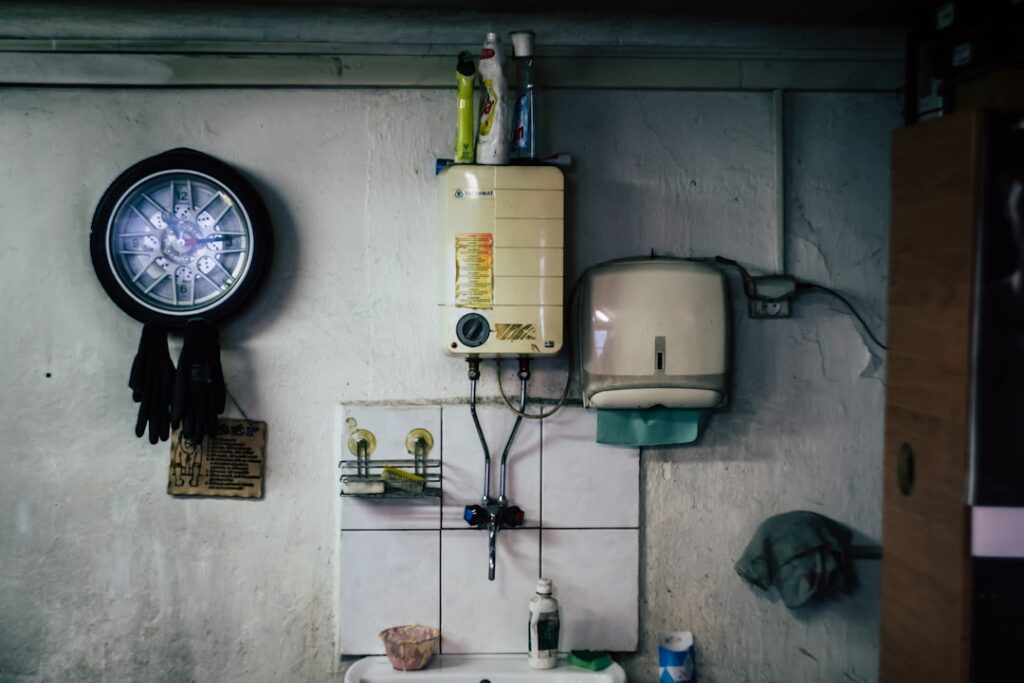
An instant water heater instant system, more commonly called a tankless or on-demand water heater, heats water only when you need it instead of storing gallons hot around the clock. Turn on a hot tap and the unit fires up, heating water as it flows through, then shuts off when you are done. The payoff is endless hot water, a smaller footprint, and lower standby energy losses compared with a traditional tank. For many households, it is a compelling upgrade.
This guide explains how instant water heaters work, the main types, how to size one, installation requirements, energy savings, and costs, so you can decide whether going tankless makes sense for your home.
- How an Instant Water Heater Works
- Types of Instant Water Heaters
- Sizing for Your Household
- Energy Savings and Efficiency
- Installation Requirements
- Pros and Cons
- Cost of an Instant Water Heater
- Maintenance Tips
- Instant vs. Traditional Tank Heaters
- Common Misconceptions
- Getting the Most From a Tankless System
- Gas vs. Electric Instant Heaters
- Is a Tankless Upgrade Worth It?
How an Instant Water Heater Works
Unlike a storage tank that keeps 40 to 50 gallons hot continuously, a water heater instant unit heats water on demand. When you open a hot tap, cold water flows into the unit, a gas burner or electric element rapidly heats it, and hot water flows out for as long as the tap runs. Because there is no reservoir, you never run out during extended use, and the unit wastes no energy keeping unused water warm.
Types of Instant Water Heaters
Instant heaters come in a few configurations to suit different needs:
- Whole-house gas tankless: The most common, providing high flow to serve an entire home with hot water.
- Whole-house electric tankless: Compact and clean-burning, but require substantial electrical capacity for high demand.
- Point-of-use units: Small heaters installed near a single fixture for instant hot water at a remote sink.
- Condensing models: High-efficiency gas units that capture extra heat from exhaust for better performance.
Sizing for Your Household
Proper sizing is critical, because an undersized unit cannot keep up when several fixtures run at once. Tankless heaters are rated by flow rate in gallons per minute (GPM) and by temperature rise:
- Add up the GPM of fixtures you expect to run simultaneously; a shower is about 2 to 2.5 GPM and a kitchen faucet about 1.5 GPM.
- Two showers at once may require 5 GPM or more of capacity.
- Colder incoming water means a larger temperature rise is needed, so northern climates require higher-capacity units.
- Choose a unit that comfortably meets your peak simultaneous demand.
Energy Savings and Efficiency
One of the biggest draws is efficiency. By eliminating standby losses, instant heaters use less energy for the same hot water:
- Homes using less than about 40 gallons of hot water a day can see 24 to 34 percent better efficiency than a storage tank.
- Condensing models push efficiency even higher.
- Many qualify for ENERGY STAR certification and utility rebates or tax credits.
- Point-of-use units cut the water wasted waiting for hot water to reach distant fixtures.
Installation Requirements
Switching to tankless often involves more than a simple swap, so plan for the requirements:
- Gas units frequently need a larger gas supply line and dedicated, often stainless, venting.
- Electric units may require upgraded electrical service and multiple dedicated circuits.
- Condensing models need a condensate drain for acidic exhaust moisture.
- Water quality matters; hard water calls for periodic descaling, and a softener or filter helps.
Professional installation is strongly recommended to handle gas, venting, and electrical work safely and to code.
Pros and Cons
Weigh the benefits against the trade-offs:
- Pros: Endless hot water, lower energy bills, compact wall-mounted design that frees floor space, and a long lifespan of 20 years or more, roughly double a tank.
- Cons: Higher upfront cost, possible gas or electrical upgrades, a slight delay before hot water arrives, and reduced output if too many fixtures run at once on an undersized unit.
Cost of an Instant Water Heater
Budget for both the unit and installation, which can add significantly for gas models:
- Electric point-of-use unit: $150 to $500
- Whole-house electric tankless: $500 to $1,500 for the unit
- Whole-house gas tankless: $1,000 to $2,500 for the unit
- Installation: $500 to $2,500 depending on gas, venting, and electrical upgrades
The higher upfront cost is offset over time by lower energy bills and a longer service life, especially with available rebates.
Maintenance Tips
Instant heaters last longest with a little care. Descale the unit once a year, or more often with hard water, to remove mineral buildup that reduces efficiency. Clean the inlet filter periodically, and have a professional inspect the burner and venting on gas models. A softener or filter upstream greatly extends the interval between descalings.
Instant vs. Traditional Tank Heaters
Deciding between tankless and a conventional tank comes down to your priorities:
- Hot water supply: Tankless never runs out during continuous use; a tank can be drained during back-to-back showers.
- Energy use: Tankless avoids standby loss and uses less energy for typical households.
- Upfront cost: Tanks are cheaper to buy and install; tankless costs more but lasts longer.
- Space: Tankless mounts on the wall and frees floor space; a tank takes up a sizable footprint.
- Lifespan: Tankless often lasts 20-plus years versus 8 to 12 for a tank.
If low bills, endless hot water, and long life matter most, tankless wins. If you want the lowest upfront cost, a tank still has a place.
Common Misconceptions
A few myths cause confusion when shopping for an instant heater:
- “Hot water is truly instant.” The unit heats instantly, but water still travels through the pipes, so there is a brief delay at the tap unless you use a point-of-use unit or recirculation.
- “One unit handles unlimited demand.” Output is capped by flow rate; too many fixtures at once on an undersized unit will drop the temperature.
- “They need no maintenance.” Annual descaling is important, especially with hard water.
Getting the Most From a Tankless System
To maximize performance, size the unit generously for your peak simultaneous demand and cold-climate temperature rise, and consider a recirculation feature or a small point-of-use unit at distant fixtures to cut the wait for hot water. Softening or filtering hard water dramatically reduces scale buildup, keeping the heat exchanger efficient and extending the intervals between descalings. These steps ensure the system delivers on its promise of steady, efficient, on-demand hot water.
Gas vs. Electric Instant Heaters
Choosing between a gas and an electric tankless unit is one of the first decisions, and it hinges on your home’s existing utilities and demand. Gas tankless heaters, which include standard and high-efficiency condensing models, deliver very high flow rates and can comfortably supply a whole home even in cold climates where a large temperature rise is needed. They do require a gas line, often upsized, and proper venting, which adds to installation cost. Electric tankless units are more compact, produce no combustion byproducts, and need no venting, making them cleaner and simpler to place, but supplying a whole house with electric on-demand heat draws enormous power and frequently requires a significant electrical service upgrade with multiple dedicated circuits. For homes already on natural gas with high hot-water demand, a gas unit is usually the more capable choice, while electric models shine for point-of-use applications and smaller households with adequate electrical capacity.
Is a Tankless Upgrade Worth It?
For many homeowners the answer is yes, but the value depends on your situation. If your current tank is old and due for replacement, stepping up to a tankless unit brings endless hot water, lower monthly energy bills, a reclaimed corner of floor space, and a lifespan roughly double that of a tank, which spreads the higher upfront cost over many more years. Available rebates and tax credits for high-efficiency models further improve the math. The upgrade makes the most sense for households that value never running out of hot water and plan to stay in the home long enough to recoup the investment through energy savings and longevity. If you are replacing on a tight budget and do not mind a conventional tank’s limits, a standard unit remains cheaper up front, but for long-term efficiency and convenience, tankless is a compelling choice.
An instant water heater instant system is a strong choice for homeowners who want endless hot water, lower energy use, and a compact unit that lasts two decades or more. Size it carefully to your peak demand, budget for any gas or electrical upgrades, and keep up with annual descaling. Do that, and a tankless heater will deliver reliable, on-demand hot water while trimming your energy bills for many years.