Flooring marketing loves the word waterproof, and when it comes to real wood, that word is doing a lot of dishonest work. Water resistant wood flooring is a genuine and useful category, but it is critical to understand up front that water-resistant does not mean waterproof. Wood is an organic material, and no finish or core makes it impervious to standing water the way vinyl or tile is. This guide gives you the straight story on what water-resistant wood can and cannot handle, so you put it where it will actually last.
- Water-Resistant vs. Waterproof: The Crucial Difference
- How Wood Is Made More Water-Resistant
- What Water-Resistant Wood Can Handle
- What It Cannot Handle
- Wood vs. LVP and Laminate for Wet Areas
- Where Wood Is the Right Choice
- Solid vs. Engineered for Moisture
- How to Protect Water-Resistant Wood
- Reading the Warranty Fine Print
- The Bottom Line
Water-Resistant vs. Waterproof: The Crucial Difference
These terms get used interchangeably in advertising, but they mean very different things. Water-resistant means the flooring can withstand occasional spills and moisture for a limited time if you wipe it up promptly. Waterproof means the material itself is unaffected by water no matter how long it sits, which is true of luxury vinyl plank and tile but not of real wood.
Any product marketed as waterproof wood flooring deserves a skeptical eye. Real wood swells, warps, and can grow mold when water penetrates it. What manufacturers have genuinely improved is the resistance, the amount of time and moisture the floor can shrug off before damage sets in.
How Wood Is Made More Water-Resistant
Modern engineered wood floors achieve real water resistance through better construction and finishes:
- Engineered construction. Rather than a solid plank, engineered wood layers a real wood veneer over a plywood or high-density core. The cross-layered core is far more dimensionally stable than solid wood, so it resists the swelling and warping that moisture causes.
- Advanced surface finishes. Aluminum-oxide and specialized topcoats seal the surface, slowing water penetration and giving you more time to clean up spills.
- Tighter locking systems. Some products add sealed or coated edges and tight click-locks that reduce water seeping into the seams.
- Water-resistant cores. Certain premium engineered lines use enhanced cores that tolerate humidity better than standard plywood.
These improvements are real and worthwhile. They just have limits.
What Water-Resistant Wood Can Handle
Used within its design, water-resistant engineered wood performs well. It comfortably handles the moisture of everyday life: a spilled glass wiped up quickly, damp mopping with a well-wrung mop, tracked-in rain, and the humidity swings of a normal home. Engineered construction also makes it a better candidate for below-grade installations like basements, where solid hardwood is never recommended, because the stable core resists the subtle moisture that concrete slabs give off.
What It Cannot Handle
This is where honesty protects your investment. Water-resistant wood is not the right choice for genuinely wet environments:
- Standing water. A leak, an overflowing appliance, or a pet accident left overnight will still damage the floor if it sits and penetrates the seams.
- Full bathrooms and wet zones. Showers, tub surrounds, and areas that see regular pooling water are not suitable for wood of any kind.
- Flood-prone areas. If a space floods, wood will warp and likely need replacement.
- Constant high humidity without climate control, which can still cause movement over time.
Wood vs. LVP and Laminate for Wet Areas
When you truly need waterproof performance, wood is the wrong tool, and it is worth knowing the alternatives:
| Material | Water Performance | Best Use |
|---|---|---|
| Water-resistant engineered wood | Handles spills, not standing water | Living areas, bedrooms, basements |
| Luxury vinyl plank (LVP) | Fully waterproof core | Kitchens, bathrooms, laundry rooms |
| Waterproof laminate | Highly water-resistant, sealed core | Kitchens, entryways, moderate-moisture rooms |
| Tile | Fully waterproof | Bathrooms, showers, mudrooms |
For a kitchen or full bath, LVP or tile is the honest answer. Choosing wood there just because it is labeled water-resistant sets you up for disappointment.
Where Wood Is the Right Choice
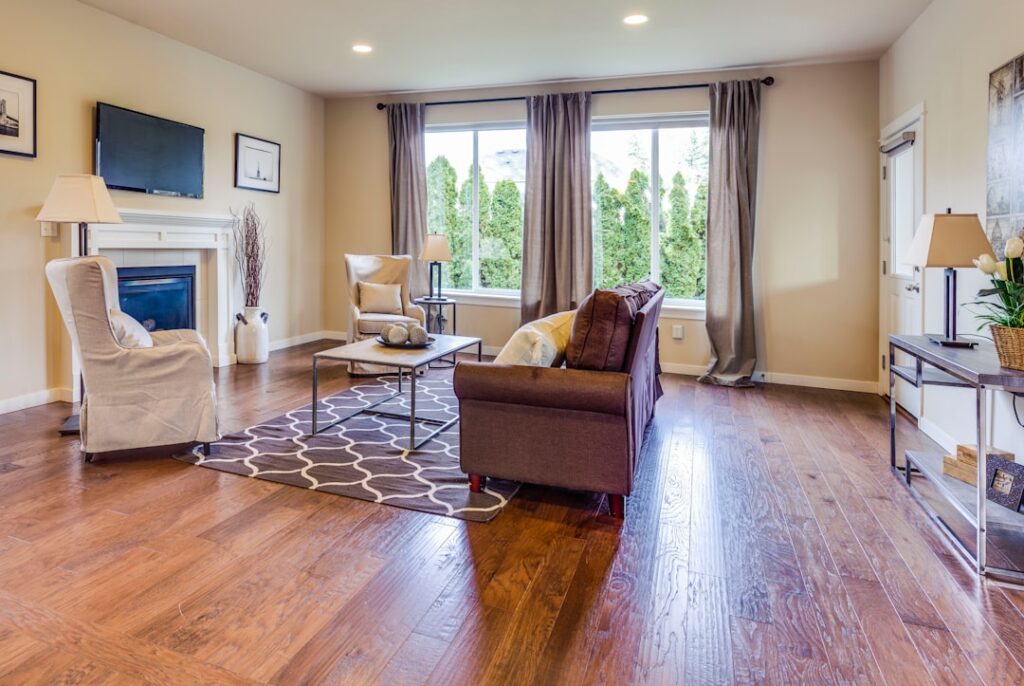
Real wood earns its place through beauty, warmth, and the ability to be refinished, and water-resistant engineered wood extends that appeal into slightly damp-prone areas. Living rooms, dining rooms, bedrooms, hallways, and finished basements are ideal. In these spaces you get the authentic look and feel of hardwood with the added insurance of handling everyday spills, provided you clean them up rather than letting them sit.
Solid vs. Engineered for Moisture
If moisture resistance is on your mind, the construction matters more than the wood species. Solid hardwood is a single piece of wood through and through, which means it expands and contracts significantly with humidity and cannot be installed below grade. It is the least moisture-tolerant option and is best reserved for stable, climate-controlled main-floor rooms.
Engineered wood, by contrast, is built for better dimensional stability. Its cross-layered core resists the swelling and cupping that humidity causes, which is why nearly all water-resistant wood flooring is engineered rather than solid. If you want real wood in a basement, over a concrete slab, or in a home with big seasonal humidity swings, engineered water-resistant wood is the appropriate choice. Just remember that even the best engineered wood is still wood, and it shares wood’s fundamental limit against standing water.
How to Protect Water-Resistant Wood
Getting the most life out of a water-resistant wood floor comes down to smart habits that respect its limits:
- Wipe up spills immediately rather than letting them sit and seep into the seams.
- Use a well-wrung damp mop, never a soaking-wet one, and skip steam mops entirely.
- Place mats at entries and in front of sinks to catch water before it reaches the floor.
- Maintain indoor humidity between roughly 35 and 55 percent to minimize seasonal movement.
- Address leaks fast, since a slow dishwasher or refrigerator leak can quietly ruin wood before you notice it.
Reading the Warranty Fine Print
Marketing claims and warranty terms often tell different stories, so read the fine print before you buy. Many water-resistant wood warranties specify a limited time window, such as protection against surface spills for a set number of hours, and they typically exclude damage from standing water, flooding, or improper maintenance. Some products carry a topical water-resistance rating that protects only the surface, not the seams or the core. Understanding exactly what the manufacturer stands behind tells you what the floor can truly handle, and it keeps you from expecting waterproof performance from a product that only promises resistance.
The Bottom Line
Water resistant wood flooring is a smart upgrade over traditional solid hardwood for moisture tolerance, but treat the label as resistance, not immunity. Wipe up spills promptly, keep it out of true wet zones, and reach for LVP or tile where standing water is a real possibility. Match the material to the room honestly, and engineered water-resistant wood will reward you with years of natural beauty in the spaces where it truly belongs.
Prefer to explore on your own?
See how new flooring looks in your actual room in seconds — free, no signup.
Try the free Floor Studio →