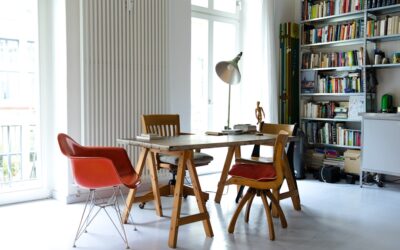
For decades, herringbone meant glued solid oak that would warp the moment a dishwasher leaked. Modern engineering has flipped that completely. Waterproof herringbone flooring — built from SPC rigid core, WPC, or premium LVT — delivers the same architectural pattern in a product that handles standing water, pet accidents, and bathroom installations without missing a beat. This guide breaks down the actual product categories, brand options, pricing, and install methods so you can specify a floor that looks like 18th-century parquet but performs like modern commercial sheet vinyl.
- What Makes Herringbone Flooring Waterproof
- Top Brands and Product Lines
- Wear Layer and Performance Specs
- Plank Dimensions and Pattern Scale
- Installation Methods
- Subfloor Prep and Moisture Testing
- Best Rooms for Waterproof Herringbone
- How It Compares to Real Wood Herringbone
- Color and Design Choices
- Maintenance and Longevity
What Makes Herringbone Flooring Waterproof
True waterproof status requires a non-organic core that won’t swell or delaminate when wet. Three constructions qualify. SPC (stone polymer composite) uses limestone powder, PVC, and stabilizers in a rigid 4 to 6-mm core. WPC (wood polymer composite) adds foaming agents for a slightly softer feel. Pure LVT — flexible vinyl with a thicker wear layer — is fully waterproof when glued down with a moisture-rated adhesive.
Engineered wood herringbone is not waterproof, full stop. Manufacturers may market water-resistant SKUs, but a sustained leak will damage any wood-fiber product.
Top Brands and Product Lines
Karndean Knight Tile and Korlok Select offer LVT herringbone in wood and stone looks with 20-mil and 30-mil wear layers. Material runs $5 to $8 per square foot. Amtico Spacia and Signature deliver the most refined visuals at $7 to $11 per square foot.
For SPC rigid-core herringbone, look at COREtec Originals Herringbone, Mannington ADURA Max Apex, Mohawk RevWood Premier Herringbone, and Pergo Extreme. Material costs $4 to $7 per square foot. Shaw Floorte Pro and Quick-Step Vivid herringbone SKUs round out the value tier at $3 to $5.
Wear Layer and Performance Specs
For residential use, a 12 to 20-mil wear layer handles normal foot traffic for 15 to 20 years. For light commercial or heavy residential — kitchens, mudrooms, entries — push to 22 mil or higher. For full commercial spec, 28 to 30 mil is the target.
Embossed-in-register textures matter on herringbone because the pattern naturally draws the eye. A flat-finish printed plank will read fake from across the room. The better products use deep EIR pressing that aligns with the printed grain.
Plank Dimensions and Pattern Scale
Waterproof herringbone planks typically come in 4×18, 5×24, or 6×30-inch formats. Smaller blocks (4×18) suit traditional small rooms — half baths, mudrooms, galley kitchens. Wider planks (6×30) scale better in open-plan kitchens, great rooms, and large basements where a tight pattern would feel busy.
Allow 7 to 12 percent waste on herringbone layouts because every plank has a defined direction (left and right pieces) and field starts and finishes require diagonal cuts at the perimeter.
Installation Methods
Click-lock floating install is the most common method for SPC rigid-core herringbone. Use the Uniclic, Valinge 5G, or similar drop-lock joints carefully — herringbone joints have higher stress at the point where four planks meet. Start in the center of the room with a chalk-line spine and work outward to maintain pattern alignment.
Glue-down installation with a moisture-rated adhesive like Mapei Ultrabond ECO 980, Bostik GreenForce, or DriTac 7500 is the better choice for spaces over 600 square feet or for installations under heavy commercial loading. Glue-down also gives a more solid underfoot feel and eliminates click-joint stress.
Subfloor Prep and Moisture Testing
Concrete subfloors should test below 8 lbs per 1,000 sq ft per 24 hours per ASTM F1869 or below 85 percent RH per ASTM F2170. SPC tolerates higher moisture readings than wood floors, but the adhesive (for glue-down) often has a lower tolerance — always check the adhesive spec sheet.
Flatness matters more for herringbone than straight-lay because misaligned subfloor creates visible pattern distortion. Aim for 3/16 inch over 10 feet. Self-level with Mapei Planiseal or Henry 555 LevelPro on any dished or telegraphed slab.
Best Rooms for Waterproof Herringbone
Bathrooms, mudrooms, laundry rooms, and basements are obvious wins because moisture is a constant. Kitchens with frequent dishwasher or fridge leaks benefit hugely — a real wood herringbone in those spaces is a 15-year time bomb.
Whole-floor installations work too. Lay waterproof herringbone across an open-plan kitchen-living-dining on a single ground floor for visual continuity. The 100 percent waterproof construction means a kitchen flood doesn’t end up rippling under the living room couch.
How It Compares to Real Wood Herringbone
Visual fidelity on the top-tier products — Karndean Korlok, Amtico Spacia, COREtec Originals Premier — gets you 90 percent of the way to real engineered oak from normal viewing distance. Where waterproof herringbone loses is in close-up tactile feel and refinishability. You can’t sand and restain a vinyl floor; when the wear layer is gone, the whole floor needs replacement.
Cost-wise, waterproof herringbone runs 40 to 60 percent below real engineered oak herringbone installed. For most homeowners, that delta funds a much larger renovation scope elsewhere.
Color and Design Choices
Waterproof herringbone is available in nearly every wood-look colorway — light limed oak, warm honey hickory, smoked dark walnut, weathered greige, and even concrete and stone visuals. The pattern itself draws so much attention that subtler colors often work better than bold ones; aggressive stains in herringbone can feel relentless in a large open-plan space.
For coastal homes and beach properties, light blonde and whitewashed looks pair with the surrounding palette. For city condos and modern lofts, smoked walnut and oxidized concrete looks pair well with industrial fixtures and matte black hardware.
Maintenance and Longevity
Sweep daily and damp mop weekly with a pH-neutral cleaner like Bona for LVT, Method Squirt + Mop, or Karndean Clean. Avoid steam mops — heat softens the wear layer and degrades click-joint integrity over time.
A properly installed waterproof herringbone flooring project with a 20-mil or higher wear layer realistically lasts 18 to 25 years in residential use. Heavy commercial installations with a 28-mil wear layer can stretch to 30 years before visible wear demands replacement.
Prefer to explore on your own?
See how new flooring looks in your actual room in seconds — free, no signup.
Try the free Floor Studio →