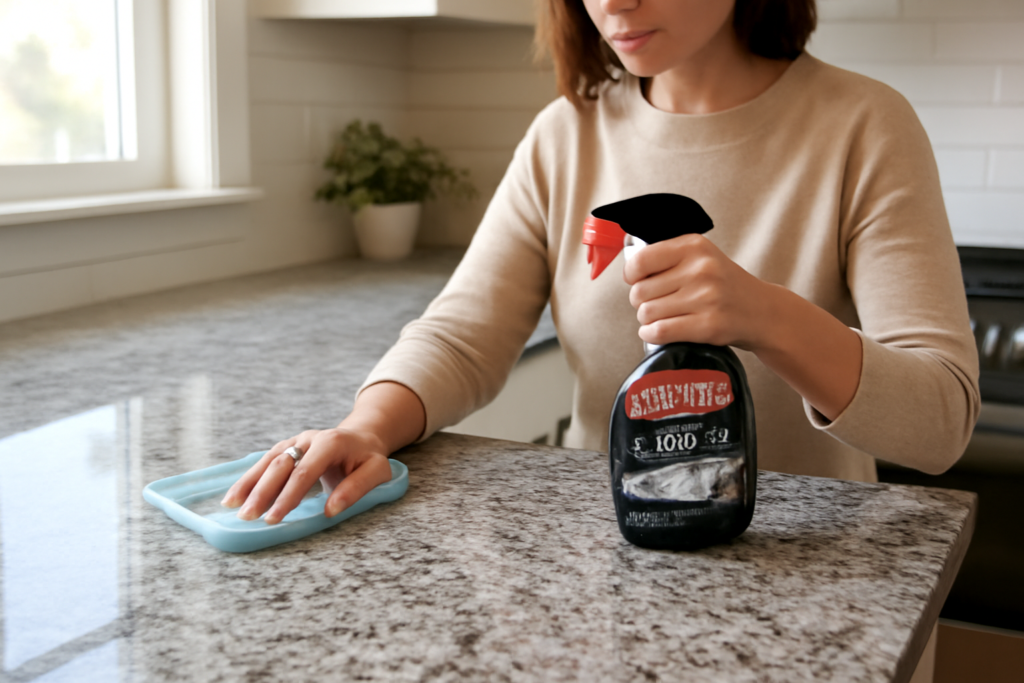
Granite and marble counters get ruined more often by the wrong cleaner than by stains — vinegar, ammonia, and all-purpose sprays slowly etch and dull polished stone. Weiman Granite and Stone Cleaner exists to solve exactly that problem: it is a pH-neutral spray formulated to clean sealed natural stone without attacking the surface or the sealer. It has become one of the most widely stocked stone cleaners in American grocery and hardware stores, and for good reason. This guide covers what the formula actually does, which surfaces it is safe on, how to use it correctly, and where its limits are.
Why pH-Neutral Matters for Stone
Natural stone chemistry is unforgiving. Marble, travertine, and limestone are calcium carbonate, which reacts with any acid — lemon juice, vinegar, even some bathroom sprays — leaving dull, cloudy etch marks that no amount of cleaning removes. Granite tolerates acid better but its sealer does not; acidic and highly alkaline cleaners strip penetrating sealers over months, opening the pores to oil and water stains.
A pH-neutral cleaner sits near 7 on the scale, the same as pure water. It lifts grease and food soil with mild surfactants instead of chemical aggression, so it cleans without etching the stone or degrading the sealer. That is the entire value proposition of Weiman’s stone line, and it is a legitimate one — pH-neutral cleaning is what every stone fabricator and restoration professional recommends for daily care.
What the Weiman Product Line Includes
Weiman sells several stone-care products, and it helps to know which is which:
- Granite & Stone Cleaner (trigger spray): The daily cleaner, usually sold in a 24-ounce bottle. Streak-free formula for routine wipe-downs.
- Granite & Stone Cleaner & Polish: Cleans and leaves a light polish that enhances shine on honed-looking or dulled stone. The most common version on store shelves.
- Granite & Stone Sealer: A spray-on topical sealer meant to reinforce protection between professional sealings.
- Disinfecting Granite Cleaner: An EPA-registered version that kills common bacteria while staying stone-safe — useful for kitchen counters after handling raw meat.
- Granite & Stone Wipes: Pre-moistened wipes with the same neutral chemistry for quick cleanups.
Pricing is modest across the line — typically $4 to $9 per bottle at big-box retailers, which works out far cheaper than specialty stone-shop cleaners with similar chemistry.
Surfaces It Is Safe On
The neutral formula is safe on essentially every sealed hard countertop surface:
- Granite, marble, quartzite, travertine, limestone, slate, and onyx (sealed)
- Engineered quartz such as Silestone, Cambria, and Caesarstone
- Corian and other solid-surface materials
- Ceramic and porcelain tile, including polished porcelain slabs
- Laminate counters and sealed butcher block, in a pinch
Two cautions. First, unsealed or badly worn stone can absorb any liquid cleaner unevenly — if water no longer beads on your granite, reseal before worrying about which spray to use. Second, the Cleaner & Polish version leaves a slight sheen, so avoid it on floors, where any polish film can make stone tile slippery. Use the plain cleaner or a neutral floor cleaner there instead.
How to Use It Correctly
Technique is simple, but a few details separate a streak-free counter from a smeary one:
- Clear crumbs and loose debris first with a dry cloth so you are not grinding grit across polished stone.
- Spray a light, even mist directly onto a 2- to 3-foot section of the counter. More product is not better; overspraying causes streaks.
- Wipe with a clean microfiber cloth in overlapping strokes. Microfiber matters — paper towels leave lint on dark granite and cotton rags push soil around.
- For dried-on food or grease, spray, let it sit 30 to 60 seconds, then wipe. Stubborn spots come off with a plastic scraper or a nylon pad, never steel wool.
- Buff dry with a second dry microfiber cloth if you want a showroom finish on dark, polished stone.
Daily or every-other-day use is fine — the formula is designed for routine cleaning, and there is no buildup problem with the non-polish version.
Honest Limits: What It Will Not Do
Weiman’s stone cleaner is a maintenance product, not a restoration product, and it is worth being clear about the boundaries. It will not remove etch marks — those dull spots on marble where acid ate the polish are physical damage that only re-honing and re-polishing can fix. It will not pull deep-set oil stains out of granite; that job requires a poultice, either homemade with baking soda and acetone or a commercial stain-lifting paste, left on the stone for 24 to 48 hours.
The standard cleaner also does not disinfect. If you want stone-safe germ kill after raw chicken, use the disinfecting version and follow the label’s dwell time — a quick spray-and-wipe does not sanitize with any disinfectant. Finally, the spray sealer is a light-duty topcoat, not a substitute for a proper penetrating sealer. Plan on a full impregnating sealer application every one to three years on granite and annually on marble, depending on use.
How It Compares to Alternatives
Against dish soap and water — the classic fabricator recommendation — Weiman wins on convenience and streak-free finish; diluted dish soap is stone-safe but leaves a film that dulls polish over time unless you rinse thoroughly. Against other branded stone sprays like Method Daily Granite, Granite Gold, or StoneTech Revitalizer, the differences are modest: all are pH-neutral, all clean light soil well, and the choice mostly comes down to scent, price, and availability. Granite Gold and StoneTech skew slightly more expensive; Weiman is usually the cheapest per ounce and the easiest to find on a grocery run.
What you should not use instead: Windex (ammonia), vinegar solutions, Magic Erasers on polished stone (micro-abrasive), bleach sprays, or bathroom lime removers. Every one of those causes cumulative damage to stone, sealer, or both.
A Simple Weekly Stone-Care Routine
Products only work inside a sensible routine, and stone care rewards consistency over intensity. Daily, wipe crumbs and spills as they happen — especially citrus, wine, tomato sauce, and cooking oil, the four most common stain and etch sources in kitchens. Every day or two, do a full spray-and-microfiber pass over the counters. Weekly, wash cutting boards and small appliances’ footprints, then clean under them, since trapped moisture rings form there first. Twice a year, run the water-bead test: sprinkle a tablespoon of water on the busiest section and check it after 15 minutes. If it beads, your sealer is working; if it darkens the stone or spreads flat, schedule a reseal before stains find the open pores. Ten minutes a week is genuinely all sealed stone asks for.
Verdict
For routine care of sealed granite, quartz, and marble, weiman granite and stone cleaner does exactly what daily stone maintenance requires: it cleans effectively at neutral pH, dries streak-free, protects your sealer investment, and costs a few dollars a bottle. Keep one under the kitchen sink for daily wipe-downs, add the disinfecting version if you want sanitizing power, and reserve your skepticism for the deeper jobs — etching, staining, and resealing — where no spray cleaner, this one included, is the right tool.