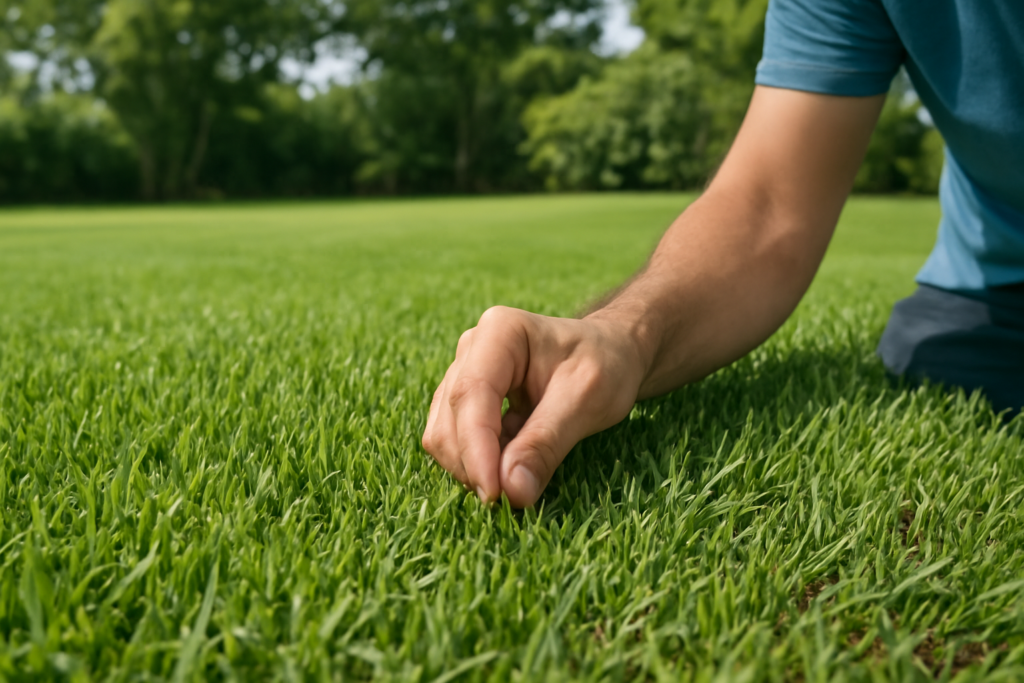
If you have walked across a sun-baked athletic field or a golf course fairway in the South, you have almost certainly walked on bermuda. So what is bermuda grass? It is a fine-textured, warm-season turfgrass prized for its heat tolerance, drought resistance, and remarkable ability to bounce back from heavy foot traffic. That same vigor makes it either the perfect lawn or an aggressive nuisance, depending on where you plant it and how you manage it.
Few grasses inspire such divided opinions. To a homeowner in Phoenix or Atlanta with a sun-drenched yard, bermuda is a miracle, the one lawn that stays lush through brutal heat and heavy use while sipping relatively little water. To a gardener trying to keep it out of the flower beds, it is a relentless invader that spreads by every means available. Both views are correct, and understanding why is the key to deciding whether it belongs in your yard. The very traits that make bermuda tough, its aggressive stolons and rhizomes, its love of heat, its refusal to quit, are the same traits that make it hard to contain. Once you know what you are dealing with, you can harness its strengths and manage its weaknesses rather than being surprised by either. The following sections lay out exactly where bermuda thrives, how it is used, and the care and cultivars that turn its wild vigor into a manicured lawn.
The Basics of Bermuda Grass
Bermudagrass (Cynodon dactylon) originated in the grasslands of Africa and Asia, not Bermuda, despite the name. It is a warm-season perennial that spreads by both above-ground stolons and below-ground rhizomes, letting it repair itself quickly and colonize open ground fast. That dual spreading habit is why a bermuda lawn recovers from wear that would leave other grasses bald.
It grows aggressively in heat, thriving when temperatures climb between 95 and 100 degrees Fahrenheit, and it turns brown and dormant once soil temperatures fall below 55 degrees. There are two broad types: common bermuda, which is seeded and coarser, and hybrid bermuda, which is established from sod or sprigs and gives the dense, fine turf you see on golf greens.
Where Bermuda Grass Grows Best
Bermuda is a creature of the sun and the warm South. It flourishes in USDA zones 7 through 10, covering the Southeast, Texas, the Gulf Coast, and the warmer parts of the Southwest and California. Full sun is non-negotiable; bermuda needs at least seven hours of direct light and thins badly in shade, which is its single biggest weakness.
On the plus side, it tolerates a wide range of soils, handles salt reasonably well, and shrugs off drought better than almost any other lawn grass. When water gets scarce it goes dormant and tan, then greens back up after rain, so it survives conditions that would kill fescue or St. Augustine.
Common Uses
Bermuda’s toughness makes it the default choice wherever grass takes a beating.
- Sports fields: Football, soccer, and baseball fields rely on its fast recovery from cleats and scrums.
- Golf courses: Hybrid cultivars form the tight, fast turf on fairways, tees, and greens across the South.
- Home lawns: A well-managed bermuda lawn is dense, weed-resistant, and drought-tough in full-sun yards.
- Erosion control: Its dense root and rhizome network stabilizes slopes and roadsides.
The flip side of all that vigor is that bermuda escapes into flower beds and neighboring lawns, where many gardeners consider it a weed. Edging and barriers are part of owning a bermuda lawn.
Mowing and Height
Bermuda likes to be cut short and cut often. Keep common bermuda between 1 and 2 inches, and hybrid bermuda between half an inch and 1.5 inches. Mowing low and frequently encourages the lateral spreading that builds a dense, carpet-like stand; letting it grow tall makes it stemmy and open.
Because it grows so fast in summer, expect to mow every three to five days during peak season. Never remove more than a third of the blade at once, and keep the mower blade sharp. A reel mower produces the cleanest cut on low-height bermuda, which is why golf courses use them.
Watering and Feeding
An established bermuda lawn is drought-tolerant but looks its best with about 1 to 1.25 inches of water per week, delivered in deep, infrequent soakings that push roots down. Let the soil dry between waterings; bermuda handles dry spells far better than soggy ones and is prone to disease when kept constantly wet.
Bermuda is a heavy feeder compared with slower grasses. Apply 3 to 5 pounds of nitrogen per 1,000 square feet across the growing season, split into monthly feedings from late spring through late summer. That steady nitrogen fuels the aggressive growth and rich color bermuda is known for. Stop feeding about a month before your first expected frost so you are not pushing tender growth into cold weather.
Overseeding is worth mentioning for anyone who cannot stand a tan winter lawn. Because bermuda goes dormant and brown in cold weather, many homeowners in the warmer parts of its range overseed with perennial ryegrass in the fall to keep green color through winter. The ryegrass grows during the cool months and dies off as heat returns in spring, handing the lawn back to the bermuda. It is extra work and a bit of expense, but it is the standard trick for keeping a Southern lawn green year-round on golf courses and show lawns alike.
Managing the Downsides
Two issues define bermuda maintenance: thatch and invasiveness. All that fast lateral growth builds a thatch layer quickly, so plan to dethatch or core aerate at least once a year, ideally in late spring when the grass is growing hard enough to heal. A thatch layer thicker than half an inch blocks water and invites fungus.
Then there is its wandering habit. Bermuda will climb into garden beds, sidewalk cracks, and adjacent lawns via its rhizomes. Install deep edging, keep beds mulched, and spot-treat escapees before they establish.
Bermuda Grass Cultivars to Know
The bermuda in a seed bag is not the same grass you see on a putting green, and the difference comes down to cultivar. Understanding the two families helps you set the right expectations.
- Common bermuda: Established from seed, coarser in texture, and the budget choice for large lawns and utility areas. It self-repairs well but never gets as fine or dense as the hybrids.
- Hybrid bermuda (Tifway 419, TifTuf, Celebration): Established from sod or sprigs rather than seed, with a fine texture, dense growth, and superior color. These are the cultivars on golf courses and premium home lawns.
Newer hybrids like TifTuf were bred specifically for drought tolerance and can hold green color on dramatically less water, which is why they have become popular in water-restricted regions. If you want the tightest, most manicured bermuda lawn, a sodded hybrid is worth the higher upfront cost over common seed.
Seasonal Care Calendar
Bermuda responds best when your maintenance follows its growth cycle. In early spring, as the grass breaks dormancy, apply a pre-emergent herbicide before soil hits 55 degrees Fahrenheit, then wait for full green-up before the first feeding. Scalp the lawn slightly at the season’s first mow to remove dead winter growth and speed green-up, dropping the height by about half an inch before returning to your normal cut.
Summer is peak season: mow every three to five days, feed monthly with nitrogen, water deeply, and dethatch or aerate in late spring or early summer while the grass grows hard enough to recover. As fall approaches, taper off nitrogen about a month before your first expected frost, and apply a fall pre-emergent for winter weeds. Through winter the lawn goes dormant and tan across most of its range; keep traffic light and hold all fertilizer until spring. Manage those seasonal tasks along with bermuda’s two quirks, thatch and invasiveness, and you get exactly what makes it famous: a lush, resilient, drought-proof lawn that takes everything summer and a backyard full of kids can throw at it, then greens up thick again the following spring.
Common Bermuda Problems and How to Read Them
Even a vigorous bermuda lawn runs into a predictable short list of troubles, and learning to read the symptoms saves both money and turf. Dollar spot shows up as silver-dollar-sized straw-colored spots in late spring and is usually a sign the lawn is underfed, so a light nitrogen application of half a pound per 1,000 square feet often outgrows it. Spring dead spot, by contrast, leaves circular sunken dead rings that appear as the lawn greens up, a cold-weather root disease best managed by easing off late-fall nitrogen and improving drainage. Armyworms can strip a bermuda lawn to stubble in a matter of days in late summer, so scout at dusk and treat with a labeled insecticide the moment you see the small green-to-brown caterpillars.
Cultural missteps cause just as much damage as any pest. Scalping, removing more than a third of the blade at once, exposes tan stems and stalls growth for a week or more, while mowing with a dull blade shreds the tips and leaves them frayed and gray. Iron chlorosis turns blades yellow-green even when nitrogen is adequate, common in alkaline soils above pH 7.5, and a chelated-iron foliar spray greens the lawn back within days. Keep soil pH in the 6.0 to 7.0 range, sharpen the blade every 20 to 25 hours of mowing, and water deeply but infrequently, and most of these problems never take hold in the first place.