You vacuum regularly, your home looks clean, and yet you keep finding small oval beetles on windowsills and tiny hairy larvae near the baseboards. So where do carpet beetles come from, and why do they keep showing up in a tidy house? The short answer is that they almost always start outdoors and drift inside on flowers, secondhand items, or through open windows, then settle in wherever they find the natural fibers and food debris they feed on.
Understanding their entry points and what draws them in is the key to stopping them before a few stray beetles become a full infestation.
Outdoor Origins
Adult carpet beetles live and breed outdoors, feeding on pollen and nectar. They are strong fliers and are drawn to light, which is why you often spot them near windows. During warm months they enter homes through open doors and windows, gaps around screens, cracks in siding, and vents. Once inside, the female looks for a dark, undisturbed spot to lay eggs, and a single female can lay dozens of eggs at a time.
Common species include the varied carpet beetle, the black carpet beetle, and the furniture carpet beetle. All three follow the same pattern: harmless adults outdoors, destructive larvae indoors.
How They Get Inside
Beyond simply flying in, carpet beetles hitch rides on items you bring home. The most frequent culprits include:
- Cut flowers and plants carried in from the garden, since adults feed on pollen.
- Secondhand furniture, rugs, and clothing that already contain eggs or larvae.
- Wool, fur, feathers, and animal hides, which are prime food sources.
- Stored items like blankets, taxidermy, or old textiles pulled out of attics and basements.
- Bird and rodent nests in attics, chimneys, and wall voids, which are a hidden breeding ground.
What Attracts Them Once Inside
Carpet beetle larvae are the damaging stage, and they eat materials made of keratin, the protein found in animal-based fibers. That puts several household items at risk. They feed on wool carpets and rugs, silk, fur, feather-filled pillows, leather, and even dead insects trapped in light fixtures. They also feed on pet hair and lint that collects under furniture and along baseboards.
Synthetic fibers like polyester and nylon are generally safe, but blended fabrics and anything stained with food, sweat, or oil can still attract them. Dark, quiet spaces such as closets, under beds, inside heating ducts, and behind baseboards are their favorite nesting areas.
Signs You Already Have Them
Catching an infestation early limits the damage. Watch for these indicators:
- Small irregular holes in wool clothing, rugs, or upholstery.
- Shed brown, bristly larval skins in drawers, closets, or along carpet edges.
- Tiny tan or brown pellets of fecal matter near affected items.
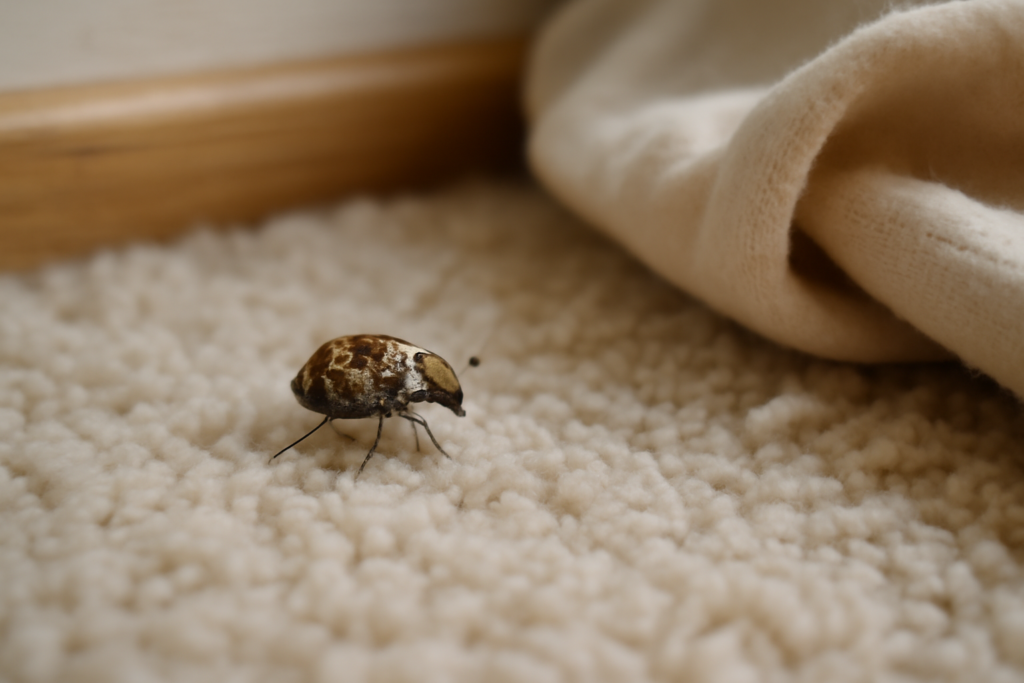
- Adult beetles, about an eighth of an inch long, on windowsills.
- Thinning or bare patches in natural-fiber carpet.
How to Prevent Carpet Beetles
Prevention costs far less than replacing a damaged wool rug. Build these habits into your routine:
- Vacuum thoroughly and often, especially under furniture, along baseboards, and in closets where lint and pet hair gather.
- Inspect cut flowers before bringing them inside, and check secondhand textiles and furniture carefully.
- Store seasonal wool and fur in sealed containers or garment bags rather than open closets.
- Clean clothing before storage, since food and sweat stains attract larvae.
- Seal cracks around windows, doors, and vents, and repair torn screens.
- Remove old bird and rodent nests from eaves, attics, and chimneys.
Dealing With an Active Infestation
If you find larvae or recurring damage, start by vacuuming the affected rooms completely and emptying the canister or bag outside immediately. Launder washable items in hot water, and dry-clean or freeze delicate textiles to kill eggs and larvae. Wipe down shelves and drawers, and discard heavily infested items that cannot be cleaned.
For widespread or stubborn infestations that keep returning despite cleaning, call a licensed pest control professional. They can identify hidden breeding sites, such as nests in wall voids or ducts, and apply targeted treatments more effectively than over-the-counter sprays. Persistent activity often means there is a source you have not located, and a pro will track it down.
The Carpet Beetle Life Cycle
Knowing the life cycle explains why these pests are so persistent and where they hide. An adult female lays 40 to 90 eggs, usually tucked into a food source such as a wool rug, a lint-filled duct, or an old nest. The eggs hatch in one to three weeks, and the emerging larvae do all the feeding and all the damage. This larval stage is the long one, lasting anywhere from a few months to more than a year depending on temperature and food supply.
After the larvae mature, they pupate and emerge as adults, which then leave to feed on outdoor pollen and start the cycle again. Because the destructive larval stage is so long and so hidden, you can have an active problem for months before you ever see an adult on a windowsill. That delay is exactly why early signs like shed skins and small fabric holes deserve immediate attention.
Carpet Beetles vs. Clothes Moths
People often confuse carpet beetle damage with clothes moth damage, since both attack natural fibers. The difference matters because the treatment overlaps but the search image does not. Clothes moths leave silken webbing or tube-like cases on the fabric, while carpet beetles leave dry, bristly shed skins and small fecal pellets. Moth larvae are smooth and creamy white, whereas carpet beetle larvae are brown, hairy, and carrot-shaped.
If you find webbing, suspect moths. If you find shed skins and tiny beetles near windows, suspect carpet beetles. Either way, the prevention playbook of vacuuming, cleaning before storage, and sealing items in airtight containers works against both pests.
The Bottom Line
Carpet beetles come from outside, riding in on flowers, used goods, and through small gaps, then settle wherever they find natural fibers and debris. They are not a sign of a dirty home, but consistent vacuuming, careful inspection of incoming items, and proper textile storage make your house far less inviting. Stay alert to the early warning signs, and bring in a professional if the problem grows beyond a few stray beetles.
Prefer to explore on your own?
See how new flooring looks in your actual room in seconds — free, no signup.
Try the free Floor Studio →