When people search for white laminate sheets, they usually mean one of two very different products, and sorting out which one you need is the first step to a good purchase. On one hand, there is white laminate flooring sold as tongue-and-groove planks; on the other, there is white laminate panel stock like Formica or Wilsonart, sold in large flat sheets for cabinets, countertops, and furniture.
Because this is a flooring site, I will spend most of our time on the flooring side, where a crisp white floor can transform a room. But I will also cover the sheet-material side so you leave knowing exactly which product to order and what to expect from it.
The Two Meanings of “White Laminate”
Clearing up the terminology saves you a wasted trip to the store:
- White laminate flooring comes as rigid planks, typically 48 inches long, with a click-lock edge that snaps together over an underlayment. The white look is a printed decor layer under a clear wear layer.
- White laminate sheet stock is thin, flexible high-pressure laminate (HPL) sold in sheets up to roughly 4 by 8 or 5 by 12 feet. You glue it to a substrate like plywood or MDF to surface a countertop, cabinet door, or shelf.
They share the word “laminate” but they are engineered for opposite jobs. One goes on your floor and bears foot traffic; the other faces your cabinets and takes contact adhesive.
Why Choose a White Laminate Floor
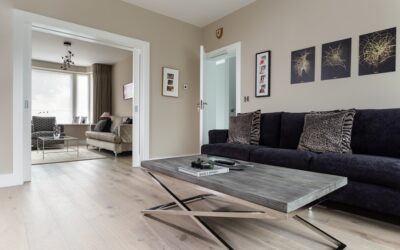
A white or whitewashed laminate floor is one of the most effective ways to make a space feel larger, brighter, and more modern. The pale surface bounces natural light around, opens up small rooms, and gives you a clean backdrop for bold furniture and rugs. White floors are especially popular in coastal, Scandinavian, and minimalist interiors.
Laminate delivers this look at a fraction of the price of real bleached hardwood, and modern products do a convincing job replicating whitewashed oak grain, complete with texture you can feel underfoot. For a bedroom, home office, or living room, a white laminate floor reads as high-end without the high-end invoice.
Popular White Flooring Shades
“White” spans a wide range in flooring, so match the undertone to your room:
- Bright white washed oak: the cleanest, most contemporary option, great with cool grays and crisp whites.
- Warm cream or ivory: softer and cozier, pairs well with beige and natural wood tones.
- Gray-white or limewashed: a driftwood feel with subtle gray in the grain, versatile and forgiving.
View a full plank in your actual light before buying. A white that looks perfect in the store can pick up a yellow or pink cast under warm home bulbs.
The Yellowing Question
The most common worry with white laminate is yellowing over time, and it is a fair concern. The good news is that quality laminate with a UV-stable wear layer resists discoloration far better than cheap products or old vinyl. To keep a white floor looking white:
- Choose a reputable brand with a strong wear layer rating (AC3 or higher for residential use).
- Limit direct, prolonged sunlight with sheers or blinds, since intense UV can slowly shift any pale surface.
- Avoid oil-based cleaners and waxes, which leave residue that yellows and dulls the finish.
With normal care, a good white laminate floor holds its color for many years. The bigger day-to-day issue is visible dirt, which brings us to cleaning.
Cleaning and Maintenance
White floors are honest; they show what is on them. Counterintuitively, that can be a plus, because you clean before grime builds up. Keep it simple:
- Sweep or dry-dust-mop several times a week to catch grit that can scratch the wear layer.
- Damp-mop with a well-wrung microfiber mop and a laminate-safe cleaner. Never flood laminate with water, which swells the core at the seams.
- Wipe spills quickly and skip steam mops, which force moisture into the joints.
A white floor actually hides fine dust and pet hair better than a dark floor does, so the maintenance reputation is worse than the reality, as long as you stay ahead of tracked-in dirt.
White Laminate Sheet Material for Cabinets and Counters
Switching to the sheet-goods meaning: white HPL from brands like Formica, Wilsonart, and Pionite is the workhorse of budget-friendly cabinet and countertop surfacing. It comes in dozens of whites, from stark bright white to soft antique white, and in finishes from high-gloss to matte and textured. You bond it to a substrate with contact cement, trim the edges flush with a router, and you have a durable, wipeable surface.
It is ideal for laundry rooms, closets, DIY furniture, and kitchen refreshes where solid surface or stone is out of budget. Gloss white shows fingerprints and fine scratches more than matte, so for a heavily used counter a matte or lightly textured finish hides wear better and stays looking clean.
What It Costs
For flooring, white laminate planks run roughly $1 to $4 per square foot for the material, with premium textured products at the top of that range. Installation, if you hire it, adds about $2 to $4 per square foot, though click-lock laminate is one of the friendliest DIY floors out there. Underlayment adds another $0.30 to $0.60 per square foot if it is not pre-attached.
For sheet stock, a 4-by-8-foot sheet of white HPL typically costs $40 to $100 depending on grade and finish, plus contact cement and trim. Buy about 10 percent extra material for either product to cover cuts, mistakes, and future repairs.
Installation Basics for White Laminate Floors
One reason white laminate flooring is so popular with homeowners is that it installs as a floating floor. The planks click together and rest on top of the subfloor over a foam or cork underlayment, rather than being nailed or glued down. That means no fasteners into the subfloor and, in most rooms, a weekend of work rather than a week. A few field-tested pointers make the difference between a floor that looks pro and one that gaps:
- Let the boxes acclimate flat in the room for 48 hours so the planks match the home’s temperature and humidity before you lock them together.
- Leave a 1/4-to-3/8-inch expansion gap around the entire perimeter, hidden later by baseboard or quarter-round, so the floor can move with the seasons.
- Stagger the end joints at least 8 to 12 inches from row to row for strength and a natural look, and start each row with the cut-off piece from the last one to reduce waste.
- On a white floor especially, keep the underlayment and subfloor scrupulously clean; any grit trapped underneath telegraphs as a lump you will notice against the pale surface.
Because white shows the least dust of any light floor but the most scratching from grit, a good entry mat and a no-shoes habit go a long way toward keeping that bright finish looking new.
Which One Is Right for You
If you are surfacing a floor, buy white laminate flooring planks with a solid AC rating and a UV-stable finish, and lean toward a shade with a slight warm or gray undertone that will not fight your lighting. If you are refacing cabinets or building a counter, buy HPL sheet stock in a matte white for the best balance of looks and durability. Either way, white laminate gives you a bright, budget-conscious finish that punches well above its price when you choose a quality product and install it carefully.
Prefer to explore on your own?
See how new flooring looks in your actual room in seconds — free, no signup.
Try the free Floor Studio →