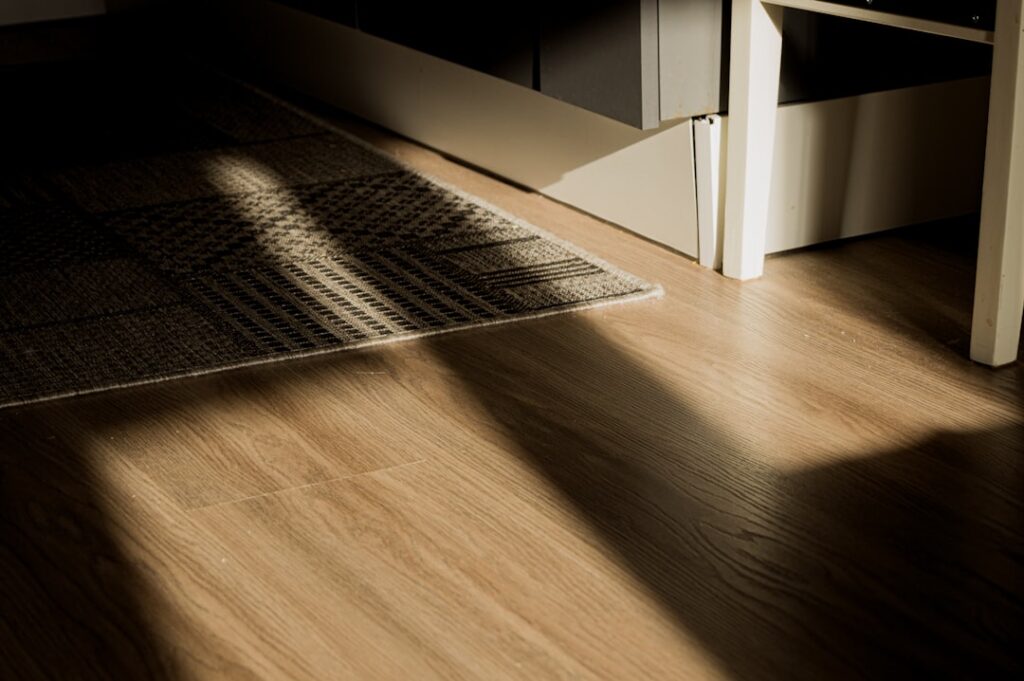
Real white oak flooring costs a fortune and hates moisture. That’s exactly why white oak luxury vinyl plank has become one of the most requested looks in remodeling: it captures the pale, open grain and soft neutral tones of genuine white oak while shrugging off spills, kids, and dogs. If you love the light-and-airy Scandinavian and modern-farmhouse aesthetic but need a floor that survives real life, this is the sweet spot.
Not all white oak LVP is created equal, though. The difference between a $2 plank and a $5 plank shows up fast. Here’s how to buy the right one.
Why White Oak Is the Look Everyone Wants
White oak reads lighter and more contemporary than red oak or hickory, with a straighter, subtler grain and cooler undertones that lean beige and greige rather than orange. That neutrality is why designers love it, it works with warm and cool palettes alike and makes small rooms feel bigger and brighter.
Getting that look in real hardwood means paying $8 to $15 per square foot installed and then babying it around water. Luxury vinyl plank delivers the same visual for a fraction of the price and none of the moisture anxiety, which is why it dominates kitchens, basements, and busy family homes.
The look also flatters a wide range of design styles, which is a big part of why it has stayed on trend. In a modern farmhouse it plays warm and rustic alongside white cabinetry and black hardware. In a minimalist or Scandinavian space it reads clean and airy against pale walls. In a coastal or transitional home it grounds the room without competing with the decor. Because white oak’s undertone is neutral, it doesn’t fight your paint colors or furniture the way an orange-toned red oak or a yellow pine can, so it’s a safer long-term choice if you repaint or redecorate down the road.
The Advantages of White Oak LVP
- Waterproof: A 100 percent waterproof core means you can install it in kitchens, bathrooms, and basements where real oak can’t go.
- Durability: A quality wear layer resists scratches from pets and furniture that would dent soft white oak.
- Comfort and quiet: Attached cork or foam underlayment softens footsteps and warms the floor underfoot.
- Easy installation: Click-lock planks float over most subfloors, a realistic weekend DIY project.
- Low maintenance: No refinishing, no waxing, just sweep and damp-mop.
- Cost: $2 to $5 per square foot for material versus $6 to $12 for solid white oak.
The Drawbacks to Weigh
Vinyl isn’t wood, and there are honest trade-offs. LVP won’t add the same resale value as genuine hardwood, and it can’t be sanded and refinished, once the wear layer is gone, the plank is done. Cheaper products can look repetitive because they cycle through only a handful of printed grain patterns, so a large room reveals the same “plank” every six or eight boards.
Heat and sunlight matter too. Vinyl can fade or expand under intense direct sun through south-facing windows, so budget for UV-resistant products or window treatments in sunrooms. And while it’s tough, a dragged appliance can still gouge it.
What to Look For When Buying
Three specs separate premium white oak LVP from the bargain bin:
- Wear layer: 12 mil for light residential use, 20 mil for busy homes with pets, and 28 mil or more for the toughest wear. Below 12 mil, scratches show fast.
- Core type: SPC (stone plastic composite) is rigid, dent-resistant, and best over imperfect subfloors; WPC (wood plastic composite) is softer and warmer underfoot.
- Thickness: 5mm to 8mm total. Thicker planks feel more like real wood and lock together more solidly.
For realism, choose planks with embossed-in-register texture, where the surface grain lines up with the printed grain, and a wide plank format (7 to 9 inches) with at least a dozen unique board faces. That variation is what sells the illusion.
Matte vs. Satin and Plank Width
White oak looks most authentic in a low-sheen matte or satin finish; high-gloss vinyl instantly reads as fake. Wider, longer planks (up to 60 inches) suit open-concept spaces and modern homes, while narrower boards fit traditional rooms. If you want the on-trend look, go wide, long, matte, and light, with subtle wire-brushed texture.
Installation Basics
Most white oak LVP uses a floating click-lock system that a determined DIYer can handle. The essentials:
- Acclimate the planks in the room for 48 hours so they adjust to temperature and humidity.
- Ensure the subfloor is flat within 3/16 inch over 10 feet; sand high spots and fill lows.
- Leave a 1/4- to 3/8-inch expansion gap around the perimeter, hidden later by baseboard.
- Stagger end joints at least 6 inches so seams don’t line up in an obvious pattern.
- Cut planks with a sharp utility knife (score and snap) or a fine-tooth saw.
Glue-down installation is an option over concrete for very high-traffic areas, but floating floors are faster and forgiving for home use.
Caring for White Oak LVP
One of the biggest draws of vinyl plank is how little it asks of you. There’s no refinishing, no waxing, and no annual reseal, but a few habits keep a light floor looking crisp. Sweep or dry-mop regularly, since grit is the main enemy of any wear layer; those fine particles act like sandpaper underfoot. For deeper cleaning, use a damp mop with a pH-neutral vinyl floor cleaner, never a steam mop, which can force moisture into the seams and lift the printed layer over time.
Protect the floor from the two things that actually damage vinyl: heat and point loads. Put felt pads under furniture legs, use wide floor protectors under heavy appliances, and add a rug (with a felt, non-staining backing) in front of sunny south-facing windows to limit fading. Rubber-backed mats can discolor vinyl, so choose felt or a colorfast woven backing instead. Handle those basics and a white oak LVP floor stays bright and scratch-free for its full lifespan.
Best Rooms for White Oak Vinyl Plank
Because it’s fully waterproof, white oak LVP goes where real hardwood can’t. Kitchens, full bathrooms, laundry rooms, mudrooms, and basements are all fair game, and it flows beautifully through open-concept main floors where you want one continuous light-wood look. The pale, neutral tone is especially effective in smaller or darker rooms, since it reflects light and visually opens the space. About the only spots to reconsider are three-season porches and sunrooms with intense, unshaded light, where you’ll want a UV-stabilized product to prevent fading.
Cost and Value
For a 300-square-foot room, expect $600 to $1,500 in materials plus $3 to $6 per square foot if you hire an installer. A full DIY job with underlayment and trim often lands under $1,000, a fraction of a comparable white oak hardwood floor. Given the waterproofing and near-zero maintenance, the value case is strong for any busy household.
Don’t forget the extras that round out a budget. Plan for transition strips at doorways and where the floor meets other surfaces, roughly $15 to $40 each, plus new or reinstalled baseboard or quarter-round to cover the expansion gap. If your subfloor needs leveling compound or a moisture barrier over concrete, add another $0.50 to $1.50 per square foot. Buy 10 percent extra material for cuts and future repairs, and keep a full plank or two from the same production run in storage. Those small line items are easy to overlook, but accounting for them upfront keeps a mid-project trip to the store from derailing your timeline.
Bottom line: white oak luxury vinyl plank gives you the light, modern wood look almost everyone wants right now, without the price or the fragility of the real thing. Buy a 20-mil-plus SPC plank in a wide, matte format, install it over a flat subfloor, and you’ll get a floor that looks designer and lives practically for 15 to 20 years.
Prefer to explore on your own?
See how new flooring looks in your actual room in seconds — free, no signup.
Try the free Floor Studio →