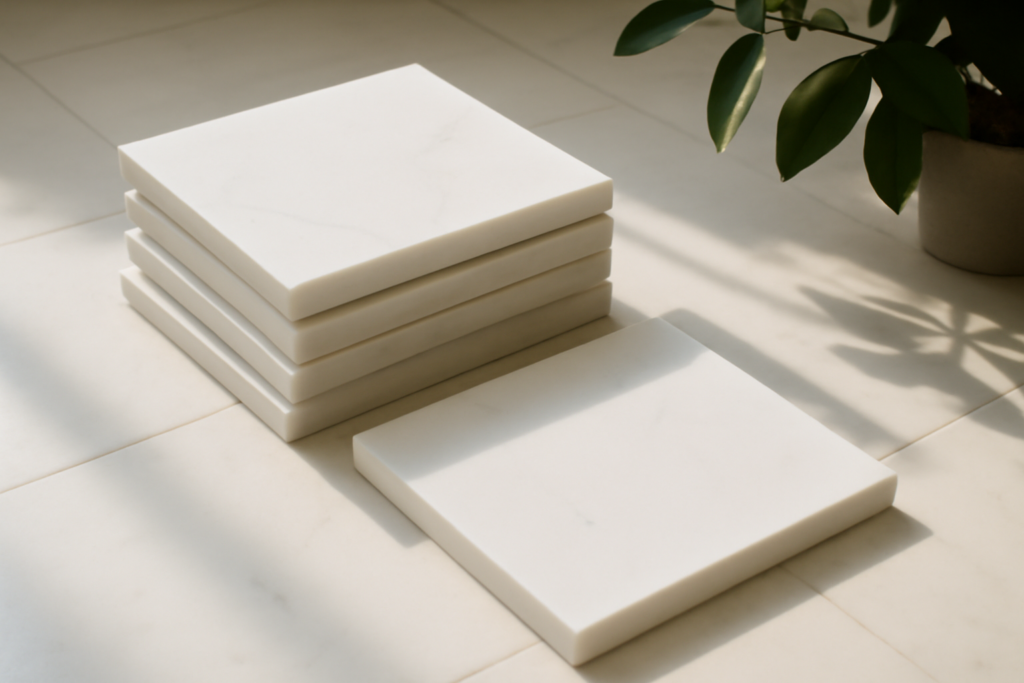
Few natural stones stop a room the way white thassos marble tile does. Quarried on the Greek island of Thassos in the northern Aegean, this is one of the whitest natural marbles on earth, prized for a clean, almost snow-white field with only faint gray veining or crystalline sparkle. I have installed it on shower walls, kitchen backsplashes, and a handful of powder-room floors, and every time the client’s first reaction is the same: it reads brighter and more luminous than the sample chip led them to expect.
That brightness is the whole appeal, but it comes with responsibilities. Thassos is a soft, absorbent, calcite-based stone, which means it etches, stains, and scratches more readily than porcelain or quartzite. This guide walks through what the stone actually is, honed versus polished finishes, realistic pricing, the sealing and maintenance it genuinely needs, and the design applications where it shines and the ones where I steer people away.
What White Thassos Marble Actually Is
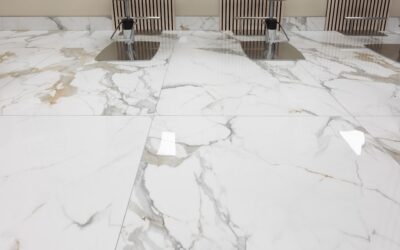
Thassos is a dolomitic-to-calcitic marble with an unusually high concentration of pure white crystals, which is why it lacks the heavy gray or gold veining you see in Carrara or Calacatta. Instead of dramatic rivers of veining, a good slab of Thassos shows a nearly uniform bright white with occasional soft gray wisps and a subtle sugary glitter under direct light. That crystalline structure is part of why it looks like frozen snow rather than a flat paint white.
Because it is genuine marble, every piece is different. When you order, expect some tiles to lean slightly warmer or to carry a faint vein while others are dead white. I always dry-lay the full order on the floor before setting a single tile so I can blend the range across the wall or floor rather than clustering the warmest pieces in one corner. Buyers who want factory-perfect uniformity are usually happier with a porcelain look-alike; part of the luxury of Thassos is accepting the natural variation.
Honed vs. Polished Thassos
The finish decision matters more with Thassos than almost any other choice. Polished Thassos has a mirror-like reflective surface that maximizes brightness and makes the white pop, but it shows etch marks and water spots the instant an acid touches it. Honed Thassos is ground to a matte, satin finish that is softer underfoot, less slippery when wet, and far more forgiving of the dull etch rings that acidic substances leave behind. The etch still happens on honed stone, it is simply much harder to see against the matte surface.
For floors, showers, and any wet or high-traffic area, I specify honed almost every time. The slip resistance alone justifies it in a bathroom, and the forgiveness on etching saves the homeowner years of frustration. Polished is beautiful on a backsplash or a feature wall that will not be scrubbed with lemon and vinegar, or on a fireplace surround where the reflectivity becomes a design asset. Decide the finish before you decide the layout, because it changes how the stone lives day to day.
Etching and Staining: The Honest Truth
Etching is the number one thing people misunderstand about white thassos marble tile. Etching is not a stain and it is not dirt; it is a chemical burn where an acid dissolves a microscopically thin layer of the calcium carbonate, leaving a dull, lighter spot. Lemon juice, vinegar, wine, tomato, coffee, and many common bathroom cleaners will etch marble in seconds. Sealer does not prevent etching, a critical point most buyers get wrong. Sealer slows absorption and helps against staining, but it cannot stop an acid from reacting with the stone surface.
Staining is the separate problem, where a colored liquid soaks into the pores and discolors the stone from within. Oil, rust from a shaving can, hair dye, and dark spills are the usual culprits. This is where sealing genuinely helps. Because Thassos is so bright, a stain is more visible than on a darker stone, so prompt cleanup is essential. Blot spills immediately, never wipe, and keep a marble-safe pH-neutral cleaner on hand rather than reaching for whatever is under the sink.
Sealing and Ongoing Care
Seal Thassos with a quality penetrating, impregnating sealer before grouting and again after the grout cures, then reseal roughly once a year on floors and every one to two years on walls. To test whether resealing is due, drop a small pool of water on the stone and wait ten minutes; if the stone darkens where the water sat, the sealer has worn and it is time to reapply. Sealing is a fifteen-minute job with a soft cloth and is the single most valuable habit for keeping the white looking clean.
For daily care, use only pH-neutral stone cleaners or a few drops of mild dish soap in warm water. Never use vinegar, bleach, ammonia, or generic tile-and-grout cleaners on this marble. Wipe up standing water in showers with a squeegee to prevent hard-water mineral buildup, which is especially visible on bright white stone. With honed Thassos, minor etch marks can often be buffed out with a marble polishing powder; deeper damage on polished stone may need a professional refinish.
Sizes, Formats, and Cost
White thassos marble tile comes in the usual formats: 12 by 12 inches, 12 by 24 inches, and larger 24 by 24 slabs, plus mosaics like hexagons, penny rounds, herringbone, and classic marble subway in 3 by 6 and 4 by 12. Mosaics on mesh sheets are the most popular use because they let you get the Thassos look on a backsplash or shower niche without the cost of large-format slabs.
On price, expect field tile to run roughly 15 to 30 dollars per square foot for standard sizes, with premium large-format and thick slabs climbing higher, and mosaic sheets often landing in the 20 to 40 dollar range depending on pattern. Because it is imported Greek stone, freight and availability swing the number, and a true first-quality Thassos costs meaningfully more than the many misleadingly labeled white marbles sold as substitutes. Budget for waste too: order 10 to 15 percent extra for cuts, breakage, and future repairs, because dye-lot matching a natural stone years later is nearly impossible.
Best Design Applications
The classic home run for Thassos is a bright, spa-like bathroom. Honed Thassos on the floor with a polished mosaic accent in the shower niche gives you a luminous, high-end look that reads clean and timeless. In kitchens, a Thassos backsplash paired with warm wood cabinetry or brass hardware creates a crisp contrast that photographs beautifully and never feels trendy. It also works as a fireplace surround, a waterfall island face where it will not meet acid, and as inlay strips or borders against darker marbles like Nero Marquina for a graphic black-and-white effect.
Where I hesitate is a busy kitchen countertop or a family bathroom with small children, because those environments guarantee daily acid contact and constant cleaning. If a client insists on Thassos in a working kitchen, I push hard for honed finish, meticulous sealing, and realistic expectations that a lived-in patina is part of natural marble. Managed honestly, the trade-off is worth it; the material simply delivers a brightness that no engineered product fully replicates.
Thassos vs. Porcelain Look-Alikes
Porcelain manufacturers now print convincing Thassos-style tiles that are non-porous, stain-proof, etch-proof, and a fraction of the maintenance. For a floor that will see heavy traffic, a mudroom, or a rental property, I often recommend a good porcelain over natural Thassos precisely because it eliminates the etching worry. The white will stay uniform and the tile will shrug off spills.
What porcelain cannot fully capture is the depth and crystalline glow of real stone. Under raking light, genuine Thassos has a translucency and sparkle that a printed surface flattens. If the space is a showpiece where that luminosity is the point, and the owner is willing to maintain it, the natural stone earns its premium. If durability and low upkeep matter more, the porcelain look-alike is the smarter buy, and there is no shame in choosing it.
Final Buying Advice
Buy from a supplier who will let you hand-select or at least view the actual lot, because Thassos quality varies widely and cheaper grades show more gray, more pitting, and less of that signature white. Confirm the finish, order your overage, and plan your sealing schedule before installation day. Treat the etching reality as a known feature rather than a defect, and choose the application to match the stone’s temperament.
Done thoughtfully, white thassos marble tile delivers one of the brightest, most elegant surfaces available in natural stone. It rewards owners who understand its softness and punishes those who treat it like porcelain. Go in with clear eyes about care, pick honed for wet and busy zones, and you will have a surface that keeps that clean Aegean brightness for decades.
Prefer to explore on your own?
See how new flooring looks in your actual room in seconds — free, no signup.
Try the free Floor Studio →