It is the safest, most enduring exterior color in America, and it pairs with virtually any roof, trim, or door. White vinyl siding gives a home a clean, classic, and bright appearance while delivering the same low-maintenance durability that made vinyl the most popular siding in the country. But “white” is not one single shade, and choosing the right tone and profile matters more than most homeowners realize. This guide covers your options, real costs, and the cleaning routine that keeps white siding from looking dingy.
Why White Stays So Popular
White is the default for good reason. It reflects sunlight, which keeps the siding cooler and reduces the warping risk that plagues dark colors in intense heat. It reads as fresh and timeless, suiting colonial, farmhouse, cottage, and modern homes alike. And because it is neutral, it gives you total freedom with trim, shutters, and door colors. White also tends to hold its broad appeal at resale, since buyers rarely object to a clean white exterior.
The trade-off is obvious: dirt, mildew, and algae show more readily on white than on darker tones. That is manageable with routine washing, which we cover below.
Not All Whites Are the Same
Manufacturers offer a surprising spectrum of whites, and the undertone changes the whole feel of a home.
- Bright or pure white: Crisp and clean, best for modern or coastal looks.
- Soft or off-white: A gentle, slightly warm white that hides dirt a touch better.
- Antique or almond white: A creamy, traditional tone popular on colonial and farmhouse homes.
- White with a cool gray cast: Contemporary and understated.
Always view a physical sample on your home in daylight before committing. Whites can look very different next to your roof color and in your region’s light.
Profiles to Choose From
White siding comes in the same profiles as any vinyl. The two most common are traditional clapboard, with a flat, even face for a clean look, and Dutch lap, which has a decorative groove along the top of each course that casts a shadow line for added depth. Beyond those, you can choose board-and-batten for a vertical farmhouse look, shake and shingle panels for cottage charm, and scalloped accents for gables. Mixing a primary clapboard or Dutch lap with shake accents on gables is a popular way to add character.
Pairing Trim, Shutters, and Roof
White siding is a blank canvas, which is both its gift and its challenge. Because it goes with everything, the surrounding elements carry the design. Black or charcoal shutters and a dark front door give a crisp, classic contrast that suits colonial and farmhouse homes. Natural wood accents on a porch or door warm up an all-white exterior and lean modern farmhouse. For a coastal look, soft blue or sage shutters against bright white feel breezy and relaxed.
Coordinate with your roof color too. A gray or black roof pairs cleanly with any white, while a brown or weathered-wood roof calls for a softer, warmer off-white so the two do not clash. Viewing samples against your actual roof and trim in daylight prevents a mismatch you would otherwise notice every time you pull into the driveway.
Resale and Longevity Benefits
White vinyl is a low-risk choice when resale is on your mind. Its broad, neutral appeal rarely turns off buyers, and a clean white exterior photographs well in listings, which matters when most buyers first see a home online. Quality vinyl also comes with long manufacturer warranties, often spanning decades, reflecting its expected lifespan. Because individual panels can be replaced when damaged, you can keep the exterior looking sharp without residing the whole house. That combination of timeless appeal, easy repair, and long warranty makes white vinyl a practical investment as well as an attractive one.
Cost Expectations
White is a standard color, so it carries no premium over other common shades. Materials typically fall in a general range of $2 to $5 per square foot, with premium insulated panels reaching $6 to $8. Professional installation usually adds $3 to $7 per square foot. For an average home of around 1,500 square feet of wall area, total installed costs commonly land in the range of $9,000 to $18,000. Insulated white siding costs more up front but improves energy efficiency and panel rigidity.
Keeping White Siding Bright
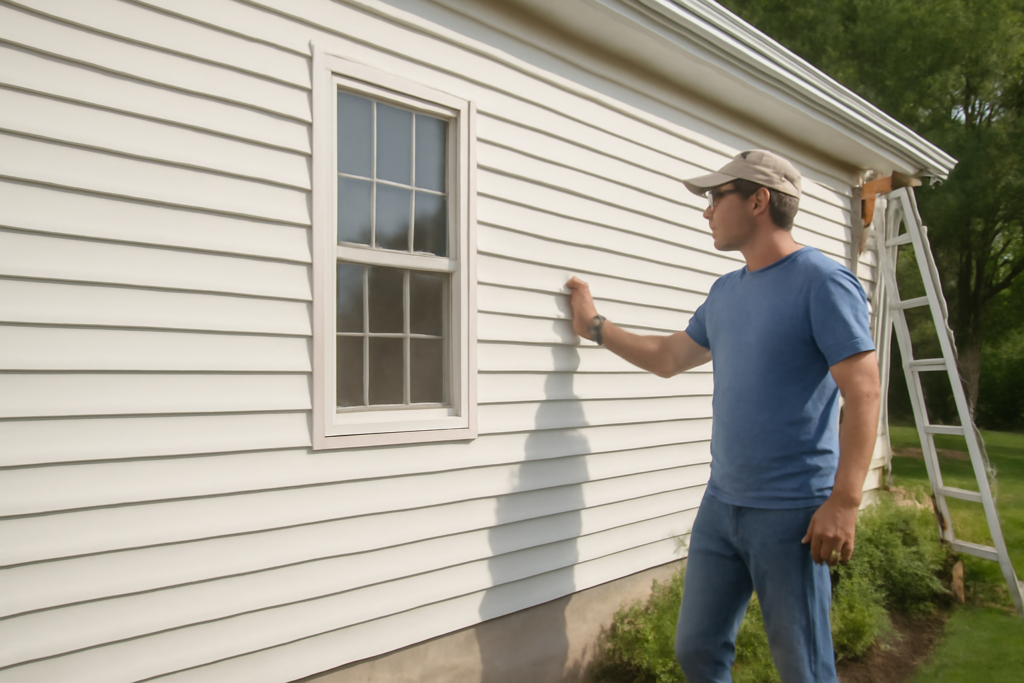
This is the section that matters most for white. Plan to wash the siding once or twice a year, and address mildew or algae promptly before it spreads.
- Rinse the walls with a garden hose to remove loose dirt.
- For mildew and grime, mix one part white vinegar to four parts water, or use a dedicated vinyl siding cleaner.
- Scrub gently with a soft long-handled brush, working from the bottom up to prevent streaks, then rinse top down.
- For stubborn algae, a cleaner containing oxygen bleach helps; avoid harsh chlorine bleach near plants.
If you use a pressure washer, keep it on a low setting with the nozzle below the seams so water is not forced behind the panels.
Long-Term Care and Durability
Quality white vinyl resists fading thanks to UV inhibitors molded into the panels, and the reflective color helps it stay dimensionally stable in heat. Inspect once a year for cracked or loose panels, especially after storms, and replace damaged sections individually. Keep shrubs trimmed back so air circulates and moisture does not encourage mildew along shaded walls.
With nothing more than an annual wash and the occasional spot cleaning, white vinyl siding rewards you with a bright, classic exterior that can look sharp for 20 to 40 years.
Dealing With Mildew, Algae, and Stains
Because dirt and organic growth show readily on white, knowing how to handle the common offenders keeps the exterior crisp. Mildew appears as small black or gray speckles, usually on shaded north-facing walls and under eaves where moisture lingers. A solution of oxygen bleach or a vinyl-safe cleaner, scrubbed gently and rinsed, lifts it without harming plants the way chlorine bleach can. Green algae streaks respond to the same treatment, and trimming back shrubs to improve airflow helps prevent regrowth.
Other stains have their own fixes. Rust streaks from nearby metal or fertilizer often need a cleaner formulated for rust, while artillery fungus, the tiny tar-like spots that come from mulch, is notoriously stubborn and best prevented by keeping wood mulch away from the walls. Always work from the bottom up when applying cleaner and rinse from the top down to avoid streaking, and test any product on an inconspicuous spot first.