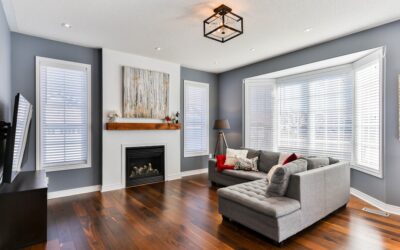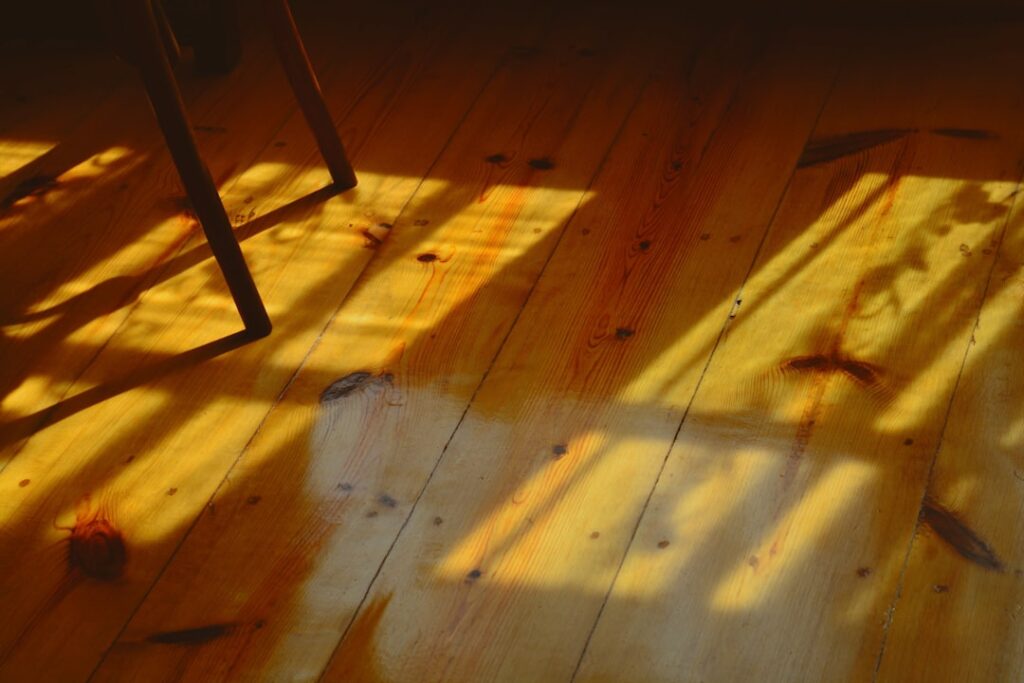
Walk into a model home built since 2018 and odds are the floors are textured, not glossy. Wire brushed hardwood flooring has quietly become the dominant finish style for prefinished oak and hickory because it hides daily wear that shows on smooth boards within months. The technique uses stiff metal brushes to scour the soft early wood from each plank, leaving the harder grain raised. The result looks like a floor that has aged 20 years on day one.
How Wire Brushing Works
Mills run kiln-dried planks under rotating wire-bristle drums before staining. Soft spring growth gets shredded down by 1/64 to 1/32 of an inch, while the dense summer growth stays put. Stain then pools in the recessed grooves and lightens on the high points, which is why wire brushed boards have that two-tone, hand-scraped look without the price of true hand-scraping.
Most factories follow brushing with a UV-cured aluminum oxide finish, typically 7 to 9 layers thick. That coating fills the deepest valleys but leaves enough texture to feel under bare feet.
The Real Pros
Hidden wear is the headline benefit. A dropped fork, a dog claw, or a chair leg leaves a mark on smooth oak that catches every angle of light. On a brushed surface, those same marks blend into the existing texture and rarely show from standing height. Resale photos tell the same story — listings with brushed floors photograph well even after five years of family traffic.
Slip resistance is the second under-rated benefit. The raised grain gives socks something to grip on stairs and in kitchens. Pet owners with older dogs notice it almost immediately. Brushed planks also accept reactive stains better, so you get richer, more dimensional color than a smooth sample swatch suggests.
The Cons Buyers Underestimate
Cleaning takes more attention. Crumbs, sand, and pet hair settle into the grooves and a flat-head microfiber pad will skim right over them. You need a vacuum with a hard-floor setting or a Bona-style spray mop with a textured pad. A standard wet Swiffer leaves streaks because the cleaner pools in the recesses.
Refinishing is also harder. Sanding a brushed floor flat erases the texture you paid for, so most owners stick with chemical recoat systems instead of full sand-and-refinish. Plan on a screen-and-coat every 7 to 10 years rather than a 25-year sanding cycle.
Best Species for Wire Brushing
White oak is the runaway favorite. Its open grain takes the brush beautifully, and the Janka rating of 1,360 holds up to family wear. Hickory is even harder at 1,820 and produces dramatic light-and-dark contrast. Walnut wire brushes well but softens visually — the grain difference is subtler. Maple, on the other hand, is a poor candidate because its tight grain produces almost no texture variation when brushed.
- White oak: $5 to $9 per sq ft, the all-rounder
- Red oak: $4 to $7 per sq ft, pinker undertone
- Hickory: $6 to $10 per sq ft, hardest mainstream choice
- Walnut: $9 to $14 per sq ft, dark and dressy
- European oak: $7 to $12 per sq ft, wider boards available
Solid vs Engineered Wire Brushed Hardwood
Engineered planks dominate this category for a reason — the cross-laminated core resists the cupping that plagues solid hardwood in basements and over slab. A 1/4-inch wear layer on a quality engineered board can be sanded once, sometimes twice. Solid 3/4-inch wire brushed planks still exist, but installers note that the texture survives better on engineered products because the brushing happens before lamination, not after planing.
For below-grade installs, radiant heat, or any room that touches concrete, choose engineered every time. For a 100-year-old farmhouse with strip subflooring, solid is still the more historically appropriate option.
Pricing the Whole Job
Material runs $4 to $14 per sq ft depending on species and width. Installation adds $3 to $6 per sq ft for nail-down or glue-down, and $2 to $4 for floating click installs. Underlayment, transitions, and base shoe typically add another $0.75 to $1.50 per sq ft. A 1,000 sq ft job in mid-range white oak realistically lands between $9,500 and $15,000 installed.
Skip the cheapest mill-grade brushed planks at $2 to $3 per sq ft. The brushing on those is usually shallow scuffing rather than true grain removal, and the texture wears off within two years.
Installation Notes That Save Headaches
Acclimate boxes for 5 to 7 days in the install room, with the HVAC running at the seasonal humidity you actually live in. Keep the subfloor flat to 3/16 inch over a 10-foot span — wider boards (5 inches and up) telegraph subfloor humps badly. Use a urethane adhesive like Bostik Best or Sika MS for glue-downs and stagger end joints by at least 8 inches for a clean look.
Maintenance Realities Year-by-Year
Daily care means a hard-floor vacuum or a microfiber dust mop. Weekly damp clean with Bona Hardwood Floor Cleaner or Loba CleanFix — both are pH-neutral and designed to glide across textured surfaces without pooling. Avoid steam mops, oil soaps, and any vinegar-water mix. The acetic acid etches the urethane wear layer on prefinished planks within months.
Plan a screen-and-recoat (also called a refresher coat) every 7 to 10 years. A pro charges $1.50 to $3 per sq ft for the service, which lightly abrades the surface and adds a fresh top coat. The texture stays intact and the floor looks 80% as good as new. Skip a full sand-and-refinish unless damage is severe — flattening a brushed floor erases the look you bought it for.
Who Should Buy It
Wire brushed hardwood flooring earns its place in homes with kids, pets, or heavy entertaining. Empty-nesters who want a lower-maintenance look that still photographs as upscale also love it. If you favor a glassy, formal aesthetic with crisp baseboard reveals, smooth or wire-brushed-light may serve you better — pronounced texture reads casual, not dressy. Buy a sample box, lay 10 boards on your existing subfloor, and live with it for a week before committing the full order.
Prefer to explore on your own?
See how new flooring looks in your actual room in seconds — free, no signup.
Try the free Floor Studio →