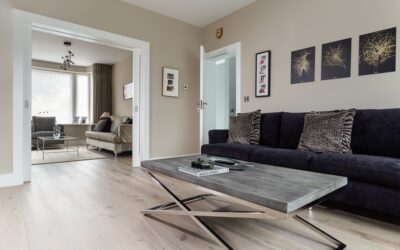
Older brick housing stock, cool damp winters, and a love for honest-looking oak shapes how locals approach a wood floor purchase. The right wood flooring Nottingham homeowners install today is rarely the unfinished solid plank their grandparents put down — engineered constructions, factory-applied UV-cured finishes, and click-lock systems have rewritten the playbook. Here is what works, what does not, and where the money actually goes.
Solid vs Engineered: The Real Trade-off
Solid hardwood — 3/4-inch oak or maple — looks beautiful and can be sanded six or seven times across a lifetime. It hates moisture. Engineered hardwood layers a sawn or rotary-cut veneer (1.2 mm to 6 mm thick) over a Baltic birch or HDF core, giving you the same surface with 60 percent less dimensional movement during humidity swings.
For most older homes with timber joist subfloors, engineered is the smarter buy. A 5-mm wear layer can be refinished two to three times, matching the practical lifespan of solid in any normal household. Below-grade rooms (basements, slab additions) should always use engineered — solid simply will not survive.
Species and Janka Hardness
European white oak dominates the market for good reason. It hits 1,360 on the Janka scale (hard enough for kids and dogs), takes stain evenly, and resists cupping in mixed-humidity climates. Other contenders worth considering:
- American white oak (1,360 Janka): Slightly warmer color than European, more grain variation.
- Hard maple (1,450 Janka): Light, modern, but reveals scratches faster.
- Hickory (1,820 Janka): Wide color range, top choice for active households.
- Brazilian cherry/Jatoba (2,350 Janka): Dramatic deep red, very hard, ages darker over time.
- Walnut (1,010 Janka): Soft for hardwood, but the chocolate tone is unmatched.
Realistic Pricing Tiers
Quality and price scale together. Entry-level engineered oak with a 2-mm wear layer runs $4 to $6 per sq ft material. Mid-range at 3-4 mm wear layer climbs to $6 to $9 per sq ft. Premium European oak with a 4-6 mm sawn face, UV oil finish, and 7-inch-plus widths sits at $9 to $14 per sq ft. Solid hardwood splits in a similar range: $4 to $7 for 2 1/4-inch strip oak, $8 to $14 for 5-inch and wider boards.
Installation adds $3.50 to $7 per sq ft depending on glue-down vs nail-down vs floating method, plus another $1.50 to $3 if the subfloor needs leveling. Site finishing (sand and finish in place) adds $2.50 to $4.50 per sq ft on top of unfinished material.
Brand Spotlight: Where to Spend
Several manufacturers consistently deliver. Mohawk TecWood Select offers 5-inch engineered oak with a 3-mm wear layer at around $5.99 per sq ft. Mannington Restoration uses a 2-mm sawn-face veneer on a 12-mm plywood core, priced around $7.50 per sq ft — strong refinish-once value. Bruce Hydropel adds a waterproof claim to a 4-mm wear layer, ideal for kitchens and entryways at $5.49 to $6.49.
At the premium end, European brands like Kahrs and Boen ship UV-oiled engineered planks with 4-mm wear layers in 7 1/2-inch widths for $9 to $13 per sq ft. Armstrong’s American Scrape Hardwood gives you a hand-scraped solid look in oak and hickory at $6 to $8 per sq ft material if you want the texture without the engineered price point.
Installation Methods and What They Mean
Three installation methods dominate. Nail-down (solid hardwood over plywood subfloors) is fast and creates a structurally bonded floor — the install crew uses 1 1/2-inch to 2-inch flooring cleats every 6 to 8 inches. Glue-down (engineered over concrete or plywood) uses a urethane adhesive like Bostik Best or Mapei Ultrabond ECO 980 and produces the quietest floor underfoot. Floating click-lock engineered floors install fastest but transmit more sound; an acoustic underlayment (Quiet Walk Plus, Roberts SuperFelt) is mandatory.
For most retrofits over old plank subfloors, an additional 1/4-inch or 3/8-inch plywood overlay solves squeaks and creates the flat surface engineered hardwood requires. Budget $1.50 to $2.25 per sq ft installed for the overlay.
Finish Types and Real-World Performance
Factory-applied aluminum-oxide urethane is the workhorse finish — extremely scratch-resistant, low maintenance, no recoat needed for 10-15 years in most households. UV-cured oil finishes (Rubio Monocoat, Pallmann Magic Oil) give a softer matte look but need a maintenance oil every 12 to 24 months in high-traffic areas. Site-finished waterborne polyurethanes (Bona Traffic HD is the gold standard) sit between the two in maintenance demand.
If you have dogs or kids, lean factory finish with an aluminum-oxide wear layer. The trade-off is a slightly more uniform plank-to-plank appearance, which most homeowners actually prefer once they see it installed.
Picking the Right Local Installer
Wood is unforgiving. An installer who skipped moisture testing or laid boards across joists instead of perpendicular to them creates problems that cost more to fix than the original install. Ask for NWFA Certified Installer credentials, a moisture meter reading on the day of install (ASTM F2170 for concrete, pin-style for wood subfloor), and a written acclimation plan — typically 5 to 10 days on site at the homeowner’s normal indoor humidity.
Reputable crews will also discuss expansion gaps (3/4 inch around the perimeter), transition strip placement, and what they will do at doorways and floor-to-floor height changes. Vague answers on any of these points are a red flag.
Maintenance That Preserves the Investment
Wood does not need much, but it needs the right things. Sweep or vacuum (soft brush head, no beater bar) weekly. Damp-mop with Bona Hardwood Floor Cleaner every 7 to 14 days. Felt pads on every chair leg, replaced every six months. Walk-off mats at every exterior door catch the abrasive grit that does 80 percent of the damage to hardwood finishes.
Avoid steam mops, oil soaps, and any cleaner containing wax or silicone — they create a film that prevents future recoats. Done right, a quality engineered or solid floor will outlive the homeowner who installed it, which is the whole point of choosing wood in the first place.
Prefer to explore on your own?
See how new flooring looks in your actual room in seconds — free, no signup.
Try the free Floor Studio →