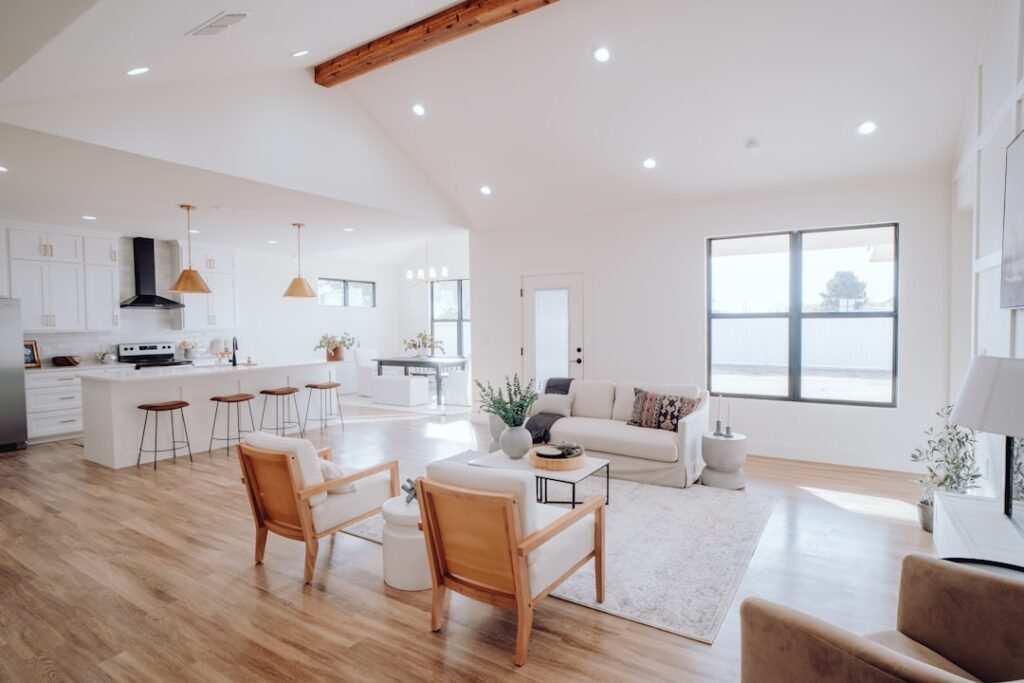
If you want the warmth and character of hardwood without the maintenance demands or the price tag, wood look LVT is the flooring category worth your attention. Wood look LVT — luxury vinyl tile or plank engineered to mimic real wood — has evolved dramatically in the past decade. Modern products use high-definition printing and three-dimensional embossing to replicate oak, hickory, walnut, and other species so convincingly that guests often can’t tell the difference. This guide breaks down everything you need to make a confident purchase.
What Makes Wood Look LVT Different
Standard vinyl flooring reproduces wood visuals using a flat photographic print layer. Wood look LVT goes further by layering that print with embossed surface texture that physically matches the grain lines in the image beneath it. The premium version of this technology is called registered embossing in register (EIR). In an EIR product, the embossing machine is synchronized with the print layer so the raised knots, grain channels, and saw marks land exactly where they appear in the photo. Run your hand across a good EIR plank and you feel actual texture variation — not a generic wood pattern stamped on top of an unrelated image.
That tactile realism, combined with wider plank formats and deeper color ranges, is what separates wood look LVT from the vinyl flooring of 20 years ago. It’s not a compromise product anymore — it’s a legitimate design choice.
Core Construction: SPC vs WPC
Wood look LVT is built around a rigid core that determines how it performs in real-world conditions. Two core types dominate the market:
SPC — Stone Plastic Composite
SPC cores combine limestone powder with PVC resin and plasticizers. The result is extremely dense and rigid — denser than WPC — which makes SPC planks highly resistant to denting, highly stable under temperature swings, and ideal for radiant heat systems. SPC is also thinner (typically 4–6 mm total thickness), so it works well in spaces where door clearance is tight. Most SPC products range from $2.50 to $5 per square foot.
WPC — Wood Plastic Composite
WPC cores incorporate a foamed polymer layer that gives the plank a slightly softer, warmer feel underfoot. WPC products tend to run 6–8 mm thick, which helps muffle sound from below and provides a bit more cushion when you’re standing in the kitchen for long periods. They’re slightly less rigid than SPC, which makes them more forgiving over minor subfloor imperfections. Price range: $3 to $7 per square foot.
For most homeowners, SPC is the practical winner — it handles moisture better, handles temperature change better, and costs a bit less. WPC earns its place in above-grade living spaces where acoustic comfort and underfoot softness matter more.
Plank Dimensions and Format
Plank width and length have a huge impact on the finished look of a room. Narrow 3-inch planks read as traditional strip hardwood. Wide-plank formats at 7, 8, or 9 inches wide read as more contemporary and make small rooms feel larger by reducing the number of seams in the floor.
Current mainstream dimensions for wood look LVT:
- Width: 5 to 9 inches, with 6 to 7.5 inches being the most common sweet spot
- Length: 36 to 60 inches per plank; longer planks (48–60 inches) create a more realistic hardwood feel
- Thickness: 4 mm (budget SPC) to 8 mm (premium WPC); 6 mm is the residential standard
For open-concept spaces over 400 square feet, go with a longer plank — at least 48 inches. Short planks in large rooms look choppy. In a bathroom or laundry room where you’re covering 50 to 80 square feet, shorter and narrower planks are perfectly appropriate.
Wear Layer: The Number That Matters
The wear layer is the clear protective coating over the print layer. It determines how long the floor looks good before scratches, scuffs, and dents become visible. Wear layer thickness is measured in mils (1 mil = 0.001 inch):
- 6 mil: Budget residential; fine for low-traffic bedrooms or temporary installations. Expect 5–8 years of good looks with normal care.
- 12 mil: Standard residential; handles kitchens, living rooms, and entryways. Good for 10–15 years.
- 20 mil: Heavy residential and light commercial; holds up under pets, kids, and high foot traffic. 15–25 years.
- 28–40 mil: Commercial grade; used in retail, healthcare, and hospitality. Overkill for most homes.
For a family home with dogs or kids, don’t go below 12 mil. Spend the extra $0.50–$1 per square foot to get 20-mil protection and you’ll avoid replacing the floor in 6 years.
Species Looks Available
Manufacturers reproduce dozens of wood species, but a handful dominate the market because they translate best to vinyl printing:
Oak
White oak and red oak are the most popular species reproductions in wood look LVT. Light-to-medium oak tones — beiges, warm grays, and natural honeys — work with virtually every interior palette. Wide-plank white oak in a blonde or greige tone is the defining look of contemporary American interiors right now.
Hickory
Hickory’s dramatic color variation — alternating light sapwood and dark heartwood — is hard to achieve in real hardwood without careful sorting. In LVT, that variation is controlled in the print layer, so you get the visual drama without inconsistent boards. Hickory looks read rustic and warm.
Walnut
Deep chocolate and espresso walnut tones are popular in modern and transitional spaces. Real walnut hardwood runs $8–$14 per square foot installed. Walnut-look LVT delivers the same color story for $3–$6 installed.
Reclaimed and Hand-Scraped Looks
Many LVT lines offer distressed, hand-scraped, or wire-brushed surface textures that replicate reclaimed barn wood or antique-finished hardwood. These heavily textured products also hide everyday scuffs and scratches better than smooth-finish planks because the surface variation breaks up reflective light.
Wood Look LVT vs. Real Hardwood: Direct Comparison
Real hardwood is beautiful, adds recognized resale value, and can be sanded and refinished multiple times over 50 or more years. But it has meaningful weaknesses: it will expand and contract seasonally with humidity changes, it cannot be installed below grade in a basement, it dents under heavy furniture and pet nails, and water left sitting on it causes permanent staining and cupping.
Wood look LVT is 100% waterproof and dimensionally stable regardless of humidity. You can install it in a basement, a bathroom, or a kitchen without any concern about moisture damage. It will not dent from furniture as readily as soft species like pine, though a 20-mil wear layer won’t stop a stiletto heel or dropped heavy tool either. It cannot be refinished when the wear layer eventually shows age — replacement is the only end-of-life option. And while LVT adds functional appeal to a home, it does not carry the same resale premium that genuine hardwood does in a real estate appraisal.
The math often tips toward LVT in practical renovation decisions: real hardwood installed runs $8–$15 per square foot, while premium wood look LVT with professional installation runs $5–$10 per square foot. In a 500-square-foot open-concept space, that’s a $1,500–$2,500 difference that pays for other finishes in the room.
Installation Methods
Most residential wood look LVT products use a click-lock floating installation — planks snap together at tongue-and-groove joints with no adhesive required. You lay them over a flat subfloor (with a thin foam underlayment, often pre-attached), leave a 1/4-inch expansion gap at all walls, and cover the perimeter with baseboards or quarter-round. A 200-square-foot room can be done in a long afternoon by a careful DIYer.
Glue-down LVT is also available and is preferred in commercial settings or where the floating floor would bounce too much due to a springy subfloor. Glue-down requires adhesive troweled over the entire subfloor, tile or plank pressed firmly into the wet adhesive, and a period of waiting for the adhesive to cure before traffic.
Subfloor prep is critical in either case. The surface must be flat to within 3/16 inch over a 10-foot span. High spots need grinding; low spots need leveling compound. Skipping this step leads to hollow spots under the planks and clicking sounds underfoot — one of the most common complaints homeowners have about LVT installations, and one that is entirely preventable.
What to Budget
Here’s a realistic pricing table for wood look LVT in a typical 300-square-foot room:
- Budget SPC (4–6 mil, 5-in plank): $2–$3/sq ft material; $1.50–$2.50/sq ft labor = $1,050–$1,650 installed
- Mid-range SPC (12 mil, 6–7 in plank): $3.50–$5/sq ft material; $1.50–$2.50/sq ft labor = $1,500–$2,250 installed
- Premium WPC or EIR SPC (20 mil, 7–9 in plank): $5–$7/sq ft material; $2–$3/sq ft labor = $2,100–$3,000 installed
Always buy 10% extra for cuts and waste. In rooms with diagonal or herringbone layouts, increase waste factor to 15%. Check that all boxes you buy carry the same dye lot number — color can vary slightly between production runs, and mixing lots creates visible shade bands in the floor.
Prefer to explore on your own?
See how new flooring looks in your actual room in seconds — free, no signup.
Try the free Floor Studio →