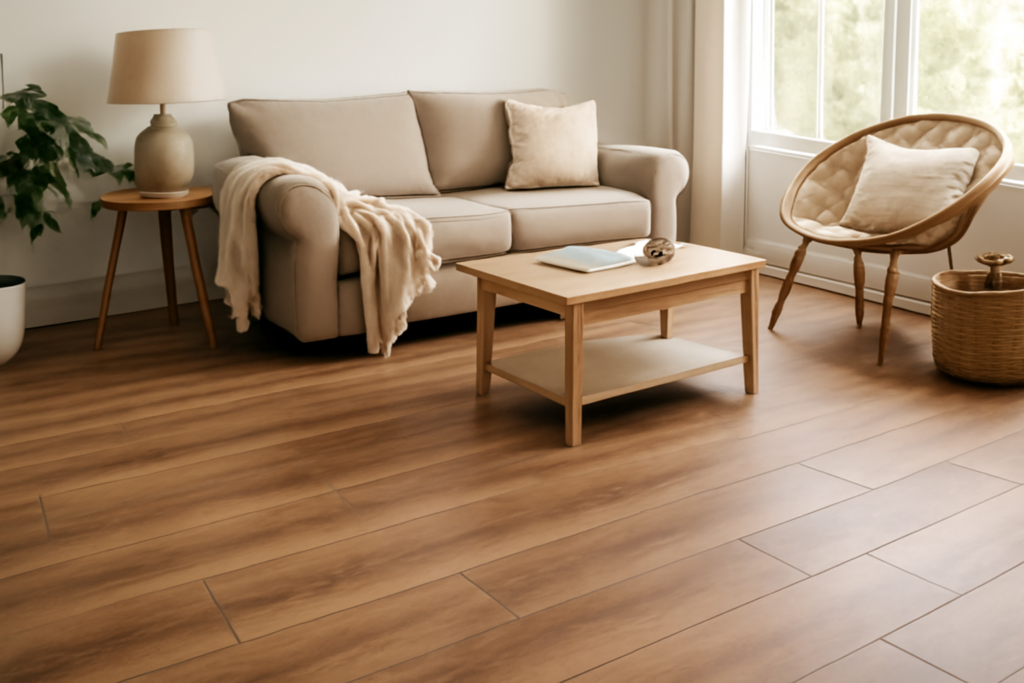
You can have the warm, timeless look of hardwood without its price, fragility, or moisture worries, thanks to today’s wood looking flooring options. Modern manufacturing has made luxury vinyl plank, laminate, and wood-look tile so convincing that even installers sometimes look twice. Each gives you the appearance of real wood while solving problems hardwood cannot, like waterproofing for bathrooms or scratch resistance for busy homes. This guide compares the main options, their pros and cons, realistic costs, and where each one shines, so you choose the right wood look for your space.
Why Choose a Wood Look Over Real Hardwood
Real hardwood is beautiful, but it has limits. It scratches, dents, and reacts poorly to water and humidity, and it costs more upfront. Wood-look alternatives keep the aesthetic while adding durability, water resistance, and lower prices. They also open up rooms where solid hardwood does not belong, such as bathrooms, basements, and laundry rooms. For most homeowners, the choice is less about whether to use a wood look and more about which type fits each room.
Luxury Vinyl Plank (LVP)
LVP is the most popular wood-look flooring today, and for good reason. It is made of multiple vinyl layers topped with a high-resolution photographic image of wood grain and a clear protective wear layer. Many LVP products are fully waterproof, which makes them suitable for any room in the house.
- Pros: Waterproof, durable, comfortable and warm underfoot, DIY-friendly with click-lock systems, and quiet.
- Cons: A premium feel still falls short of real wood; lower-grade products can dent under heavy furniture; quality varies widely by wear-layer thickness.
- Cost: Roughly $2 to $7 per square foot for materials, plus about $1 to $4 for installation.
LVP is the best all-around pick for kitchens, baths, basements, and high-traffic family areas where water and wear are concerns.
Laminate Flooring
Laminate predates LVP and remains a strong value. It uses a dense fiberboard core topped with a printed wood-grain image and a tough wear layer. Modern laminate looks excellent and resists scratches better than many materials, making it a favorite for homes with kids and pets.
- Pros: Very scratch- and dent-resistant, affordable, realistic textures, and easy click-lock installation.
- Cons: Traditional laminate is vulnerable to standing water; only water-resistant or waterproof lines belong in wet areas. It can sound hollow without good underlayment.
- Cost: Roughly $1 to $5 per square foot for materials, plus about $2 to $5 for installation.
Laminate suits bedrooms, living rooms, and hallways, and water-resistant versions can handle kitchens. Keep standard laminate out of full bathrooms.
Wood-Look Tile
Porcelain and ceramic tile printed and textured to mimic wood planks offers the most durable, fully waterproof wood look available. These tiles come in plank shapes and realistic grains, and they handle anything from bathrooms to outdoor patios.
- Pros: Completely waterproof, extremely durable, ideal for wet and high-heat areas, works with radiant heating, and stays cool in hot climates.
- Cons: Hard and cold underfoot, more expensive to install, and grout lines interrupt the seamless plank look.
- Cost: Roughly $3 to $12 per square foot for materials, plus about $5 to $14 for installation.
Wood-look tile is the top choice for bathrooms, mudrooms, sunrooms, and hot or humid climates where moisture and heat rule out other options.
Comparing the Three at a Glance
Each option leads in a different category, so match it to your priority:
- Best for waterproofing everywhere: Wood-look tile, with LVP a close second.
- Best for comfort and easy DIY: LVP.
- Best for scratch resistance on a budget: Laminate.
- Best for hot climates and radiant heat: Wood-look tile.
- Best overall value and versatility: LVP.
How to Pick the Most Realistic Product
Within any category, a few details separate a convincing floor from a fake-looking one. Look for embossed-in-register texture, where the surface grain lines up with the printed image, which adds real depth. Choose products with multiple plank patterns (more unique board images) so the floor does not show an obvious repeat. Wider and longer planks look more like real wood and feel more modern. Finally, view samples in your own lighting before committing, since the same product can read very differently under daylight and warm bulbs.
Installation and Care Notes
LVP and laminate both use floating click-lock systems that snap together over a flat subfloor, making them DIY-friendly weekend projects. Tile requires mortar, spacing, and grouting, so it is best left to a skilled installer. For care, sweep regularly and clean with products made for the material; avoid excess water on laminate, and use felt pads under furniture on LVP to prevent dents. With proper care, all three can last 15 to 25 years or more.
Wood-Look Options by Room
Choosing the right wood look comes down to where it will live. In bathrooms, laundry rooms, and basements, where moisture is a constant threat, wood-look tile or fully waterproof LVP is the smart choice. In bedrooms, living rooms, and hallways, scratch-resistant laminate or comfortable LVP both perform beautifully and cost less. Kitchens favor waterproof LVP or tile, since spills are inevitable. For homes with radiant floor heating or in hot climates, wood-look tile is the standout. Thinking room by room prevents the common mistake of installing a moisture-sensitive product where it cannot last.
What About Resale Value?
A frequent question is whether wood-look flooring helps or hurts resale compared with real hardwood. Genuine hardwood still carries the strongest prestige with buyers and can be refinished for generations. That said, high-quality LVP and wood-look tile are widely accepted and even preferred in spaces where buyers expect durability and water resistance, like kitchens, baths, and basements. Cheap, obviously fake flooring can detract, but a well-chosen, realistic product in good condition reads as a practical, attractive upgrade. For most homes, quality wood-look flooring supports value while saving money upfront.
Avoiding Low-Quality Products
Not all wood-look flooring is created equal, and the cheapest options often disappoint. Thin wear layers on budget LVP dent and scratch quickly, and low-resolution prints with few repeating patterns look obviously artificial. With laminate, a low AC durability rating signals a product that will not hold up to traffic. With tile, poor color variation and uniform graining give the fake away. Spend a little more for an adequate wear layer or AC rating, varied plank images, and realistic embossed texture; the modest upgrade is the difference between a floor that looks convincing for decades and one that looks dated in a few years.
The Bottom Line
Wood looking flooring lets you enjoy the hardwood aesthetic with better durability, water resistance, and value. LVP is the versatile all-rounder for most homes, laminate offers scratch resistance on a tight budget, and wood-look tile delivers waterproof toughness for wet rooms and hot climates. Decide which strength matters most in each room, avoid the cheapest products, prioritize realistic texture and varied plank patterns, and view samples in your own space, and you will get the warm look of wood without its drawbacks.
Prefer to explore on your own?
See how new flooring looks in your actual room in seconds — free, no signup.
Try the free Floor Studio →