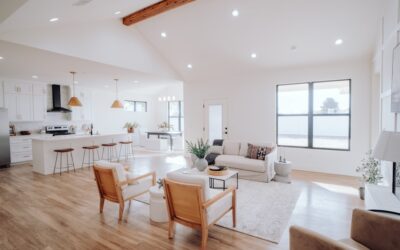
Plenty of homeowners want the warmth of hardwood without its price, fussiness, or fear of water. Wooden look flooring delivers exactly that — surfaces that read as oak, hickory, or walnut but are built from vinyl, laminate, porcelain, or engineered wood instead of a single solid plank.
After years of installing all four, I can tell you the right choice depends entirely on the room. Each option nails the look from across the floor; where they differ is durability, water resistance, feel underfoot, and cost. Let me walk you through them so you pick the one that fits your space, not just the showroom.
The Four Main Wood-Look Options
Almost everything marketed as wood-look falls into one of these four categories, and they perform very differently.
- Luxury vinyl plank (LVP): A printed wood image over a waterproof PVC or stone-composite core. The most water-resistant option and comfortable underfoot.
- Wood-look laminate: A high-resolution photo layer over a dense fiberboard core. Hard, scratch-resistant, and budget-friendly, but the wood core can swell if water sits on a seam.
- Wood-look porcelain tile: Fired ceramic planks with the texture and grain of wood. Completely waterproof and nearly indestructible, but cold and hard.
- Engineered wood: A real hardwood veneer bonded over plywood layers. The only option here that’s genuine wood on top, with the best feel but the least water tolerance.
How Realistic Does Each Look
Print and texture technology has come a long way. The most convincing wood-look floors use embossed-in-register texture, where the surface grain lines up with the printed image so it feels like real wood under your hand. Beveled or micro-beveled edges add to the illusion by mimicking individual board joints.
Engineered wood wins on authenticity because the top layer is real timber — it ages and reflects light like the genuine article. Wood-look porcelain and premium LVP come surprisingly close at arm’s length. Cheap laminate and bargain LVP with a repeating pattern give themselves away once you spot the same knot showing up every few planks, so look for designs with a high number of unique board faces.
Durability and Water Resistance
This is where the options separate clearly, and it should drive your decision more than looks.
- Porcelain tile: fully waterproof, scratch-proof, and good for 50+ years. The toughest of the group, ideal for bathrooms, mudrooms, and pet households.
- LVP: waterproof core handles spills, splashes, and damp basements. Softer surface can dent under heavy furniture but resists scratches well.
- Laminate: very scratch- and dent-resistant on top, but standing water at a seam can swell the core unless it’s a sealed water-resistant line.
- Engineered wood: the least water-tolerant — fine for living rooms and bedrooms, risky in baths. Can usually be refinished once or twice, unlike the others.
What Each Costs
Here are realistic 2026 material prices per square foot:
- Wood-look laminate: $1.50 to $4
- Luxury vinyl plank: $2.50 to $5
- Wood-look porcelain tile: $3 to $8
- Engineered wood: $4 to $9
Installation changes the math. LVP and laminate float and click together for $1.50 to $3 per sq ft in labor, or free if you DIY. Porcelain requires mortar, grout, and skill, so installed labor runs $5 to $12 per sq ft — the cheapest material can end up the most expensive floor once it’s down.
Comfort, Sound, and Underfoot Feel
The look may be identical from across the room, but these floors feel very different when you walk on them. Engineered wood and LVP have a slight give and stay close to room temperature, so they’re comfortable for bare feet and long hours standing at a counter. Laminate is harder and can sound hollow without a quality underlayment beneath it. Porcelain is the hardest and coldest of all — wonderful in a hot climate, less so on a winter morning unless you pair it with radiant heat.
Sound matters in multi-story homes and apartments. LVP and engineered wood with attached pad transmit the least impact noise to rooms below. If you’re installing over a bedroom or in a condo with sound rules, factor an acoustic underlayment into your budget regardless of which product you choose, and check whether your HOA specifies a minimum sound rating.
Where Each One Fits
Match the product to the room and you’ll never regret it. Put waterproof LVP or porcelain in kitchens, baths, laundry rooms, and basements. Use laminate or LVP in busy hallways and family rooms where scratches from dogs and kids are the main threat. Save engineered wood for formal living rooms, bedrooms, and dining rooms where it’ll stay dry and you want the genuine-timber feel and the option to refinish later.
In a whole-home remodel I often mix them — porcelain in the wet zones, LVP through the main living areas — choosing colors close enough that transitions read as intentional, not mismatched.
Wooden Look Flooring Pros and Cons
Pros
- Hardwood looks at a fraction of solid-wood cost
- Waterproof options (LVP, porcelain) go where real wood can’t
- Lower maintenance — no sanding, sealing, or refinishing for most types
- Huge range of species, colors, and widths
- Many click-lock options are DIY-friendly
- Better scratch and dent resistance than soft solid woods
Cons
- Most types can’t be refinished — replace, don’t restore
- Porcelain is cold and hard, with pricey installation
- Cheap prints repeat and look fake up close
- Engineered wood still fears standing water
- Resale appeal trails genuine solid hardwood
Buying Guide: How to Choose
Start with water exposure. If the room ever sees spills or moisture, choose LVP or porcelain and stop there. For dry living spaces where authenticity matters most, engineered wood justifies its price. For tight budgets in low-moisture rooms, laminate is hard to beat.
Whatever you pick, demand embossed-in-register texture and a high unique-board count for realism, confirm the wear-layer thickness (look for 12 to 20 mil on LVP) and the warranty terms, and order 8 to 10 percent overage for cuts and repairs. Bring samples home and view them in your own daylight and lamplight — showroom lighting flatters everything. Choose by room, not by the prettiest board on the rack, and your wooden look flooring will look great and hold up for decades.
Prefer to explore on your own?
See how new flooring looks in your actual room in seconds — free, no signup.
Try the free Floor Studio →